


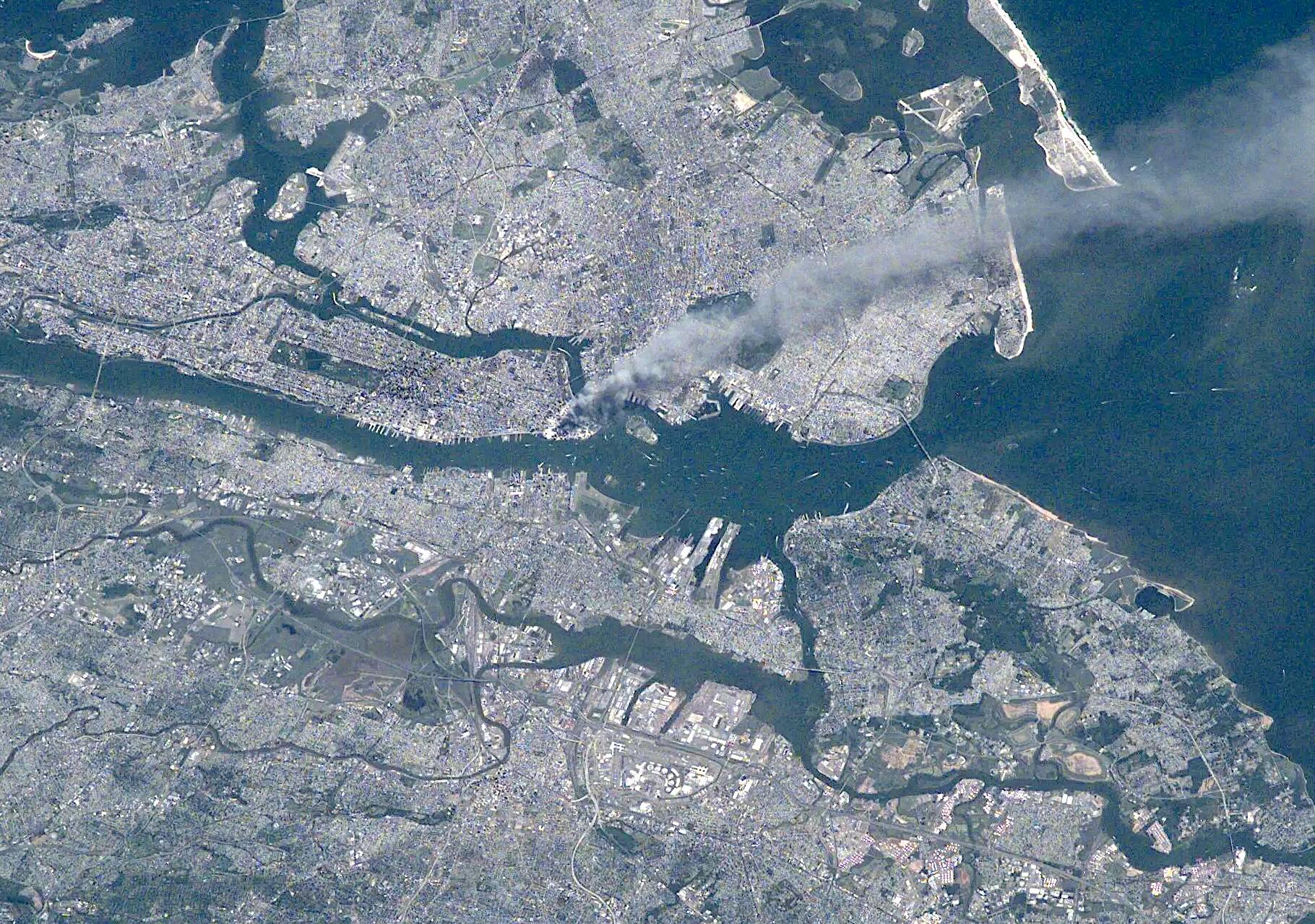

Every year since 2001, I have always taken note of the weather on September 11. It was on that morning back then, as I walked to my car before the early morning drive to work in northern New Jersey, I remember how the day dawned. The sky was sparklingly clear–deep blue and not a cloud to be seen. But as a pilot, I also noted that the wind was virtually dead calm–a very unusual combination, at least here in the Northeast. I clearly remember thinking, “What a beautiful, smooth day to fly!”
As I drove northbound, I heard over the radio that a plane had struck one of the towers of the World Trade Center. After the initial shock, it struck me as odd, since I had already made note of how calm the winds were. As a journalist, I started mentally chalking up the questions I would want answered as to what might have happened.
Like most people who heard the news early that day, I first assumed it was a light airplane that had somehow gone astray. I had flown the Hudson River corridor several times and the tops of the towers were about level with the required low altitude for navigating over the river. But, actually hitting one accidentally seemed highly unlikely, especially on such a calm day. The idea of a light-airplane pilot committing suicide did cross my mind.
I wondered if a business jet departing from Teterboro could have been involved. Maybe a control issue? Or some other mechanical failure? The likelihood it was an airliner seemed a remote possibility. Approaches to JFK Airport and Newark (KEWR) were simply not on a track that could logically involve the site of the Twin Towers. Even closer-in LaGuardia (KLGA) flights would have no good reason to be anywhere near lower Manhattan.
There are a few spots on my commute where I knew I could sometimes catch a glimpse of the New York skyline. As I passed one of them, 22 miles to the west-northwest, I craned my neck. I think I heard the news report that the “accident” involved an airliner about the same time I saw the smoke from the North Tower, which had been struck by American Airlines Flight 11. My first response was disbelief that this could have possibly been unintentional. What did I actually believe? I couldn’t begin to process that.
By the time I pulled into the parking lot at work, United Airlines Flight 175 had hit the South Tower and news reports were starting to filter in about “other flights.” From there, it was a matter of sorting out fact from speculation and trying to make sense of what would come next. It still seems surreal 23 years later, but for a time, the prospect that this attack signaled the start of total, global war could not be ruled out. On the more personal side, 18 residents of my small town died that morning.
As I write this on Sept. 10, 2024, the weather for tomorrow, for the first time in 23 years, looks to be, once again, “a beautiful, smooth day to fly.”

