Technique

Old Aviation Truths for a New Year

The thoughts are succinct and paragraphs short in a conversation about some of the basic truths of staying alive, happy and well when flying. Okay, there might be a few opinions mixed in. Pushing It The weather is not going to get better in another five miles. If you are trying to scud-run, the weather […]

Read More »

An Airplane Bearing Gifts

I always had enjoyed waking to find snow falling, although it had been a long time since I’d had the experience. Maybe this morning’s snow was prophetic, as a white blanket was never guaranteed in these parts this time of year. It made me feel particularly good in spite of the fact it would take […]

Read More »

This Month In Aviation Safety: Parallel Runway Ops

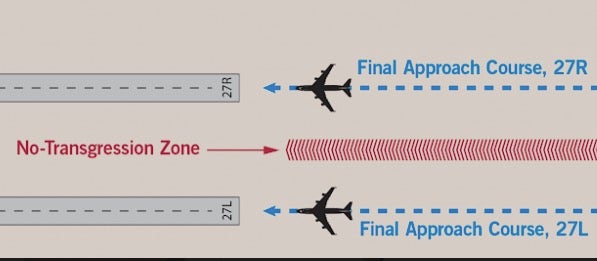
The parallel runway configuration—which may have staggered or offset thresholds, as well as intersections with other runways—can allow simultaneous takeoffs and landings under most conditions. Such runway configurations are found at airports in all airspace classes, B through G, and they may include turf surfaces, too. They offer operational flexibility a system of intersecting runways […]

Read More »

Which Airspeed?

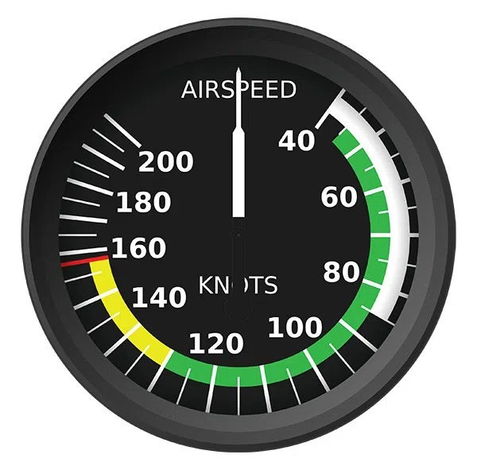
One of the most important bits of information pilots can glean from our instrument panels is airspeed. It’s used on takeoff to gauge when to apply backpressure for liftoff, it’s used when landing to ensure we’re neither too slow or too fast, and we use it in cruise to help verify performance (and establish bragging […]

Read More »

Control Thy Airspeed

If you studied aviation accident reports as much as we do, one of the many phrases you’d often see is “failure to control airspeed.” It crops up in runway overruns a lot, but primarily appears when discussing in-flight loss of control accidents, of which there are enough the probable cause has earned its own acronym: […]

Read More »

Energy Errors

The FAA’s Airplane Flying Handbook (AFH, FAA-H-8083-3C) describes energy management as “the process of planning, monitoring, and controlling altitude and airspeed,” which seems straightforward enough. Using the available tools, primarily pitch and power, we’re expected to attain and maintain “desired vertical flightpath-airspeed profiles, detect, correct and prevent “unintentional altitude-airspeed deviations” and prevent “irreversible deceleration and/or sink rate” […]

Read More »

Smarter Than Direct

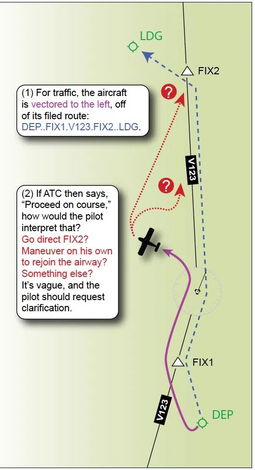
Don’t you hate it when this happens? “November 12345, I have an amendment to your clearance…advise when ready to copy.” Then ATC gives you the barely pronounceable name of a waypoint you never heard of. You’re given a re-route around restricted airspace or a military operations area (MOA) that just went hot. Or you’re making […]

Read More »

Radio Confidence

Remember when you first picked up the mic in an airplane, either to ATC or at a non-towered field? Most of us were probably as tentative as a boy trying to get his first date. Even if you’re good at public speaking, few of us gain the comfort without first practicing with prepared remarks. But, […]

Read More »

Cutting You Loose

Believe it or not, air traffic controllers don’t issue radar vectors for amusement. I know it might seem like it when you’re getting strung out for a sequence or for traffic, watching the time-equals-money clock ticking away, increasing the costs of your flight. My goal as a controller is to get you on your own […]

Read More »

Overcoming Bad Habits

In the March 2021 issue of Aviation Safety magazine, I discussed the need to restructure the way we teach flying, to focus ab initio training on developing habits that don’t have to be unlearned as one progresses through flight training and into advanced ratings and operations. The classic example is developing in students the habit of using […]

Read More »
Sign-up for newsletters & special offers!

Get the latest stories & special offers delivered directly to your inbox

SUBSCRIBE