























It barely even looks like an airport. There’s no fuel pump. No FBO. And there’s certainly no control tower. The asphalt is crumbling, and there’s an inadvertent pothole here, there and yon. Pilots who land on the runway had better brush up on their short/soft-field landing skills or risk dinging their prop with loose gravel. But it is nonetheless an airport and, like any airport, it owns the hearts of a few, die-hard pilots who want to keep it that way. In another sad story that’s becoming far too common these days, there’s a small, very vocal faction on California’s Monterey Peninsula that wants to shut down Carmel Valley 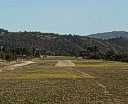 Vintage Airpark (O62). Predictably, they’re using all the politically-correct buzzwords to do their dirty-work: noise, school children, environmental pollution, safety, etc. It’s what they’re not saying, however, that’s really at the heart of the issue. Carmel Valley is a small sliver of heaven that connects Carmel-by-the-Sea to the outside world. Like any slice of heaven, everyone wants to own a piece of it, and real estate values have skyrocketed in the area over the past several years. Carmel Valley Vintage Airpark sits on some 29 acres of open land with heart-stopping views of the California coastal mountain range — a real estate developer’s dream.
A Little Slice Of History
It’s certainly not a new idea. In fact, the founder of the airport had a similar vision. The only difference was that it included airplanes in harmony with development. The story began in 1941 when Byington Ford settled on the Monterey peninsula. Convinced that airplanes would soon be an attainable pleasure for everyday citizens, he decided to embark on a visionary idea and bought a corner of the Mexican Rancho Las Laureles with the idea of turning it into an airpark where owners could live in close proximity to their airplanes. At the time, it was a revolutionary concept — the first of its kind anywhere. Of course, it was also an idea that has gained a broad appeal since then. Unfortunately, Ford picked December 7, 1941, as the day to introduce his dream — dubbed 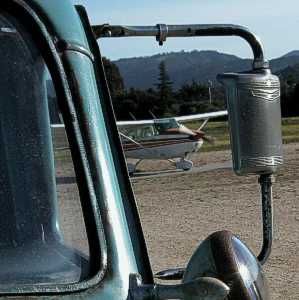 "Airway Ranch" — to the rest of society. As the bombs fell that day on Pearl Harbor, the nation turned its attention to more pressing matters. Ford eventually joined the nation’s war effort and his project languished. After the war ended, it became apparent that Ford’s dream of building an airpark was a little ahead of its time, so he sold some of the home sites for ordinary residences. Only two hangar-homes were ever built on the property. One later burned, but another still stands on the north side of the runway, although the owner has redesigned it for use as other than a hangar-home.
In 1949, the State of California licensed the airport and the current owner, Peter Delfino, bought the property. For years, the airport has coexisted peacefully with the local town, serving not only as favorite destination for pilots, but also as an important part of the town’s culture and an integral part of its emergency and fire safety contingency plans. In 1994, Lars de Jounge moved to Carmel Valley, bought a home alongside the airport and leased the airport from the Delfinos. De Jounge also dreamed of an airpark and, with the help of an architect, sought approval from the county planning commission for ten home sites. Unfortunately, de Jounge’s plan was a little too ambitious for the slow-growth temperament of Monterey County, and eventually their foot-dragging killed the project. Meanwhile, developers and so-called environmentalists began eying the property, and their vision did not include airplanes.
Today’s Harsh Realities
Going Down Fighting?
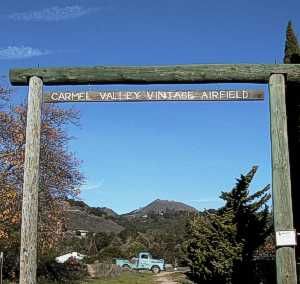 Fast forward to the current situation: Peter Delfino’s son, Allan, who is now calling the shots, just wants to sell the property, collect his profits and get on with his life. The Monterey County Board of Supervisors wants to shut down the airport, and a handful of Carmel Valley residents want the same thing. But this little airport is not going down without a fight. A group of local pilots and concerned citizens formed the Carmel Valley Historic Airpark Society (CVHAS) in August 2000, grabbed some petitions, started talking to the neighbors and set out to fight city hall. It may seem pointless to fight city hall, but what city hall didn’t count on was how clever a group of die-hard pilots could be. In a fitting ironic twist, the CVHAS used one of city hall’s favorite tactics to help get what they want — they turned to environmental protection. It’s an oft-employed strategy in the pristine coastal communities of the Peninsula — one that tugs at the heart of environmentalists, residents and tourists with the common desire of protecting this special piece of paradise on earth. It’s not commonly used to protect an airport, however.
On Friday, November 3, 2000, the California Historical Resources Commission voted unanimously to nominate Carmel Valley Vintage Airpark (CVVA) as a State Historic Resource. The Commission found that the development of CVVA by Byington Ford in 1941 was significant in that it represented the first airpark in the United States and the world. The designation doesn’t actually buy them much, but it does grant them a little more time and makes it just a little more difficult for the Board of Supervisors to shut down the airport. The historical designation triggers the California Environmental Quality Act process and means that an Environmental Impact Review (EIR) will have to be completed before the airport can be closed. It also means substantial savings in tax breaks and the added bonus of monetary incentives allocated by the state for improvements should a prospective buyer decide to purchase the property and maintain the airport.
CVHAS managed to secure this designation over the unanimous objection of the Monterey County Supervisors, elected officials who are supposed to represent the best interests of the citizens of Monterey County. Whether or not that is actually happening is a matter of some local debate. Interestingly, the Carmel Valley Vintage Airpark resides in Supervisor Dave Potter’s municipal district and, according to de Jounge and Ray O’Neal with CVHAS, approximately 85 percent of the residents and businesspeople in the area support the airport and want to keep it open. CVHAS has already collected more than 1,500 signatures in support of the airport. It’s not exactly clear why Supervisor Potter is so opposed to the airport. He has a voting record that suggests he opposes most projects designed to further growth in the area — but not all projects. He courts the environmental set and reportedly has his sights set on higher political office. Perhaps he feels that politically the airport would make a better park. Perhaps he has another motive. Attempts by AVweb to contact Potter for clarification have been unsuccessful so far.
…Amid Strong Local Support
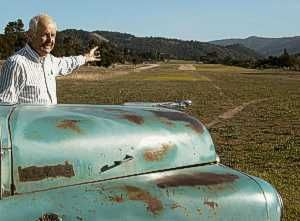 Despite the overwhelming local support, the supervisors remain adamant about closing the airport. Part of their objection to the airport may stem from their failure to enact a comprehensive land-use plan for all public-use airports in the county as required by the State legislature since 1973. According to de Jounge, that responsibility has never been fulfilled, in spite of repeated requests to do so by the County Airport Land Use Commission. Closing the airport is potentially an easy way for the supervisors to tidy up a situation they’ve failed to address. Perhaps to facilitate the closure and to "fix" that oversight, County Counsel Adrienne Grover has drafted an amortization ordinance that could eventually lead to the airport’s demise. Through the draft ordinance, the County could set a future date by which all otherwise legal but "non-conforming" (read: unwanted) land use must end. Such an ordinance would have the effect of setting in motion a process by which CVVA and, perhaps, other public airports in the county would be forced to close once the owners have recovered their investment in their airport facilities. The Delfinos who own the airport do not object specifically to the airport, but understandably wish to cash in on their investment that they’ve held since 1949.
Regardless of the supervisors’ objections, the majority of residents in the area seemingly do not want to see the airport die. Whether or not that means anything remains to be seen. However, there seem to be other factors the supervisors are obviously dismissing or simply ignoring. According to Jeff Hand, a local pilot and member of CVHAS, there are fire and emergency implications to shutting down the airport. "There was a big fire that swept up the Valley many years ago and the sheriff evacuated everyone and had them all congregate at the airport because it was a natural fire break," Hand told AVweb. "As far as the public is concerned, the best reasons to keep the airport viable are the open space it provides with the trail for pedestrians, and then the emergency role it plays. People forget about the emergency role because emergencies are far and few between. Still, between the fire threat, the potential for flooding of the nearby river, and the occasional road closures due to landslides, the [airport’s] emergency role is quite valid."
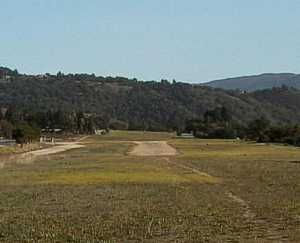 Almost on cue last year, a wildfire at nearby Big Sur demonstrated the strategic importance of the Carmel Valley Vintage Airpark. The California Department of Forestry used the airport as a staging area to refuel firefighting helicopters at the field. "The Carmel Valley Fire Protection District has come out publicly in support of the airport because of these reasons and because of the role it plays in emergency preparedness," Hand told AVweb. "In addition, the Monterey County Office of Emergency Services considers it a useful landing zone for small fixed wing planes and all sized rotary wing aircraft for many disaster scenarios. The head of OES (the Office of Emergency Services) has assured me of this, but we are still waiting for a letter of public support."
Hope For The Future
Today, de Jounge and his group are fighting against time. Ideally, they are looking for a buyer or a small group of buyers to purchase the airport with the idea of preserving it for public use. There are currently three lots of record on the property in addition to the runway. A trail runs along the property’s edges where local residents walk their dogs or simply walk themselves. This Saturday, Santa and Mrs. Claus will arrive via airplane for the 41st Annual Santa’s Fly-In. Don’t miss it if you’re in the area. It could be the last flight for Carmel Valley’s beloved Santa. At AVweb, we certainly hope not.
Editor’s Note: AVweb will continue to monitor and report on the fate of the historic Carmel Valley Vintage Airpark. |
