



















If aviation has one unforgivable sin, it’s running out of gas. But every year, a surprising number of pilots do just that. What’s truly amazing is the number of flights that make it to within two miles of the end of the runway before theengine quits. Just two miles. In the bright light of hindsight, we all agree that cutting the fuel that close is dumb. But it happens with depressing frequency. Why? Probably because many of us really don’t think much about a fuel management strategy. To save the hassle of studying performance charts, wesimply carry two or three hours of extra fuel and let it go at that. This approach works but it’s not always efficient and if you fly IFR enough, you mayfind yourself cutting the fuel more closely.
I like to think of fuel in the same way I think about money. As an aircraft owner, I’ll take the time to shop around for the lowest interest rate on an airplane loan and the best buy on avionics. I want my money to go as far as possible. Fuel’s the same way. Rather than simply pumping an extra 40 gallons aboard, I’ll try devise an overall fuel strategy that gets me where I’m going as cheaply and as safely as possible.
How could you run out of gas?
Although it really shouldn’t happen, instrument pilots get into fuel trouble for the same, predictable reasons. Among them are amended clearances that add miles to the route, altitude restrictions that put the airplane into strong headwinds and just mistaken calculations. Throw in arrival delays caused by unforecast weather and a diversion to your alternate, and a 45-minute reserve begins to look pretty slim.Consider too the notorious inaccuracy of general aviation fuel gauges. Some read high. Some read low. Some can’t make up their minds. If the tanks aren’t topped, you’ll be tempted to rely on the gauges as the true measure of how muchfuel you really have. Resist the temptation.
Here are a few things the prudent pilot can do to skew the odds in his or her favor. First of all, never assume that you have as much usable fuel as the aircraft manufacturer says you should have. Tank sizes have been known to vary from the book specs. Unless your aircraft is perfectly level during refueling and the line attendants completely fill every tank, you’ll have less than full fuel. It could be a little less or a lot less. To get an accurate sense of whatthe tanks hold, top them carefully with the aircraft on level ground and recordthe totals over several flights. My Cherokee Six has four fuel tanks, with a supposed usable capacity of 84 gallons. I figure there’s one less usable gallonper tank so I plan on 80 gallons.
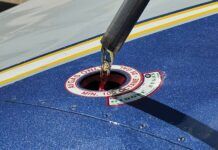
If you can’t top the tanks and don’t know how much is aboard, don’t rely on thegauges. Instead, use a sight-gauge to dip the tanks. Sporty’s (Clermont Airport, Batavia Ohio, 45103, 800-543-8633) sells them for $9.95. They can calibrated for any aircraft.
You can learn about fuel consumption (and, indirectly, engine health) by keeping an accurate fuel log. Try to figure the exact amount you’ve burned on every flight, then predict how much each tank will take at the pumps. For my Cherokee Six, I know that I can count on two gallons for start, taxi, and takeoff and that each thousand feet of climb will cost an additional gallon. At 65% power, I know from experience (not the book) that I’ll burn 12.7 gallonsper hour in cruise, with 7 gallons per hour on the way down at cruise airspeed and a 500 feet-per-minute rate of descent. My estimate is usually within a few tenths of a gallon for each tank.
Plan on the ground
The 45-minute IFR fuel reserve is the absolute minimum the law allows. Treat itaccordingly and think it through before takeoff. The cockpit is no place to make decisions; there’s just too much going on. Make your decisions on the ground, then all you have to do in the air is follow through. Besides, it’s a lot easier to think at 1g, zero knots and zero feet. My minimum landing fuel isan hour an a half worth of normal cruising time, beyond the alternate.If anything occurs to suggest that I’ll arrive at my destination or my alternate with less than 90 minutes of fuel (20 gallons in the Six), I land somewhere closer and refuel. This rule is chiseled in granite. If I use any of those 20 gallons, there had better be a good reason and it better be something beyond my control.
And what does this plan cost me? Actually, very little. If I subtract my 20-gallon landing reserve from my 80 gallons of usable fuel, I’m left with 60 gallons. Allowing for climb and descent, that works out to about 4.5 hours fromtakeoff to touchdown. Even if my alternate is an hour from my destination, thatstill gives me 3.5 hours enroute. And even in the spacious comfort of the Six, 3.5 is about as long as I want to stay in an airplane.
What if
It’s a cruel fact of life that even when you’ve done everything right, the godsmay still deal you a bad hand. During these trying times, you may have to fall back on some fuel-survival skills. I’m always surprised at the number of pilotswho aren’t aware of the speeds to fly for best range and best endurance. But then again, these are easy things to forget. After all, you hope never to have to use them.I was reminded of how important fuel efficiency is while flying on the wing in an F-16 a couple of years ago. We were at 12,000 feet over Germany in some particularly nasty winter weather. Fighters and transports were stacked up all over the place. ATC was maxed out.
Our flight had been given a delaying vector away from the base. I was struggling to maintain position and knowing that my fuel state wasn’t too sterling didn’t help. You can imagine my surprise when I glanced at the airspeed indicator and saw that we were at 450 knots! We were flying farther from where we wanted to be and at breakneck speed.
My flight lead and I had a long talk afterwards. We decided that there were only two appropriate speeds to fly while enroute to or from the practice area: Maximum range or maximum endurance. Obviously, when we were given the delaying vector away from home, we should have been flying at the maximum endurance airspeed since we were only marking time. No sense hurrying when you’re just gonna have to reverse course and fly right back through the same chunk of sky.Then, once we were cleared inbound and actually going somewhere, we could accelerate to the maximum range airspeed. The F-16 is a marvelous machine in this regard. The computer will tell you exactly what airspeed to fly for either of these options at whatever the aircraft’s weight happens to be.
That’s all well and good for some jock on a broomstick with a few million in avionics onboard. But what about the average Joe-bag-o’-doughnuts in his Piper or Cessna? Sure would be nice if all he had to do was punch some numbers into acomputer and get the speeds he should fly for max range or max endurance.
In lieu of that, one good rule-of-thumb is that best range occurs at the bestrate of climb speed (Vy) plus 15% and that best endurance is right at Vy.
If you’re so inclined, you can figure a real-worldbest range airspeed from the airplane’s performance manuals by calculating fueleconomy in miles per gallon. To do this, simply divide the true airspeed by thefuel flow for various airspeeds, then pick the airspeed that gives the best economy. Since manuals are sometimes optimistic about both speeds and fuel burns, you should check your results against the speeds and fuel consumption you’re actually getting.
Best endurance in level flight corresponds to the lowest fuel flow required to maintain level flight, without regard to distance flown. You can use the rule-of-thumb or simply determine the best endurance speed empirically. Just incrementally reduce power to the minimum required for level flight with flaps and gear up. Give the airspeed a chance to stabilize between power changes. If you slow to the point of having to add power to maintain altitude, you’re on the back side of the power curve and you need to speed up a little. In practice, for the sake of controllability, you may want to fly a few knots faster than your empirically derived max endurance speed.
You’ll probably find that the empirically derived max endurance is slower than Vy and if that suits you, go ahead and use it. Whatever speeds you decide upon,mark them on the airspeed indicator. I did this with blue pinstripe tape, whichI bought from a hobby supply store.
When the wind blows
In still air, you could simply pick the appropriate regime–best range or best endurance–to suit the circumstances. Unfortunately, the air is never still. You have to compensate for winds. Max range is achieved at a higher airspeed when experiencing headwinds and at a lower airspeed in tailwinds. Just rememberthat you want to minimize your time in a headwind and maximize your time in a tailwind.Here’s another rule-of-thumb: For maximum range, increase your airspeed above the still-air max range speed by 50% of the headwind component. For a tailwind,decrease your speed by 25% of the tailwind velocity. Although winds have a profound effect on max range, it’s interesting to note that in piston airplanes, altitude has only a minimal effect. The ratio between speed and power required remains fairly constant as altitude increases. So if you’re ableto choose your altitude, go for the one with the most favorable winds.
Altitude does have some effect on endurance. Flight at lower altitudes requiresless power and therefore uses less fuel for a given amount of time. The implication is clear. For max endurance, choose the lowest safe altitude available, consistent with obstacle clearance. Also, take into account that youmight want to glide to flat ground if you run completely out of fuel.
The last two miles
There will be times when, even though we’ve kept that hour and a half in our hip pockets, we’ll be overcome by events and fuel will become a priority. The only smart thing to do is to begin fuel conservation as soon as anything out ofthe ordinary happens. And consider issuing a minimum fuel advisory to ATC or, if the situation warrants, declare an emergency.If you’re worried about fuel and you’re given delaying vectors or holding instructions, don’t race around at the speed of light. Slow down to whatever best endurance speed you’ve decided works best. If you’ve had to divert to youralternate only to discover that the aircraft ahead of you on the approach just landed gear-up, and they’re sending all traffic to Moose Lips Muni, reduce the power and fly at the best range airspeed.
