


















 Way back when the CAA (predecessor of the FAA) decreed that forty hours of training and practice wasa sufficient amount of experience and training for the PrivatePilot Certificate, it no doubt was. In fact, it was easy to preparea student for the responsibility of the Private Certificate withinthe allotted forty hours, thirty-five under FAR Part 141. However,I wonder if this is any longer a valid minimum amount of timefor the training required today. Both the equipment and the airspacehave become infinitely more complex. It is amazing to me thatanyone can master the airplane and learn the mountain of stuffthe student has to acquire today before he or she is ready toassume the responsibility of commanding an airplane with passengersaboard.
There is not a single instructor or flight school with which Iam familiar that is willing to say that forty hours of trainingand practice is sufficient to produce a competent private pilot.I am sure that one hundred percent of the aviation education community recognizes this fact, but in order to convince the public thatflight training is affordable, they cling to the unrealistic fortyhour minimum. And, on the subject of affordability, anyone whothinks the investment in flight training today is outrageous,just compare what inflation has done to other things. When I wasgrowing up and flight training was $8.00 per hour for dual instructionand $6.00 per hour for solo, a single dip ice cream cone was 3cents and a double dipper was a nickel. The last ice cream coneI bought cost three and a half dollars! In those days an adultadmission to a movie was 33 cents as compared to $8.00 today,milk was 11 cents a quart and gasoline for an automobile was 15cents a gallon for regular and 17 cents for Ethyl. So on a percentagebasis, flying is less expensive than ever.
Not good airplane manipulators
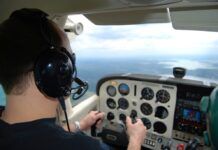
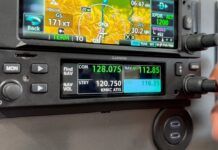
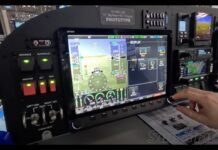
Back when the J3 Cub and the 7AC Champ were the primary trainers,the majority of the training time was spent getting the studentto work his or her hands, eyes, and feet together to make smooth,coordinated maneuvers. Today, we must teach our students to keepthe airplane upright by reference to the flight instruments, andwe must teach the use of avionics for communication and navigationas well as a myriad of other relatively new stuff. We’re certainlyturning out better, more knowledgeable pilots now thanwe were then, but, on the whole they are not nearly as good airplanemanipulators. Of course, they don’t have to be that goodsince the airplanes of today are designed to be much more stable.Pilots can and do get away with some pretty sloppy flying, particularlywith respect to rudder usage. Many of today’s pilots, who learnto fly in a modern trainer with a “training wheel” outin front, simply plant their feet firmly on the floor and drivethe airplane through the sky as if it were an automobile.
When the Recreational Pilot Certificate first came out I thoughtthis was a foolish move on the part of the FAA. Who would wantsuch a restrictive certificate? However, on more serious reflection,perhaps there is merit to the thing after all. I simply cannotbelieve I am doing this-sitting here extolling the virtues ofthe Recreational Certificate. However, I have long been concernedwith the increasing sophistication of the airspace in which weoperate and the effect it has on restricting the activity of thebasic VFR pilot. I have always maintained that there must be aplace for the fair-weather, Sunday afternoon flyer who enjoystaking a friend along on a pleasant airplane flight. But, they’repushing this poor guy out of the sky. It appears that the RecreationalCertificate may offer a solution for this kind of pilot. And,he can be just as serious and safe an aviator as the ATP operatingone of those flying condominiums across the big puddle. There’sno rule mandating that the airspace be reserved for the professionalpilot who earns his living by shoving tons of metal around thesky. In fact general aviation pilots far outnumber air carrierpilots.
Recreational Certtificate an End in Itself?
Although the FAA pushes the Recreational Pilot Certificate asa stepping stone along the way to the Private, there is most definitelya place for this certificate as an end in itself. There are lotsof people who enjoy flying in light aircraft. You know who I mean,those who go out on Saturday or Sunday and take a friend withthem for the one hundred dollar hamburger. For this individual,the Recreational Certificate is all he or she ever requires. Forthese people the burden of acquiring the additional knowledgefor the Private Certificate is a total waste, and may just beenough to discourage them from flying altogether. And, this issomething I would hate to see happen. Thus, it is possible thatthe Recreational Certificate may offer a solution for the individualwho enjoys this kind of aviating.
Of course, I can see it now. The dear old Feds will be pushingall those who hold Recreational Certificates to go forth and acquirea Private Certificate, just as they are now pushing every certificatedpilot to acquire an instrument rating, whether or not he or sheever intends to use it. But, that’s another subject altogether.However, if I may be permitted to digress for a moment, let mepoint out something that has been happening and I fear will getworse. Prior to 1957 there was no requirement whatever for a privatepilot to have any instrument training whatever. We used to tellour students, “See that cloud over there? Go in that cloudand you’re gonna die!” Scared ’em into staying out of IMCis what we did. Then, by giving them a smattering of instrumenttraining (theoretically enough to keep the airplane upright whilethey got out of any IMC into which they may have blundered), Ifear we began to instill a false sense of confidence in the studentand private pilot.
And now, with the recent changes in FAR Part 61 requiring evenmore instrument training, I fear that the situation will becomeeven worse. The balance between teaching flight students to getout of IMC if they should inadvertently blunder into it and permittingthem to acquire a false sense of confidence is questionable. Iwonder if it is worth it? What do you think? I’m open-mindedon the subject, but I think these are valid concerns.
Forty hours woefully inadequate
The FAA has long recognized that the forty hour minimum experiencerequirement for the Private Pilot Certificate is woefully inadequateand over the years several attempts have been made to increasethis minimum to a more realistic number. However, the manufacturers,who until a few years ago were building basic training airplanes,along with the flight schools, put up such a howl that the proposalswere dropped. With the current emphasis on, and the requirementfor, an increase in the amount of instrument training in the privatecurriculum, the situation is likely to get even worse.
Now, with the availability of the Recreational Pilot Certificate,there is no excuse for maintaining the forty hour minimum experiencerequirement for the Private, particularly in those cases in whichthe Recreational Certificate is used as a stepping stone on theway to the Private Pilot Certificate and advanced certificatesand ratings. If the minimum experience requirement for the Privatewere to be raised to a more reasonable sixty hours, say, we wouldno doubt see a substantially greater number of students applyingfor Recreational Pilot Certificates and using this as a sort oftemporary stage as they work their way up to the private and beyond.
Better pilots
And, they would be better pilots for it. At the very least theywould be much better airplane manipulators. In the interim theywould be gaining experience and their piloting skills would beincreasing. It is my understanding that the primary reason forretaining the forty hour minimum of training and practice forthe Private is to keep the supposed investment in the certificate low enoughto continue to attract student pilots, but since the investmentin a Recreational Certificate is theoretically even less, thatis no longer a valid reason for retaining the forty hour minimumfor the Private.
And, as long as we are on the subject, I also saw no need to increase the requirement for the CommercialCertificate from 200 to 250 hours. Of course, formerly the Commercialwas a sort of glorified Private, but a few years ago the FAA quiterightly decided that if a pilot intended to earn his or her livingas an aviator and carry passengers for hire, he’d better be ableto safely operate complex machinery in today’s sophisticated airspace,but 200 hours of training and practice ought to be sufficient.
Next month we will be discussing the unacceptable rate at whichpeople quit flying, both those who drop out during the trainingprocess and those who quit after having acquired certificatesof various grades.
In most cases, someone else has already gained the experienceyou need the hard way-keep an eye out!
