

























Top 10 AviationNews Stories | Awards of Distinction | FinalFlights
The Top 10 Aviation NewsStories of 1999
10.TheDecline In Airline Service/Air Rage
9.TheAir Traffic Control System
Showing signs of its age and increasing frailty, the U.S. ATC system got plenty of coverage in 1999. Among the most-discussed symptoms were delays, with the FAA, controllers and carriers each pointing the finger at one another. Preliminary data for the first eight months of the year showed delays running 19.5 percent ahead of the same period last year. National Air Traffic Controllers Association (NATCA) President Mike McNally acknowledged that controllers were having a difficult time assimilating new equipment, but he also faulted airline scheduling practices for some of the problems. “You can’t schedule everyone to take off at 7 o’clock,” he said. At the same time, carriers were being called on the carpet for pointing to the ATC system as their seemingly-Pavlovian response to any questions about delays. The FAA’s response to questions about delays? “Weather.”
8.The”Year of Aviation”
“The Year Of Aviation” was all hype and no substance when it came to the federal budget process. The U.S. House of Representatives did its job, by passing an FAA Reauthorization bill that sought to finally open up the user tax-fed Aviation Trust Fund for, of all things, aviation projects. However, common sense was waylaid once the Senate got involved, and for a brief moment, it appeared not only would the bill fall in defeat, additional taxes would be imposed on aviators, as well. Luckily, Rep. Bud Shuster (R-PA) pulled the plug on the already-dead patient, perhaps leaving its reincarnation for later this year. Don’t hold your breath, though.
7.Litigation
It is common knowledge that the biggest reason airplanes are as expensive as they are is their built-in cost of litigation. With a legal system that allows people to sue an airplane maker for negligence after the pilot drops stone cold dead of a heart attack and the little airplane putters slowly down into a house, when will it all end? No time soon, apparently, and lawsuits will continue to shape the way we all conduct business. Two particular 1999 lawsuits could change things even more. Whether you agree or disagree with officials in Newark, N.J., the lawsuit the city filed against the Jacoby estate will have us all questioning our next takeoff into IFR conditions. In the same way mountain rescue units charge for searches and some police departments charge for false alarms, this could lead other cities and counties to hold a pilot’s family responsible for damage from a crash. In another case that could have long-term implications, a CFI in Akron, Ohio, was sued after a student crashed while doing solo touch-and-goes. The student, who plowed into a cornfield and suffered leg and facial injuries, claims his CFI’s negligence contributed to his short landing. CFIs in the area say the suit cast a pall over the region, making them scared to teach. In the future, perhaps a “Hold Harmless” agreement before each flight?
6. EgyptAir990
Perhaps the most lasting lessons to be drawn from the EgyptAir 990 tragedy – the crash of a Boeing 767 in the Atlantic Ocean with the deaths of all 217 aboard – involve leaping to conclusions before all the facts are in. First, it was the general media, whose frenzied speculation focused on everything from thrust reverser deployment to terrorism (it was a Middle Eastern carrier, after all…). Before too, long, though, even the NTSB got into the act, with someone leaking to the press tidbits from the FDR and CVR readouts that led investigators to conclude that one of the flight’s first officers deliberately flew the big Boeing into the ocean. Then, the board even went so far as to prematurely publicize that the FBI was taking over the investigation, based on the F/O’s alleged actions. But, it seems, no one took the time to get the Egyptians on board with that concept, which resulted in a diplomatic situation and the NTSB’s eventual retention of responsibility for the probe. The investigation continues.
5.NewAircraft
In news that can only be good for GA as a whole, Cirrus Design is flying high. An SR20 production prototype crashed in March, killing much-loved test pilot Scott Anderson. The close-knit Cirrus family was crushed, but plugged on, finding and correcting the aileron problem that appeared to cause the crash. Since that dark March, at least eight SR20s have rolled off the lines, and customers at Oshkosh couldn’t wait to get on the list for a brand new pretty themselves. At last count, more than 420 customers have signed up and put money down on the little bird that could. Diamond Aircraft introduced a new version of its venerable Katana series, the -100, even as its new four-seat version underwent a comprehensive flight-testing program. Cessna set new records for bizjet sales, while forging ahead with production and customer acceptance of its “new” single-engine line. Similar news emanated from Raytheon’s Beech Aircraft unit, the New Piper factory, Mooney Aircraft and just about every other airframe manufacturer, large or small. Too, completely new designs abounded, including the soon-to-be-ready Lancair Columbia 300, plus a passel of mold-breaking designs like the Groen Brothers’ Hawk gyrocopter, the Moller Skycar, the CarterCopter and many, many others. With so much “in the pipeline,” it’s an exciting time to be involved in aviation.
4.Safety
Pilots and crews continued to find new and interesting ways to bend sheet metal and make headlines. Despite 1998 being one of the safest years ever for GA and airlines in the U.S., several high-profile crashes around the world raised questions about air safety. Yes, the drive to the airport is still the most dangerous part of the trip, but it’s hard to make sure that laymen understand that. In fact, more people died walking in front of trains in 1998 – the most recent year for which figures are available – than died in U.S. aviation accidents. Still we can do more, and we may be forced to do more when high-profile GA accidents (JFK Jr., Payne Stewart, Gary Levitz, Wayne Handley, Laird Doctor, etc.) occur.
Then, there was EgyptAir 990, which crashed in the same waters as TWA800; AA1420 ran off the end of the runway at Little Rock, Ark.; Korean Air’s continuing mishaps; Taesa’s DC-9 apparently exploding; a U.S. Navy Blue Angels crash on approach to Moody AFB and too many more. Let’s all agree to get through 2000 safely and meet back here next year, okay?
3.Bad FAA Enforcement Ideas
While the FAA has never been known for its even-handed application of the FARs nor for its common-sense approach to regulating aviation, 1999 saw three events that make the cut. First, and one inherited from 1998, is the so-called “ticket program,” or Streamlined Administrative Action Process. After widespread opposition throughout the industry to its original plan, the FAA finally backed down, removing from its proposal the most onerous features. Still, many questioned the need for such streamlining when what was really needed was just the common sense that seems so sadly lacking throughout the agency.
The second bad enforcement idea to come from the FAA during 1999 was the interpretive rule on pilot readbacks, a policy statement warning pilots that if they read back a clearance incorrectly, even if the air traffic controller does not correct the error, any violation is still the pilots’ fault. The FAA could take the incorrect readback into consideration when setting the sanction, but “the simple act of giving a readback does not shift full responsibility to ATC and cannot insulate pilots from their primary responsibility under 14 CFR 91.123.”
Last but not least was the example of the FAA inspector who NOTAMed out of service the GPS approach to Driggs, Idaho. The inspector had come to Driggs for something totally unrelated to the GPS approach and asked locals whether the desk on which altimeters were positioned had been surveyed. The FAA had just spent about $3 million at Driggs, including surveying and resurfacing, so the desk’s height was known to within about a foot. Wrong answer. Luckily, the procedure was put back into operation a couple of weeks later.
With friends like this, who needs enemies?
2. The Civil Air Patrol
It seemed to be all-out warfare within the Civil Air Patrol this past year, with friendly fire claiming as many victims as skirmishes with the “enemy.” After a year that included FBI raids, the resignation of Executive Director Paul J. Albano Sr. and others, a congressional battle over CAP control, wing groundings and general contention within the ranks, AVweb is forced to conclude that watching CAP is, indeed, better than “CATS.” This story will continue into 2000, as the U.S. Air Force continues to push for changes in the laws supporting the CAP, an internal paperwork audit is ongoing and the General Accounting Office is supposed to step in.
And, the number-one aviation news story of 1999…
1. Maintenance
First it was Lycoming piston pin plugs. Soon, it was TCM crankshafts. Later, T-34 wing spars. Finally, turbocharged twin-Cessna exhaust systems. Keeping general aviation aircraft in the air proved a challenge in 1999 as most of the fleet got another year older and a lot of owners got wiser, if poorer. As our numerous stories demonstrated, manufacturers sometimes got caught flat-footed and were forced to play catch-up. Some did well; others did not. Additionally, the FAA put forth two proposals to modify its own rules addressing maintenance. One, the ill-fated FAR Part 66, sought to replace the existing Part 65 with a two-tiered mechanic certification system that nobody liked. This one was wisely round-filed. The other, a re-write of FAR Part 145 dealing with repair stations, also drew fire. Among other things, the proposed FAR 145 would require repair stations to adhere to strict new standards for facilities, training, required equipment and record-keeping. Look for maintenance issues to continue as a top story in 2000, also.
AVweb‘s1999 Awards of Distinction
1999 brought its own set of “stupid human tricks,” new highs in silliness and new lows in attempts to do damage to aviation, plus several that fall somewhere in between, proving once again that those involved with aviation continue to do interesting, embarassing and sometimes downright inexplicable things. As always, we call ’em like we see ’em.
Slow-Motion Crash Award
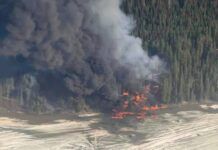
To Goodyear, whose blimp “Spirit of Akron” went down in woods south of Akron, Ohio, in what company officials called a “controlled descent.” The two crewmembers aboard escaped with minor cuts and bruises. The pilot, Gerald Hissem, reported computer problems and dumped an estimated 150 to 200 gallons of kerosene fuel before he slowly guided the deflating blimp nose down into the woods. The descent left the front part of the blimp envelope collapsed and its tail sticking up over the treetops. Goodyear said it can probably salvage most of the blimp’s components.Best Formation Landing Award
This award’s hands-down winner is Alan Vangee, a CFI who suddenly found himself saddled with the prospect of landing a Cessna 152 with a Piper Cadet perched atop it after a midair collision on final approach to the Plant City (Fla.) Municipal Airport. All three aboard both planes walked away from the event. If we gave a “Nerves of Steel” award he should get it, too. Since as far as we can tell, Alan has logged the most time in a 152 carrying another airplane piggyback, AVweb‘s Joe Godfrey asked him for some details about the event. You can read what Vangee had to say to Joe in a special AVweb Profile.Poetic Justice Award
Back in November, two press releases from the Department of Transportation caught our eye. One trumpeted Transportation Secretary Rodney Slater’s announcement of a final rule revising inspection and maintenance standards for steam locomotives – that’s right, steam locomotives. The other invited “boys and girls in grades 1-8, to craft poems about transportation in hope that their writings will inspire them to get ready for jobs in transportation.” AVweb was intrigued by the Secretary’s efforts to use poetry to help get today’s youth involved in the transportation systems of tomorrow and asked AVweb readers to submit their best efforts at poetry supporting Secretary Slater’s efforts. At long last (hey, we’ve been busy, too…), AVweb presents the results from that contest.Worst Performances By Public Officials Award
We could have come up with a Top 10 list in this category alone but decided that giving that kind of attention to so many politicians with questionable motives, no new ideas and no common sense whatsoever would just put a damper on things. Still, we must submit this altogether too-lengthy list:U.S. Senator Pete Domenici (R-NM): His shortsighted and politically-driven refusal to either allow meaningful Aviation Trust Fund reform or offer an alternative that came close to that supported by an overwhelming majority of the U.S. House of Representatives doomed the FAA reauthorization bill. As one Senate staffer told the National Journal in the aftermath: “We’re putting the game into extra innings. This is so much fun.” Riiiight…
U.S. Senator Christopher Dodd (D-CT): Dodd got his 15 minutes of fame in 1999 by browbeating domestic air carriers into taking the time to fill out and return to the FAA a Y2K-bug preparedness survey that the FAA originally designed as voluntary. He even went so far as to publish the names of non-respondent carriers in the Congressional Record. Now that Y2K has arrived, was it worth it all, Senator?
Atlantic City (N.J.) Mayor James Whelan: Thousands of polite, relatively well-dressed people quite literally descend on your city looking to pump millions in local coffers. What do you as a city official do? If you are Mayor of Atlantic City, New Jersey, the correct answer is, “Be rude to them and invite them never to return.”
Newark (N.J.) Mayor Sharpe James: As if the tragedy of the Itzhak Jacoby crash wasn’t enough, the City of Newark, N.J., added its own form of insult to his loss by filing a multimillion-dollar lawsuit against his estate less than a week after his death. The mayor said, angrily, that he was forced to file the suit when he learned no federal disaster aid was forthcoming.
Worst PR Stunt Award
This dubious honor goes to – drum roll, please – none other than former DOT inspector general Mary Schiavo for a television ratings-inspired bomb scare at the Port Columbus (Ohio) airport. It seems “someone” checked a bag with her name on it but then didn’t show for the flight. Security personnel shut down the America West concourse and a nearby runway for four hours while a thorough search – including X-rays of the luggage – was conducted. The X-ray process discovered what appeared to be bomb components but what was instead reported to have been a tape recorder, an alarm clock, a can of hairspray and wiring. Columbus, Ohio, TV station WCMH said that Schiavo, who resigned her DOT post in 1996 after highly visible disagreements with the FAA over aviation safety, checked the bag as part of a story on airport security the station was doing.
Non-Story Of The Year Award
The so-called Y2K bug. Need we say more?Most Enthusiastic Recycling Award
An employee smashing crates so the wood could be recycled accidentally destroyed three new 737 rudders at Boeing’s factory in Renton, Wash. Using a heavy weight, the employee was smashing what supposedly were used crates in the “Reclamation Area” of the plant recently when he discovered the newly-created remains of the rudders inside three smashed crates. Boeing officials were not sure how the unmarked crates, apparently from subcontractor Rohr Industries, were put on carts identifying them as ready for disposal. The rudders cost an estimated $500,000.
Rich Uncles We Wish We Had Award
To American businessman Steven F. Udvar-Hazy, the president of the world’s largest aircraft leasing company, International Lease Financial Corp., who is donating $60 million towards the Smithsonian Air & Space Museum’s annex to be built at Dulles International Airport outside Washington, D.C. The gift is part of a $130 million campaign to pay for the Dulles annex, which will house the largest spacecraft and airplanes in the museum’s collection. When completed in 2003, the annex will be about four times the size of the museum on the Mall in Washington, D.C., and large enough to hold acquisitions that the Smithsonian has been unable to display to the public.“Does This Seat Go Back?” Award
Have you ever felt like handing someone ten bucks and telling them to get a hotel room? Imagine, then, being trapped next to an amorous duo in the cramped quarters of a plane where no amount of money can buy privacy. Two passengers aboard a transatlantic flight downed enough booze to embarrass themselves for years to come. Greeting card exec David Machin, and computer company exec Amanda Holt, had apparently not met prior to their flight of hot lust, and refused to stop even at the pleading of flight attendants. “Nothing and no one could have stopped them. It would have taken a bucket of cold water,” an American Airlines rep said. We know the couple’s mothers would be proud.Over-Hyped Stories Award
This one was no-contest: JFK Jr. and Payne Stewart. Both tragedies received much more attention from the general media than they warranted, with idle speculation from clueless talking heads ruling the day. In the former case, major television networks abandoned their normal programming for most of the weekend before which JFK Jr.’s New Piper Saratoga crashed into the Atlantic Ocean – despite the overwhelming lack of news. Sadly, that coverage almost uniformly displayed an overwhelming lack of knowledge about general aviation with its speculation on whether the plane’s flight data recorder would ever be found, etc. The few bright spots in that coverage – which included AOPA staff and King Schools’ John King – were much too far between. Similar – albeit not as all-consuming – coverage was afforded the crash of a Learjet 35 carrying championship golfer Payne Stewart and five others. We in GA have much more work to do if the general public is ever to understand this industry.
1999’s Final Flights
One of the saddest duties AVweb performs is to report the passing of aviation notables, some of whom gave their all to promote flying in all its forms, and some of whom lost their lives doing what they loved. What follows is a too-short and hardly-complete list of people who took their final flights in 1999. We are poorer for their passing, but much richer for having known them, and we all will continue to benefit from their contributions.
Vice Adm. Donald D. Engen, USN (Ret.)
 As a former Navy admiral, aircraft manufacturing executive, NTSB member, FAA administrator, president of the AOPA Air Safety Foundation, and, at the time of his untimely death in a glider accident, director of the Smithsonian’s National Air and Space Museum (NASM), Don Engen leaves behind many legacies. Foremost among them is the lesson that nice guys can and do finish first, for he was a gentleman in an industry – and a town – where few of his demeanor thrive and even fewer remain. After a successful career in the U.S. Navy spanning WWII, Korea and Vietnam, perhaps two events best portray Engen’s character, wisdom and patience: His resignation as FAA administrator in the wake of then-Secretary of Transportation Elizabeth Dole’s ceaseless meddling with the agency and the deftness with which he refocused a NASM mired in indecision and political correctness over how to display the Enola Gay, the B-29 that dropped the first atomic bomb. His lasting contributions to aviation will, eventually, find their summation in the yet-to-be-built Dulles Annex to the NASM, a facility that rightfully should bear his name.
William S. (Bill) Ivans
Ivans achievements – he was a past president of the Soaring Society of America and had won numerous awards for soaring – were overshadowed by Engen’s loss: They both died in the crash of Ivans’ Nimbus-4DM motorglider near Minden, Nev. Ivans was a soaring pioneer who had won awards for high-altitude flights and had been deeply involved in the Soaring Society of America, later becoming an Honorary Vice President. Shortly after his death the Soaring Society of America’s board of directors unanimously approved a new award in his name to “recognize significant contributions by individuals or groups to the furtherance of the sport’s political affairs or sporting governance.”
Itzhak Jacoby, M.D.
A well-respected, ATP-rated pilot, flight instructor and physician known for his knowledge of the Bonanza and for his piloting skill, Jacoby was also known for his work with the American Bonanza Society, where he was a frequent contributor to the society’s magazine, and also made presentations at Bonanza Pilot Proficiency Programs, for whom he was a core instructor. Which made the crash that killed him, his wife Gail, and their 13-year-old daughter Atira all the more mysterious. All three died the day after Thanksgiving when Jacoby apparently lost his gyros during an IFR departure from Linden, N.J., and crashed onto a street in Newark.
Pete Conrad
Charles “Pete” Conrad Jr., 69, died as a result of injuries sustained in a motorcycle accident. As commander of the second lunar landing mission, Apollo 12, he became the third person to walk on the moon, following Neil Armstrong and “Buzz” Aldrin from Apollo 11. Conrad was also the only astronaut to yell “whoopee” on the moon. Upon taking his first step onto the dusty surface, the 5-foot-6 Conrad said, “Whoopee! That may have been one small step for Neil, but it was a heck of a long one for me.” Conrad’s space career spanned missions in Gemini 5 in 1965, Gemini 11 in 1966, Apollo 12 in 1969, and ended with a dangerous mission in 1973 to repair the Skylab space station.
Gary Levitz
Levitz, a businessman from Grand Prairie, Texas, had raced several aircraft during his career, which began in 1970, and had been a prominent member of the Confederate Air Force. He died when his unlimited racer, Miss Ashley II, suffered a structural failure – apparently losing part of its tail structure – and crashed during a heat race at the National Championship Air Races at Reno, Nev. Miss Ashley II was a custom-designed racer that flew on Learjet wings attached to a custom-built fuselage modeled on the P-51 Mustang. One of its signature design features was the use of the Rolls Royce Griffon engine with counter-rotating three-bladed props.
Dr. John Paul Stapp
Stapp, a retired U.S. Air Force colonel and space research pioneer known for his high-G rocket-sled rides, for which he was labeled the “fastest man on Earth,” died at the age of 89. You’ve probably seen him – every grade-B sci-fi movie and TV show from the ’50s incorporated a clip of his riding his rocket sled down the rails at 632 mph during his famous 1954 acceleration experiment. Strapped into his instrumented sled, he was brought to a stop in less than two seconds, sustaining a peak force estimated at over 40 G’s. The information he collected in 29 increasingly harsh rocket-sled rides during the 1950s proved invaluable in the design of spacecraft, ejection seats, automobile safety systems and aircraft cabins.
Scott Anderson
Cirrus Design chief test pilot Scott Anderson was well-known and respected in the Duluth, Minn., community, and his loss was deeply felt by everyone who knew him. Anderson died flying Cirrus Design’s first production SR20. The plane was undergoing its second day of test flights when Anderson radioed that he was having control problems and declared an emergency five miles from the airport. He was a major in the Minnesota Air National Guard, flying F-16s for the 148th Fighter Wing based in Duluth, and had logged nearly 3,000 flight hours in civil and military aircraft. He had earned degrees in mechanical engineering and history from Stanford University and had written three books, including “Unknown Rider,” a fictional account of a young man’s quest to become a fighter pilot.
Clem Bowman
The 1997 U.S. glider plane champion died when his sailplane crashed during its takeoff tow from the Minden-Tahoe, Nev., airport. Bowman, an air race competitor for more than 10 years, was killed when the horizontal stabilizer on his Genesis sailplane fell off, and the plane plunged about 100 feet to the ground. Bowman was among some 45 pilots and crews at the airport to take part in a practice run for the 1999 Standard Class Nationals competition.
Owen E. Hague
Hague was one of nearly 1,000 black aviators who passed through the Tuskegee Institute in Alabama during World War II to form a unit that was destined to serve flawlessly as escort for U.S. bombers. The unit flew some 200 missions, and not a single bomber was lost under their care. Through their example and record, it can be said that the unit served on another front as well – combating racism in the U.S. Hague rose to serve as assistant to the unit’s commander and retired from the U.S. Air Force after 20 years of service. He died at the age of 80 from kidney complications.
Steve Snyder
Snyder was the owner of the South Jersey Regional Airport (VAY) as well as president of the Air Victory Museum, which is involved in the restoration and display of numerous warbirds and is based at VAY. Among Snyder’s achievements was the first recorded baton pass between two parachutists – himself and Charlie Hilliard – while in freefall over Ft. Bragg, N.C., in 1958. Snyder died when the F-86 Sabre he owned and was flying crashed during a practice flight at VAY.
