


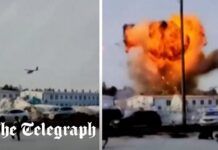


















A Thanksgiving day event in Kenya has led the U.S. government to warn airports that portable rocket launchers could be used to target commercial aircraft in the United States. Going one step further Sen. Bob Graham (D-Fla.), the top Democrat on the U.S. Senate Intelligence Committee, Sunday requested of the Bush administration immediate action to protect U.S. commercial aircraft. Launchers for two Strela SA-7 heat-seeking missiles, a 30-year-old Russian design, were found nearly a mile from Mombasa airport in Kenya after witnesses reported two missiles had been launched at an Israeli Arkia Airlines Boeing 757-300 (with 261 on board) from a four-wheel-drive vehicle. Both missiles missed the aircraft, although by how much depends on who you talk to — the pilots claim the missiles passed no closer than 100 meters, streaking off to the horizon, while at least one passenger claimed to have seen a small explosion over the aircraft’s wing. The close-range double-miss, plus the differing witness accounts, have led to speculation that the aircraft may have deployed countermeasures — such as flares — to evade the threat. Arkia has two Boeing 757-300s in its fleet and one served to carry Prime Minister Ariel Sharon to a meeting in Washington, D.C., in May. The state-run Israel Armament Development Authority earlier this year unveiled a commercial anti-missile system called Britening. Israeli air force commander Maj.-Gen. Dan Halutz said that countermeasure technology is available for commercial aircraft, but is only installed “on select ones.”
Last spring, an SA-7 was used by suspected Al Qaeda operatives to try to shoot an American plane as it departed Prince Sultan Air Base, south of the Saudi capital of Riyadh. In August, a Russian Mi-26 army transport helicopter flying in Chechnya was brought down by a Strela missile, killing 118 people. Some have suggested it’s only a matter of time …
Featured Video
Best Of The Web: Pure Power
The F-104 Starfighter was the pointy end of the stick on the front lines of the Cold War, and hundreds of them flew in...