

















It wasn’t really a bad day, just a little challenging. The wind was gusting to about 15 and it was bumpy. The clouds were solid at 3,000 feet, but the visibility was great. Students were working hard in the crosswind and the gusts, and a couple of pilots were sitting here in the Lounge drinking coffee rather than spending money to go get bounced around. About that time Harry landed, put his airplane away and came in to complain about life in general. We listened to him as he said the family had spent the weekend at their lake cabin but the ice was breaking up so he couldn’t do any fishing, and his wife won’t allow a TV in the place so he couldn’t watch professional wrestling. Then he discovered he hadn’t winterized the toilet correctly and had to spend hours cleaning up that mess. On top of all of that he still couldn’t get his wife and kids to ride up and back in the family airplane. He’d made it back in 55 minutes, while they would be on the road for at least two hours. His wife would arrive home in a terrible mood after fighting the Sunday afternoon traffic. He just couldn’t figure out why none of them would ride with him when the flight was so short.
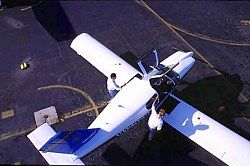 After our friend left, Everett, one of the instructors, gave a timeworn grimace and commented that nobody at the airport would ride with Harry, anywhere. I hadn’t flown with him so I asked Everett if Harry were dangerous. Everett’s response surprised me. “Harry isn’t dangerous at all, in fact he’s a heck of a good stick and rudder pilot and he flies instruments well, but he has absolutely no consideration for his passengers. He scares the bejabbers out of them with steep turns, rapid descents and bores on through turbulence down low trying to save time and gas when he could give them a smooth ride by climbing a few thousand feet. On top of that, he has taken them through terrible weather he could have avoided but he won’t divert even 20 miles. They think he has no respect for their feelings, he thinks they just don’t like airplanes.”
There were several folks present, some of whom nodded knowingly in the ensuing silence. Tina, about to take her private pilot checkride, spoke up, “Okay, hotshots, I want to give my husband and kids rides after I get my rating. I want them to like flying so that we can start using airplanes for family vacations. Is there some secret to it? It seems that a lot of your spouses won’t ride with you. What’s the deal?”
As is often the case here, the question posed started a discussion. There are some pretty knowledgeable folks who generally contribute, so I sat back and listened and tried to keep track of the suggestions that were made about how we can best share the passion we have for flight with others.
The First-Time Passenger
The unanimous consensus was to keep the first ride short. Whet the appetite rather than overwhelm your passenger. Especially for new pilots, there is a tendency to try and show all the wonderful things that have been learned in 60 or 70 hours in the air to the brand-new passenger/victim in one flight.
 A first flight, particularly in little airplanes where the passenger can see quite a bit, involves a huge number of new sensations. Depending on the passenger and his or her personal wiring, the new sensations vary from scary to fabulous. Some of the sensations may induce nausea. The result can be a passenger who begs for a longer ride or one who wants it to end right away. Keeping the ride short works well for all types of passengers – if they are nervous, they get back safely, quickly, so they can start to realize it wasn’t all that bad. The next ride can be longer. If they enjoy the ride they land wanting more, which is what you wanted in the first place.
If your passenger is one who may become nauseous, the short ride is best. Interestingly, there has been significant research into nausea. Those who are victims of motion sickness can build up a surprisingly high tolerance if the pilot will land before the person actually revisits lunch. The opposite is also true. If the person does the Technicolor yawn in flight, his or her tolerance drops on the next flight. I have a vivid memory of an aerobatic student of mine who had suffered severe motion sickness all his life. On each of his first three lessons all we could do was climb to altitude, do some Lazy-8s and then one loop. He started feeling lousy, so we would immediately return and land before he was more than just uncomfortable. On lesson four we got in three loops. On lesson five we did a full lesson for the first time. After that, we were always able to complete the planned lesson.
Time Of Day
You want the ride to be smooth, with minimal interruptions, so try to schedule it first thing in the morning. (Don’t let delays push the flight into the heat of the day, you’ll almost always be sorry.) The next-best time is about an hour before sunset. Most of the time the turbulence from the heat of the day has dissipated by then.
Prepare For The Flight
If possible, get to the airport/FBO well before your passenger. This will give you time to sort out problems that may have arisen. Okay, who has the keys to 04Q? Why was the airplane tied down with less than quarter tanks of fuel? Who left the master switch on? You know, the stuff that happens when you really want to fly. Arriving early gives you time to make sure the airplane is serviced and to do the things that need to be done at the airport before you take someone for a flight. It may be difficult to precede your passenger to the airport, however, one idea is to go to the airport, make sure things are in order, and then go get your passenger.
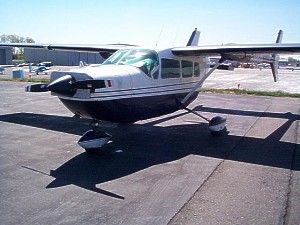 Make sure the airplane is clean inside and out. Do not present a grungy, run-down looking airplane to a first-time passenger. It presents the image that you don’t care. You want to show your friend that you are a safe, competent, concerned pilot. An airplane that is clean outside and in goes a significant distance to convey the message. The converse is also true.
Clean out the seat-back pockets. Get rid of the dirty paper towels, the ancient magazines, the gum wads. Make sure sick sacks are present and can be reached easily. Be realistic, they may be needed. Have them handy. That shows you are concerned for your passenger and plan ahead.
People have grown accustomed to cars that look attractive inside and out. They have the vague concept that airplanes are expensive. If it is expensive, it better be nice looking. It’s a perfectly reasonable assumption. Act accordingly.
For most airplanes you will have to run a weight-and-balance problem. Tactfully ask your passenger his or her weight, explaining why. On occasion a prospective passenger will ask if you want her or his weight while clothed or unclothed. It is considered somewhat poor form at that point to inquire, with a straight face, how the passenger intends to dress for the flight.
Flight Planning
Once you have determined the runway you are going to use, think of a route for a brief sightseeing flight. Cover an area that may be of interest to your passenger and will allow you to smoothly enter the pattern at a 45-to-downwind without a lot of maneuvering. Again, plan to keep the flight to about 20 minutes or so.
If you are going to use any charts or books or anything that you must keep handy during flight, get them all ready before you even go to the airport. New pilots tend to carry all sorts of junk to the airplane with them. Fumbling around in chart bags to get the masses of paperwork that seems to reassure new pilots does not reassure passengers. Have all of your stuff organized so it can be in place within a minute of getting into the airplane.
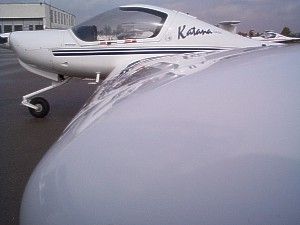 Even if you haven’t been able to get to the airport before your passenger, you want to prepare the airplane for flight in an efficient manner. As you do so, explain generally what you are doing and why. Your passenger will watch you do your preflight inspection. Point out that you do this to assure everything is working properly. Keep the tone positive. There is nothing in aviation we love more than black humor. We happily say things such as “gotta check the ailerons to see if they are going to fall off during this flight.” After all, we willingly tell our passengers to meet us at the “terminal” and when flying we turn onto our “final approach.” That’s fine between pilots but it does nothing to reassure the passenger. We are looking at the airplane to make sure everything is working correctly, rather than looking for something wrong. There may be no difference in the action itself, but the semantics mean a lot to a passenger where everything is new, different and who has seen on TV all about how these little airplanes will fall out of the sky with the slightest provocation.
Don’t take a half hour to preflight the airplane. Explain briefly what you are doing, but avoid getting interrupted in the preflight. Don’t worry about keeping your passenger amused while you divert your attention to making sure the airplane is in proper condition. He or she will watch with some interest. We all know of accidents that happened because a passenger interrupted a pilot as he or she was about to find out that the big bolt that held the airplane together had been removed. That’s why the commentators in the Lounge suggested getting to the airport ahead of the passenger and taking care of things. You can explain you did the preflight before the passenger arrived and proceed to boarding.
We are used to the gyrations involved in boarding little airplanes; the first timer is not. Take a moment to show where to step, what to avoid and why. Warn your friend about head and shin knockers. If the airplane involves some maneuvering to enter, say so, and point out that no one enters gracefully the first time.
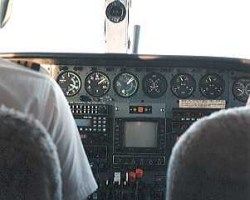 If the weather is cool and your passenger will be in a back seat, remember that the airflow in a general aviation aircraft is from the tail cone forward into the cabin. Yes, it really is, you can measure for yourself. For that reason it is always cooler in the back seat than the front. If your heater isn’t up to snuff for the rear seat riders, arrange for blankets. Make sure you have ridden in the back seat to see just how comfortable it is so that you can empathize with your passenger.
Once in the airplane, show your passenger that the seat belt buckle works differently than that in a car. Believe it or not, that is a significant matter. There have been some incidents that called for rapid egress and one or more of the passengers sat stabbing at nonexistent buttons in the buckle, as if they were trying to get out of an automotive belt. Show how the doors open and close. You are used to them, they are a mystery to your passenger. Show where the sick sacks are stashed and be professional and adult about explaining that if the urge expresses itself, use the sack. Glossing over this topic may cause you to be rewarded with a little present from your passenger, especially if your lack of consideration for his or her comfort also manifests itself in aggressive handling of the airplane.
Make sure your passenger can see out. Youngsters and shorter adults cannot see well out of general aviation airplanes. Be prepared with some pillows or some sort of a booster seat.
If you anticipate needing your passenger to participate in the flight, from holding a map to passing snacks, let him or her know prior to departure so the need does not come as a surprise once in the air.
The Headset
You don’t look like a hero in a headset. The combination of the bulging ear muffs and wires all over the place make all of us look pretty silly to the nonflying public, so explain that the headset is to protect your passenger’s ears and make it easier to talk to each other. Unless you really don’t want to hear from your passenger tell him or her that the microphone has to be kept close to the lips when speaking.
If you do not use headsets, be considerate and provide earplugs.
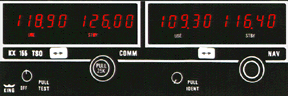 Radio communication over the headset will be confusing to your first timer. Take a moment to explain that it’s not necessary to know what is going on, but talk about it, in general, as is appropriate for your flight and the type of airport from which you are flying. Keep in mind that your passenger will be pretty alert, and, not knowing what the communications mean, will listen to the tone of your voice when you make radio calls. If you get excited you are going to worry your passenger. Keep all communications calm and professional. Waving your arms and flailing around as you reach for knobs and dials doesn’t do anything to reassure your passenger either. Keep your movements smooth and unhurried.
Checklist
Use the checklist as you normally do. Don’t bury your head in the cockpit using it as a how-to-fly book. You’ll terrify your passenger. Use it as the aid it was meant to be and briefly tell why you use it. Some years ago, my wife ran an FBO and was puzzled that the wife of one of her renter pilots would ride with every pilot at the airport except her own husband. The husband had a reputation as a very, very good pilot for his experience level. My wife finally asked his wife why she wouldn’t fly with her own husband. The response was that she didn’t think her husband knew what he was doing because he had to read the instructions on every flight and none of the other pilots had to do that. My wife suppressed her laughter, explained what a checklist was and why its use was an indicator of a good pilot. The couple began flying together. I hope it added to marital harmony.
In Flight
Explain briefly what you are doing and why, but don’t tell someone how to make a watch when the only question asked is the time. Don’t take ten minutes to start the engine, and then dawdle while doing your run up. Do let your friend know about the noises that are being heard and why you “rev up” the engine before takeoff (hey, that’s what all the hot shot reporters say). Again, tell why you do what you do in a positive fashion. Finish your chores in a reasonable time and go fly. I never have figured out the reason why some pilots take ten minutes to do a simple run up in a light single other than perhaps to give the passengers time to really get nervous as they watch the pilot repeatedly fiddle with this and that and drop their paperwork four or five times.
Once in the air keep it smooth. Make your banks shallow, no steeper than standard rate turns. Keep it smooth. Limit your descent rate to 500 fpm. Keep it smooth. Keep the ball centered all the time. By the way, really work at flying smoothly.
 Tell your passenger before you make power changes. Just reducing power from climb to cruise will cause some to think the engine is failing. Let your friend know that you are just reducing power for cruise and the sound level will change. Do the same thing prior to power reductions for landing.
There are a several things to avoid: While it is a good idea to fly over your passenger’s house if you can, do it at well over 1,000 feet and don’t roll into a steep turn right over the mansion. Under no circumstances demonstrate stalls. They scared you enough when you were learning them. Do not demonstrate the ground reference maneuvers for the private rating. Do not do steep turns. Do not try to show what a hero pilot you are by showing how to dogfight or strafe or buzz your passenger’s house. All of that sounds pretty basic, but, over the years, idiots have done just those things to first-time passengers. In most cases, they caused the passengers to walk away from a miserable flight despising aviation. In some cases, they and their passengers were killed.
By the way, if you are the sort of person who blurts out an expletive from time to time while flying, make a serious effort not to do it any time you have passengers. It simply does not promote their peace of mind.
Remember, the passenger you scare today may be on the community council that votes to shut down your airport tomorrow.
Once back in the pattern fly normally. Don’t extend the pattern over the horizon or do a power-off spot landing. Do your best to grease the landing, as, no matter what, that seems to be the thing the passenger remembers.
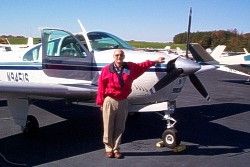 Once on the ground resist the urge to say something along the lines of “Cheated death, again.” Such comments bother a surprising proportion of passengers, and some will take you literally, thinking that they just got lucky this time and won’t want to fly again.
Afterwards, thank your passenger for riding with you and answer any questions you can. Secure the airplane and escort your passenger safely off the ramp.
Even if all went perfectly you may not have a new convert to aviation, but, if you did it right, you provided a very pleasant experience to someone and may have planted the seed for her or him to learn to fly.
What About The Family Trip?
I noticed that because of our friend Harry there was some additional discussion regarding how to travel with your family when going somewhere in an airplane. I think I caught most of the points that were raised.
We all know deep down inside that our families are the most important group of passengers we will ever fly. We just don’t always keep that foremost in our flying minds.
I cannot get over how many pilots, mostly male, treat their spouses as cargo when they fly. It is unforgivable. If you want airplane travel to be a valued part of family life, it is essential you make it an experience to be looked forward to, rather than dreaded.
You As The Pilot
Are you current? Are you really current? Can you handle the crosswind that is inevitable at the short strip near Aunt Emma’s place without scaring your family as you gyrate down final? Can you keep the needles inside the airplane when you shoot the ILS into Burke Lakefront when you take the family to Cleveland for the weekend at the Rock and Roll Museum?
Planning
 Be extremely conservative with weather. If the weather is such that you would probably go alone, but is below the comfort threshold for family members, postpone or cancel the trip. They are relying on you to carry them safely and in comfort. The airplane is expensive; it should not be an uncomfortable place for your family. Why would your family willingly put up with you spending part of the family fortune on an experience that is unpleasant? It doesn’t make any sense to a rational person, so, as a pilot, be rational. You have control over the situation. Do your weather planning from the perspective of not only “Is it good enough to go?” but also with the approach “How can I make this the most comfortable for the people I love the most?” If you are inclined to fly down low in the bumps to avoid headwinds and get there faster, climb up to the smooth air with your family. Yup. It will take a little longer. But you will be a hero for being respectful of your loved ones.
Treat your family as if they were chartering you and your airplane. You will never fly greater VIPs. They deserve the best treatment and care you can provide. Make sure that all the details have been taken care of ahead of time. They should not have to sit around while you flight plan. When you get them to the airport turn them loose for a potty break while you preflight and load the airplane. Carry your spouse’s bags and load them. Cater the airplane with some snacks and drinks for the trip. I’m not kidding. You’d do it for a business associate, make it a treat for your family by picking out a favorite food or snack for each member.
 Get some piddle packs and keep them handy. Be solicitous of your family members’ comfort in all things.
Make sure the headsets for your family members are comfortable. You don’t want to put your head in a vise for two hours. Neither does anyone in your family unless it’s Uncle Fester, but we won’t even try to figure out his motivations.
If your flight involves flight over water beyond gliding distance of shore, have your passengers put on life jackets before getting to that portion of the flight. Have your raft handy. Over water flight scares a lot of people. Some of them are bound to be in your family, so show your respect for their concerns by having the over water gear handy.
 Schedule the departure to avoid the hot, bumpy afternoon weather. Either leave early in the morning or in the evening, but try to arrive at your destination before dark.
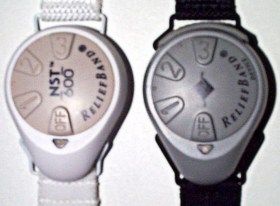
If anyone in your family has problems with nausea, buy a couple of ReliefBands from Aeromedix.com; they really work.
En Route
Stay out of thunderstorms, ice and turbulence if at all possible. That may seem as basic as it comes, but I cannot get over how many pilots willingly subject their families to just that kind of weather when they would never do so with a business associate on board.
Keep your valued passengers advised of what is going on. If there is going to be some turbulence, say so and explain what you are doing to minimize it. If you are going to fly through rain or clouds, let it be known ahead of time.
 Fly smoothly. Don’t make heading corrections with just the rudders or the ailerons. A lot of little airplanes wag their tails in turbulence. Any uncoordinated maneuver just makes it worse. We pilots are used to yaw, so it usually doesn’t bother us. We tend to forget that the center of that yaw is usually about at the pilot’s seat so we don’t feel most of its effects. For those seated behind us, it can be just plain miserable. So, keep the ball in the center all the time and use your hands and feet together to make all corrections.
If the trip is a long one, break it up and try to avoid flights in the afternoon on hot summer days unless you are willing to go high enough to find cool, smooth air. I’ve met some folks who do long flights by starting early in the morning, making a quick stop for fuel about 10:30 a.m., then landing again by 1:30 p.m. for a very leisurely lunch and a chance to sightsee in the area for a few hours in the heat of the day. They take off again about 5:00 p.m. for the last leg of the day after the turbulence has started to die down. They get in three pretty long legs, avoid beating themselves up in the hot afternoon weather and enjoy themselves in the process. If you are going to be flying in the mountains, it’s long been an axiom of aviation that only fools fly in the mountains in normally aspirated airplanes during the afternoon hours.
It’s Really A Matter Of Respect
The overall impression I gained from listening to the discussion in the Lounge was that the pilot who winds up with happy passengers is the one who takes their well-being into consideration in all facets of the flight. Let’s hope you have many good experiences giving rides to first-timers and that your family clamors to fly with you.
See you next month.
