












Oshkosh is always exciting. My trip to Oshkosh 1993 in my Mooney with two pilot buddies was no exception.
Getting there
It has become a bit of a tradition for me to arrive at Oshkosh a few days early in order to get a front row in the “North Forty” airplane camping area and to volunteer with aircraft parking during the peak arrival period. We made an uneventful flight from Burlington, Vermont, to Oshkosh, with a fuel and lunch stop in Saginaw, Michigan. My two pilot friends and I were excited about our upcoming ten day vacation.
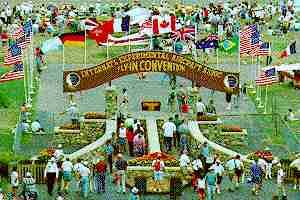 We landed in Oshkosh in mid-afternoon five days before the official opening of the convention in what appeared to be a sleepy, under-utilized mid-western airport. The rains that had plagued the Midwest all spring and summer affected central Wisconsin as well. The grass taxiways used during the convention were soft and several of the traditional camping areas were unusable. About 25% of the camping area was lost.
By the time we tied down the Mooney snugly and set up our large Sears family-size tent, our stomachs (still on Eastern Daylight Time) were calling for fuel. Five days before the show opens the food tents are not in operation. So we hitched a ride to our traditional arrival night restaurant, Friar Tuck’s, located just outside the airport boundary. After dinner we walked the mile back to our tent.
The summer cumulus was building and the sky filled with boiling clouds just as darkness set in. We settled into our sleeping bags with reading lamps and the few flying magazines we had brought. We knew in a few days we would have piles of brochures and trial subscriptions to every major flying publication.
The joys of tent camping
Light rain started falling about 10 PM. Within an hour the thunderstorms started rolling by one after another. The rain was moderate to heavy. The wind peaked at about 30 to 40 knots. Rain came horizontally through our “Sears Best” tent like it was a screen door. Over the years we had learned to put our clothing and gear in plastic bags as insurance against just such events.
The lightning lasted all night, from 10 PM to 9 in the morning. As we lay there in our aluminum frame tent in the middle of a field, at times the lightning flashes and thunder were separated by only milliseconds. I wondered what it would feel like if lightning struck our humble abode. I suspected we would feel no pain.
The clouds parted my midday and all the sleeping bags were hung neatly on the conveniently located snow fences. Our team decided, no more leaky tents for us. We would solve this problem once and for all. After $60 worth of polyethylene tarp, 200 feet of 250 lb. test rope, 40 heavy duty 39 cent each tent stakes and 40 feet of half inch conduit cut to various lengths, we had all the ingredients to set up an elaborate, albeit ugly, home-brew tent fly. Our camp site looked like a refugee camp, but we were ready for anything.
It didn’t work. Two days later, still two days before the “World’s Greatest Aviation Event” opened the excitement meter pegged again. One of my fellow camper, Jay, had brought along a portable, battery powered, palm-size Sony Watchman color TV. At 10:00 PM, I decided to turn on the evening news to get a preview of the next day’s weather. Due to semiconductor technology and miniaturization, I was now able to hear and see in my tent, in living color, a level 5 storm 25 miles west of Oshkosh moving east at 25 knots. I woke up my fellow campers and told them we would be hit by a storm in one hour. The weatherman was right and the little Sony did not lie. One hour later the three of us were holding down our tent for all we were worth. Our “Sears Best” tent poles could not take the stress and bent or broke in four places.
Hundreds of other newly arrived Oshkosh fly-in campers suffered a similar fate.
Bunking with the CAP
The Civil Air Patrol, with their dozens of young cadets did a wonderful job making sure that people were all right. Those with collapsed tents or soaking wet sleeping bags were taken to the CAP “barracks” and given bunks with clean sheets and pillows. After three days and eight hours in Oshkosh it seemed like the Hyatt Regency. In the morning we learned that 12 planes had flipped over and numerous commercial display tents destroyed.
But once again, after several hours in the hot Wisconsin sun, the sleeping bags were dry and ready for action again. Our $60 tarp tent fly did not work. The 1/2-inch conduit plus a $3 roll of duct tape procured from the fly-market were used to repair the tent poles.
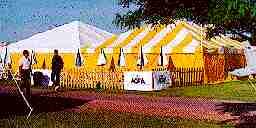 Oshkosh is always fun, but by Saturday we were getting low on clean clothes and were lonely for the comforts of home, i.e., real rest rooms with showers with doors. We had planned to break camp on the morning of our departure and ship home our excess baggage. This way we would not have to push the limit of the Mooney’s gross weight envelope. One problem: If we were to leave on Sunday we would have to box everything up and get it to the U. S. Postal Office trailer on the Oshkosh Convention site by 3 P.M. Saturday. Jay came up with the solution. He suggested, as members of the Vermont Wing of the Civil Air Patrol, the CAP might let us stay in their open hangar bunk room one more night.
The plan worked. By 3 P.M. we had shipped six boxes weighing 200 pounds. We would now be comfortably under gross weight, and we could fill the tanks to the top and fly home non-stop in just over 4 hours.
Wrong! Our Oshkosh adventure had just begun.
Departure blues
Sunday dawned 800 overcast and 1 1/2 miles visibility. A trip to the FAA FSS facility on the field suggested the weather would improve locally to marginal VFR, but an IFR flight plan was most appropriate for our 4 hour flight home, especially in view of our planned Lake Michigan crossing. We filed for 10:00 AM departure. Time for breakfast and time to close-out camping pre-payment fees.
Twenty minutes prior to our departure time I called clearance delivery on the handheld radio. To our shock and disappointment we learned that we were number 68 for release.
We were instructed to call back in two hours for a status report and told we would likely get released in about three hours.
 Clearance Delivery was right. While inbound to Oshkosh the IFR reservation system worked well, there was no such system for IFR departures. It was strictly first come, first served. Chicago Center was only releasing 6 IFR flights per hour from Oshkosh. At that rate, we feared we might need to stretch our welcome with the Civil Air Patrol. And then the field went VFR. Just barely.
The VFR departures started immediately. While the IFR departure procedure required an engine start clearance prior to taxi, many impatient instrument pilots waiting for release, joined the VFR departure line, hoping to beat the system. When they got to the front of the line without their IFR release, most just blasted off VFR in marginal conditions for all points of the compass. I bet there are a few war stories from pilots leaving Oshkosh that morning.
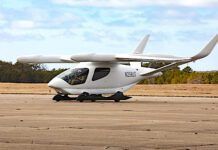
After a three-hour wait, Mooney N201NC was released and twenty minutes later we were number one for takeoff. With hundreds of campers watching and listening on their handheld radios, 1 November Charlie lifted off into the hot, muggy Wisconsin air. In four hours and five minutes we would be back home in Burlington, Vermont.
Not quite. The Oshkosh Adventure continued.
The big bang
We climbed through the overcast to our assigned 9,000 foot altitude, breaking out on top passing through 6,000 feet. The Mooney settled in on a pleasing ground speed of 175 knots with 15 knots attributed to a tail wind. Lake Michigan passed by uneventfully as did the state of Michigan. We entered the clouds and went on the gauges over the western shore of Lake Huron. The air was smooth. Halfway across the southern part of the Lake, we entered Canadian airspace and were handed off from Minneapolis Center to Toronto Center.
Shortly after being “radar identified” and cleared direct to the Waterloo VOR, we heard a loud BANG. The engine noise got very loud and an abnormal vibration commenced. The oil and fuel pressures were fine. Both mags were fine. It felt like the four-cylinder Lycoming IO-360 was running on three cylinders.
I throttled back to approximately 12 inches of manifold pressure where the level of sound and vibration seemed tolerable. We were over water on the gauges. I was concerned that our very sick engine not “give up the ghost” completely. Lose the engine, lose the vacuum pump. Lose the vacuum pump, and I knew I would lose the attitude and heading indicator gyros. I thought for a moment, “This might be it.”
ATC to the rescue
I could feel my heart pounding faster and harder. I reminded myself to fly the airplane. I set up about 90 knots on the airspeed indicator which yielded about a 500 foot-per-minute descent. I immediately declared an emergency. “Toronto Center, Mooney N201 NC mayday, mayday, mayday, we have an emergency. Our engine appears to have malfunctioned. We have partial power. I don’t know how long it will last. We need a vector to the nearest airport.”
Toronto Center responded. “Turn right ten degrees, Centralia Airport is 1 o’clock and eleven miles.” I asked, “How far is the shoreline.?” The center responded, “Six miles.” I did a quick calculation and concluded that if nothing else broke, we would make the shoreline. The question now was: would we break out of the clouds? I asked the center for the weather at our new destination airport. The center responded they did not have weather for Centralia, but 25 miles away, at London, Ontario, the weather was 4,000 overcast.
The controller vectored our crippled Mooney directly over the airport. We were now at 6,000 feet and still on the gauges.
I told the controller I would circle down to the left and would he re-vector us if the wind started drifting us away from the field. After a couple of 360 turns, and small corrections from the center, we descended to 4500 ft.
The Toronto controller told us they would lose us on radar at about 4000 ft. and suggested I contact London Tower. His final words were: “Good Luck, give us a call IF you make it.” I thought to myself that he probably should not have phrased it quite that way.
I switched to London Tower. The tower controller said he had been listening to our predicament and had us on an experimental radar system that had not been commissioned yet. That was reassuring.
As we descended through 4000 ft., Jay, in the back seat, yelled, “I see the ground!” And perhaps, 20 seconds later, “I’ve got the field!”
We were right over the most beautiful ex-Canadian military airport I have ever seen. With three long runways in a triangular configuration, my hopes of seeing my family again and not damaging my beloved airplane, soared. Toronto Center had notified the airport’s emergency services. As we circled down, we could see at least three fire trucks and two police cars with all their lights flashing, welcoming our arrival.
After a couple of wide circles of the field, I positioned 1 November Charlie high on final for runway 16. Gear down, flaps down. a little slip was all that was needed to put her down right on the numbers. We rolled out, turned off the runway and shut the airplane down.
Canadian hospitality
We now had three very relieved campers having made an unplanned arrival in a foreign country. The fire trucks and police cars surrounded the plane. The lead Ontario Provincial Police Officer (OPP) walked up to the plane. I opened the door and asked if we could get out. He said sure.
After the OPP inspected my pilot’s certificate and aircraft registration, assuring themselves that we were what we appeared to be, they helped us tie down the plane and drove us to their barracks. The OPP were terrific. They called customs/immigration and helped arrange of our “entry” into Canada by telephone.
It was now Sunday at 5 PM and Monday was an Ontario provincial holiday. The only FBO on the field was locked up tight and was not due back from Oshkosh until Wednesday. I left instructions for them to take a look at the engine and diagnose the problem. I was sure that at a minimum a cylinder would be dead, and perhaps I would need a complete new engine.
The three of us returned to Burlington the next day commercially via London, Toronto, Montreal and a rental car.
Aftermath
On Wednesday, I called the good folks at Terry Air to hear the verdict on 1 November Charlie.
Once again a surprise. The problem was not the engine but rather the exhaust. The weld on the exhaust pipe flange for cylinder #3 let go. The loose pipe accounted for the vibration and the raw, unmuffled exhaust from cylinder #3 accounted for the noise. The mechanic who made the repair told me that had I not throttled back, there was a good chance we would have caught on fire. With the exhaust repaired, I returned to Centralia Huron, Ontario, paid my bill and flew home.
Oshkosh is always an adventure. I can’t wait for next year!