



















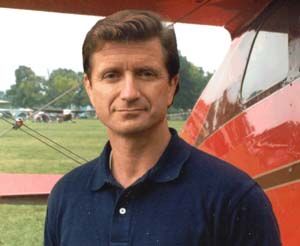
Rod Machado was born in Oakland, Calif., in1953. He’s half German and half Portuguese, which he claims gives him a geneticpredisposition to conquer a country and then go fishing. He began flying at 16, soloed at17, took his private pilot checkride with legendary instructor Amelia Reid, and, a fewyears later, began to teach flying. After moving to southern California, Rod honed hispresentation skills giving three-day ground-school instruction in Santa Ana, Calif. Rod’sdefining moment as a speaker came in 1976 in front of a crowd of 150 CFIs, most of themtwice his age. Like Rodney Dangerfield says, "Tough room." When the butterflieshit, Rod gave momentary thought to bolting for the door and changing occupations. Luckilyfor us, he stayed at the podium, conquered his fears, and hasn’t been nervous in front ofa crowd since. Rod found that humor was a way to keep himself and the crowd entertainedwhile teaching procedures and covering the dry minutae of FARs. He hung around LA-areacomedy clubs to watch rising stars like Jerry Seinfeld and Jay Leno hone their delivery.
Since then he has blended his wit and wisdom in two books, four videos, two audiocassette albums and his monthly column, License to Learn, for AOPA Pilot magazine. Rod’s safety segmentscan be seen on Saturday-morning reruns of Wide World of Flying on Speedvision.Always one of the highlights at EAA AirVenture Oshkosh, Sun ‘N Fun and AOPA Expo, Rodoffers a variety of seminars including Defensive Flying, Handling In-Flight Emergencies,and Aviation Humor. Rod is an ATP-rated pilot, but still gets excited at a Cessna 150fly-by (honest!). He has logged over 8,000 hours, most of it dual given. He is a NationalAccident Prevention Counselor and in 1991 was named Western Region Flight Instructor ofthe Year. Rod has a degree in Aviation Science and a degree in Psychology from CaliforniaState University at Long Beach. As if that’s not enough, Rod has studied Karate and holdsblack belts in Tae Kwon Do and Hapkido and ranking in Gracie Jujitsu. Rod is working onthree new books, so stay tuned to AVweb for release announcements.
Do you remember your first flight lesson?
It was at Reid-Hillview airport in 1970. I was 16. My CFI for this demo flight wasan insurance salesman and part-time flight instructor. We departed and climbed out overMorgan Hill and I distinctly remember looking down and thinking "Those are thesmallest cows I’ve ever seen." That image has always stayed in my mind. I think thisfellow thought I had talent, although he did suggest that I buy lots of insurance,preferably from someone else, not him. Apparently his company couldn’t afford the money.
I took a few more lessons there and then went to Amelia Reid Aviation. I startedtraining in her Taylorcraft L-2s, which cost about nine bucks an hour, and the instructorwas a whopping seven bucks an hour. I camped on Amelia’s doorstep. Every couple of daysI’d come by and ask her if she had any open position for a gas boy and eventually I got acall asking me if I wanted a job. I dropped the phone and ran down to the airport to claimmy entry position into aviation. Being able to taxi airplanes, fuel airplanes, and mostimportantly just being able to talk to pilots was a real turning point for me. Amelia was avery important influence and an amazing lady. She could tell if you were flying correctlyjust from the feel of the airplane. She’d be looking out the window and say "Moreright rudder." Or "More left rudder." I always thought she was talking tosome guy in another airplane. She was very demanding but one of the more relaxed peeopleI’ve ever flown with. I took my checkride with her. The moment she typed out my license Iraced away from the airport before she realized what a terrible mistake she had made.Years later I came to find out that Sean Tucker also took aerobatic instruction from her.
My CFI was Bill Hauer. He was the most patient man in the world. He was always cool andcalm, I think his blood pressure was 3 over 1. He never yelled at me once and that reallystuck with me. I was a pretty quiet teenager and had he done that I might have beendevastated. His patience gave me the opportunity to experience a lot of success inairplanes. And I gave him the chance to test his triple bypass (just kidding).
What makes a good flight instructor?
Patience, the desire to teach, and being able to use the tools of psychology. You haveto know when to say things and how to say them. If you don’t have compassion and patienceand an interest in people it’s unlikely that you’ll be a success at flight instructing.I’ve met students who have been through six or seven flight instructors. Sometimes theirinstructors leave and move on to different jobs — I won’t say "better jobs"because sometimes other jobs are not better than flight instructing — but in some casesstudents and flight instructors are not compatible. Students who feel like they have tostay with an instructor they’re not compatible with should furlough that instructor andfind a new one. Students are consumers and, as such, should pick and choose who they wantto learn from.
I was fortunate to get the right guy at the right time and that made all thedifference. Bill was the best. For instance, if he told me to put it on the numbers and Iovershot, he’d say something like "Well, okay, but I meant the first set of numbersyou flew over, not the ones at the other end of the runway." Then he’d say"Gimme your best two out of three." Sometimes he’d have to resort to specialmotivational techniques to keep me pumped up. Once, when I asked him how I was doing, hesaid, "Well, you’re missing the runway closer now."
 | |
Rod’s first gear collapse |
Do you remember you first solo?
How could I forget all those sirens, police officers and firemen? Seriously, I rememberit very well. Bill pulled over into the runup area and said "Okay, Rod, you’re goingto take it around now so let me see your student pilot’s certificate." So I gave itto him, he signed it, then he very carefully explained "Now, Rod, when I get out theairplane is going to be a lot lighter, it’s going to climb a lot quicker, it’s not goingto come down as quickly so you want to plan for that…" and I’m nodding my head andwhat I’m hearing is "blah blah blah blah blah blah blah…."
I think everybody hears blah blah blah at that moment.
Well, I nodded my head and took off and came around and on my first approach I was waytoo high. I could see Bill over by the side of the runway. He was making the sign of thecross. He had holy water and beads and I guess he said all the right things because nexttime around I came in and landed. I made a wheel landing. I just can’t remember whichwheel.
I still have the shirt with the back of the shirt cut out. That’s a tradition we don’tdo anymore. At a seminar one time a lady came up and said "My instructor tried to cutmy shirt off. I hadn’t soloed yet. He was just trying to cut my shirt off." I wonderif this is how the tradition started in the first place?
What flight training books did you use?
I used Bill Kershner’s books. I had used the typical dry FAA book, which was likegetting a two-scoop lobotomy, so it was refreshing to find the humor in Bill’s books. Iloved his comic illustrations, too.
What can a recreational pilot who flies once or twice a month do to stay sharp andmake the most of that time?
It’s a big misconception to believe that just because you’re beyond the IFR or VFRcurrency requirements that your flying skills have diminished. That’s like believing thatputting hand lotion in your fuel tank will make your landings smoother, softer and muchyounger looking. That’s not quite true. In a sense, you don’t forget how to fly anairplane in the same way you never forget how to ride a bike. I think what a person losesfirst is a sense of confidence. Now, motor skills can degrade over a long period of time,but not in a 90-day or six-month period. Obviously, getting a chance to fly is thebest thing to get your confidence back, but this isn’t always possible. Flying right seatwith someone helps, and there’s a lot of psychological value in hangar talk as we exchangeideas with other pilots, too. In fact, I think hangar flying is vastly underrated as aform of education. It keeps the neural pathways open and can help build confidence. I knowthis based on my own experience. Giving advanced instruction, I may instruct for hourswithout ever touching the controls, but my proficiency is high because I’m alwaysobserving and thinking.
Flight simulators are another great way to stay sharp. I’m the instructor’s voice onthe new Microsoft Flight Simulator 2000 and I wrote about a hundred pages in the FS2000manual. The older version had a voice that gave instruction but he sounded like a Nazibarking out orders. Bruce Williams, who is the product manager for Microsoft Flight Sim2000, thought this version should sound a little friendlier. I wrote about fifteen lessonplans that will help the uninitiated learn a little about flying an airplane. I’mconvinced that you could take somebody and teach them basic, practical flying skills withthis simulator. There are a lot of great instrument simulators on the market. Flight Sim2000 is a great IFR and VFR simulator. The graphics are very good, especially when viewedon a large monitor.
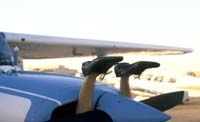 Rod demonstrates a thorough preflight inspection | |
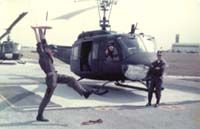 The correct way to handprop a chopper | |
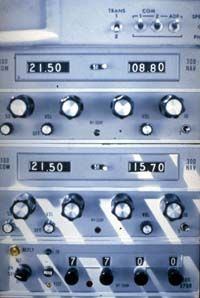 How Rod set up his radios for his first solo XC |
There’s also a private and an instrument checkride in the simulator. We replicated theactual test as best we could to contain certain skills that you need to demonstrate on thecheckride.
So far you’ve been concentrating on books and videos. Do you see your Web siteeventually adding a flight training section?
I’ve thought about it. But right now I’m involved in so many other projects that I justdon’t have much time to work on anything else. As it is, I’m thinking about hiring someoneto do all my jogging for me. I do know that I’ve only scratched the surface in terms ofInternet education. For instance, with Flight Sim 2000 I can create a file which letssomebody learn how to make a crosswind landing or an instrument approach. That file lookslike a high-resolution video but it’s only a very small file of zeros and ones. I canemail that file to someone who’s having trouble with a procedure, or I can post a databaseof different scenarios that someone can choose from. All that person needs to do is placethe file in the appropriate Flight Sim folder and they see my flight demonstration ontheir computer, just as if I’m right there showing them how to fly. This is simply amazingto me. So the technology is there, we just have to figure out the best way to use it.
How far behind the curve is the FAA in terms of flight simulators?
Actually, I’m impressed with what the FAA has done to recognize Personal ComputerAssisted Training Devices (PCATDs) up to this point. Sure, you can only use up to 10 hourson these devices for the instrument rating, but I was happy they allowed this much time.As I see it, the FAA has demonstrated a willingness to change their simulator policies ifthe aviation community can show them that a new policy is just as good, if not betterthan, the old one. To be perfectly frank about it, we don’t need to worry about the FAA asmuch as we do some of the folks in the general aviation community who tend to poo-poosimulation training devices.
For instance, there are a few folks out there that just don’t care much for simulators.Specifically, many of these folks don’t think that PC-based simulator time should beapplicable toward a rating. With all due respect I don’t agree with them. I thinksimulators are incredibly helpful in flight training. I know this for a fact. Severalyears ago I used the Elite simulator for training my instrument students. I was simplyamazed at the power of the desktop simulator as a training tool. And this isn’t just alimited sampling of anecdotal information. The efficacy of this argument is that you canget a type rating in a simulator. And the simulator doesn’t need motion to be a usefultraining device. You can also obtain equally useful training in a non-motion-basedsimulator. SimCom proved that there’s no real difference in training efficiency between anon-motion-based simulator and one having motion. So there’s no denying the value of asimulator, even if it’s the desktop PC type. Most of the PC simulators on the market arewell worth the investment as a training and proficiency-upkeep tool.
Unfortunately, there’s no simulator that lets you log VFR flight time toward the pilotcertificate, and I don’t think there will be for a while. I do think we’ll have to pushthe FAA on this because it’s a very big step for them to take. Nevertheless, if anyone isreluctant to purchase a PC-based simulator because they can’t log the time, please rethinkthat idea. Even if you could log more simulator time, it’s unlikely that it would help youget your license in less than the minimum required flight time. More importantly, thesedevices are excellent for developing and maintaining proficiency and confidence. The Navyrecently completed a study that concluded that student pilots who used an off-the-shelfflight simulation program during training made significantly higher grades and receivedfewer failures than those who didn’t. I find it hard to argue with the Navy on that one.
Back to checkrides, what’s the most common mistake people make on a checkride?
The most common mistake is thinking that they can’t make a mistake on a checkride. Youdon’t want to plan to make a mistake, but if you’ve made one, the thing to do is to showhow capable you are at recovering from it. This shows awareness and resiliency. Yourability to recover from a mistake makes a very positive impression on the designee. Thesecond most common mistake is not looking outside the airplane for traffic. A study by themilitary once said that in a 17-second scan cycle, you should be looking inside theairplane for three seconds and outside the airplane for 14 seconds. Basically it’s insidethe airplane for a second, outside for five, back inside for one, then back outside, orsomething like that proportion. This problem is the single biggest thing I notice when Igive flight reviews and proficiency flights.
Pilots need to remember that designees want them to pass. The designee is sitting thererooting for the student. When I took my CFI checkride, the FAA inspector — sly fellowthat he was — stomped on the left rudder during a departure stall. The airplane went overon its back and into a spin. For a second, I couldn’t figure out what happened. ApparentlyI wasn’t reacting quick enough for the inspector’s tastes, either. Fortunately, as theearth spun underneath us, he said, "Hey pal, does that look normal?" I wanted tosay, "Well, I did see something similar on my first solo cross country flight,"but I wisely kept silent. I finally recovered and was only too happy that this fellow gaveme the benefit of the doubt (and the hint, too).
Yes, designees want pilots to pass their checkrides, and this is especially true of awonderful lady named Mary "Tig" Pennock. Tig, now retired, could put anyone atease, especially me. Years ago I took my instrument checkride from her. When we began theoral I must have sounded like I was speaking Chinese. She’d ask a question and I’d say,"Ahh, un mak dak bok gah gak…" She’d smile, and say, "You know, you don’tlook Chinese," then slowly but methodically put me at ease with her gentle banter.She was the best and I learned a lot about how to handle people from her.
As I see it, the point of a checkride is to impress the designee that you can flysafely. Everyone makes mistakes. How you recover from them is the real test. This is whatdesignees watch for. The practical test standards are useful in that they help studentsunderstand what skills are expected of them.
Any changes you’d like to make to the practical test standards?
Those standards have been honed through a gradual process of evolution over the yearsand I think they’re spectacular … but … it’s a big misconception to think that justbecause you can do everything on the practical test standards you’ll automatically pass.Remember, designees also evaluate judgment. If you have a bad attitude or convey theimpression that you’re not going to be safe, the designee is going to look a lot morecarefully at your performance. And I don’t blame them a bit. These standards make thepractical test more objective, but you can never remove the human element from the flighttest, nor should we.
How important is spin training?
It’s very important. I’ve never had a private pilot student that wasn’t spun. I don’tnecessarily mean a three-turn spin, either. A one- or two-turn spin and recovery is oftensufficient to get the point across. Often, I’d give my students this training before theysoloed, and then I’d give them more of it after solo. They’d at least know the dangers ofa skidding turn to final or stalling in uncoordinated flight — which is a precursor to aspin — and how to recover from these situations.
It’s amazing how many students I’ve had for advanced training that have never spun anairplane. Many of them were scared silly when their instructors demonstrated spins andthis is very unfortunate. I use a technique that was taught to me by the late Cindy Ruckerwho was one of the first female airline pilots hired by Western Airlines. She had abeautiful, rich voice and her technique for teaching stalls and spins was to verballycoach students through the maneuver while the student manipulated the flight controls.Voice usage is very important here. Some instructors have high-pitched voices, the kindthat would cause bats to fly into walls. But she would lower and smooth the pitch of hervoice and guide students through every step of a process. That way the student is alwaysin control. It’s an amazing way for them to learn.
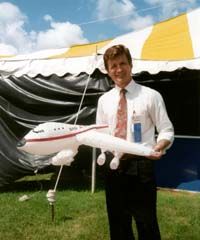 Which group has the easiest mindset to teach?
In my opinion, bankers are the easiest people to teach. I use that term generically forpeople who, like bankers, are global-type thinkers. You can load them up with informationand they’re very adept at consolidating, analyzing and utilizing what you’ve given them.That’s the way someone with a banker mentality thinks. They’re easy and fun to teach.
I also like engineers. Perhaps that’s because I like trains (just kidding). I likeengineers because they want to know everything. The only problem is that they often wantto know so much that it changes the cadence of the lesson. But that’s okay because thatcuriosity and desire is what you want as a flight instructor. Engineers learn in series.Before you go on to the next section, they have to understand the first section. Ofcourse, you can’t leave these folks alone with the airplane because they’ll take it apart.
And who are the hardest students to teach?
There’s a group of people that would include doctors, lawyers and entrepreneurs —people that got where they are by lots of study and achievement. They are the mostchallenging students I’ve ever had. Everything has to make sense to them and if they don’tunderstand it, or if they think that you don’t understand it, they may try and usurp yourauthority. When I was instructing at 19 (I looked even younger), I didn’t look like theguy who was qualified to be their instructor. These folks would show up for flighttraining and say to me, "Are you the instructor?" I say, "Yep," andthey’d say, "Are you sure?" Geesh! It was always a struggle to make sure theyrealized that I was the alpha male.
Did you ever want to fly for the airlines?
In 1977 I interviewed with United Airlines. I had well over 3,000 hours of flying time.Had a great interview, too. The day after I interviewed, United announced a hiring freezethat continued for four years. I think what happened was, they took a look at me and said"Let’s let this crop mature for a while." I felt like a fish that had just beenthrown back in. Granted, I had about 200 hours of multi time and the rest was single time.I guess that didn’t impress them. I figured with all that single-engine time, I was theirguy if they lost two out of the three engines on a 727. Not getting hired was probably thebest thing that ever happened to me. It allowed me to work for myself and develop myskills in writing and speaking.
How busy is your online life? Is that a good way for you to communicate with yourreaders?
I spend about one and a half to two hours a day answering email. I get thirty or fortyquestions a day. So far I’ve answered every one of them personally, meaning I don’t havesomebody that sits and does that for me. My column in AOPA Pilot has given me suchtremendous exposure to the pilot community, and, by the way, the folks at AOPA are themost incredible people I’ve ever worked with. They’ve just been great. They’ve given mecarte blanche to speak my mind and write on the topics of my choice. Additionally, I’mAOPA’s National CFI Spokesman, which gives me a great opportunity to meet and share ideaswith other CFIs.
Email is a wonderful way for people to find answers to questions. But to answer everyquestion in long form would be way too time-consuming. Therefore, what I try to do ispoint folks to the right source for an answer when possible. And more and more sources forthose answers are online.
What’s the most common question that people ask you?
"I’m flying an airplane. I get scared. What do I do?" By far, that’s the mostcommon question. One lady wrote and said "Before I leave my house, I make sureeverything is in order, because I’m not sure if I’ll be coming back." She continuesto fly, but she has a sense that her fate will be determined by an airplane. Contrary towhat you might think, this fear is relatively common. Flying airplanes allows humans toconfront one of our biggest fears; the fear of falling, no, not the fear of a runawayHobbs meter, either. We confront this fear of falling every time we get into an airplane.Unfortunately, the media coverage of airplane crashes often reinforces any fear that’salready present.
It’s a challenging question and my response is "I’d rather be in a well-maintainedairplane — as long as the weather’s good — than to be in a car where you have no controlover what the other driver does." The NTSB says that approximately 75% of accidentsresult from "pilot error," but I’d say that in 95% or more of these accidents,there is something the pilot did that caused the accident, or there’s something the pilotcould have done that might have prevented the accident. When I teach, I try to impressupon students that it isn’t their kismet, or fate, to get hurt in an airplane. Everyonewho flies has control of what happens to them. And once they’re in control they’re a lotless scared. Of course, if they’re flying airplanes whose blue book value varies with theamount of gas in the tank, then all bets are off. But we don’t have to fly these types ofairplanes, do we?
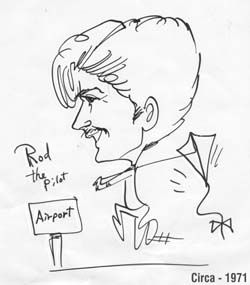 How has your martial arts training influenced the way youteach flying?
Well, I don’t have trouble collecting money from my students anymore. I’m my own billcollector (just kidding). Actually, it has had a big influence. The "DefensiveFlying" video came out of the heightened situational awareness inculcated by themartial arts. One of the primary themes taught by the martial arts is that if you know theenemy and know yourself, you’ll never be in peril in a thousand battles. The same themeapplies to flying airplanes. Knowing yourself (how you think, feel, your weaknesses, etc.)is vitally important to flying safely. Knowing the enemy (the weather, the temptation torush, etc.) is also vital to flying safely.
How many presentations do you do in a year?
I do four to five presentations a month around the country. I used to travel about 20days a month. I was in hotels so much that when I came home my dog didn’t recognize me andmy cactus would be dead. In order to feel comfortable during my short stays at home Iwould nail all my lamps to the desk then ask my neighbor to barge in unexpectedly and yell"Housekeeping!!" I’ve spoken in all fifty states, in France, Holland andGermany. Most Europeans speak English as a second language and I was amazed that they gotalmost all of the jokes. Bob Hope used to say "Count to three, if they haven’t gottenit by three they’re not going to get it." With the Germans and French, you count tofive. After all, they have to take a little time to translate. I’ve spoken to groups often and groups of over 4,000 people. It makes no difference what size group it is, I justenjoy speaking to pilots.
The weirdest group I’ve ever spoken to was a group of female mental patients. At theend of the program one of the attendees (inmates) came up and said, "Wow, we surelike you more than those other folks who speak to us." I was flushed with pride andsaid, "Oh, really? Why is that?" To wit she replied, "Because you thinkjust like we do!"
Do you have a favorite of all the seminars your present?
My favorite is called "Handling In-Flight Emergencies". It gets to the core ofwhat scares people in airplanes. I honestly believe that, outside of an act of God,there’s nothing in an airplane that’s going to do you in if you’re a reasonablyintelligent, cautious pilot who keeps his or her wits. Chuck Yeager once spoke to thisidea quite well when he said, "I was always afraid of dying. Always. It was my fearthat made me learn everything I could about my airplane and my emergency equipment, andkept me flying respectful of my machine and always alert in the cockpit." And theaviation humor program is always fun, too.
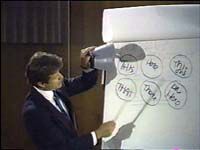 | |
| View a RealVideo clip of Rod teaching instrument scanning technique to his student Marty: |
What advice would you give to a young CFI just starting out?
I’d tell them to be the very best flight instructor they can possibly be, even if theyare using the position as a way to build hours. Their students will be their best resourcewhen it comes to getting an aviation job. I’ve been offered flying jobs over the years byothers I’ve trained. Additionally, I’d tell them to listen to older, wiser flightinstructors. They should find a flight instructor mentor who’ll help them polish theirteaching skills. Finally, I’d ask them to remember that flight instruction is a nobleprofession. Unfortunately, some folks consider it a pass-through, transient job. If I lostall my speaking and typing skills I’d go back to flight instruction in an instant becauseI enjoy it so much. And you can make a decent living doing it if you think like abusinessman. I know for a fact that you can make $50,000 a year as a flight instructor. Ofcourse, you need to live near a large metropolitan area with good weather for most of theyear to do this. I believe that as the mechanics of flight simulation becomes better andwrap-around virtual reality type screens become popular, weather will become less of anissue. In these instances, a good flight instructor with a good reputation could make agood living for most of the year.
Do you still find time to teach?
I do BFRs and proficiency flights out of Palomar airport. I’m usually booked up a fewmonths in advance, but I enjoy flying.
One last question. Where did you get your sense of humor?
I’d have to say both my grandfathers contributed. When I was young one of mygrandfathers would always kid around with me. And he was a strange fellow. He’d say thingslike, "Hey Roddy, did you know you were adopted?" And I’d say, "Oh nogramps, you mean I was actually adopted?" And he’d say, "That’s right … butthey brought you back." So, that’s the kind of stuff I had to endure. My othergrandfather had a wooden leg. His great claim-to-fame was letting it fly off while in acrowd of people. I loved those guys!