































"Life insurance." These are two words almost guaranteed to glaze the eyes of even the most attentive pilot and cause many others to look for a way — any way — to quickly change the subject to something more stimulating — like wall paint or 8-track tape players. They conjure up, in my mind anyway, images of middle-aged men wearing leisure suits and spouting unfamiliar terms like "actuarial tables" and "annuity." For years, I was content to allow the impenetrable mysteries of life insurance to remain hidden and out of sight, like the conflicting traffic I just can’t find on a hazy summer afternoon.
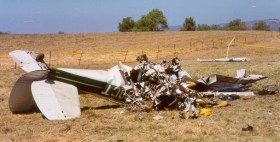 Yet, an appropriate life-insurance policy should be something to which the serious pilot gives equally serious consideration. We pilots, as a rule, are detail-oriented individuals with a strong desire to make certain that everything is as it should be. We have to be detail-oriented: Our safety depends on proper maintenance, proper training and proper operation to help ensure that the number of landings equals our takeoffs. Indeed, I now consider an appropriate life-insurance policy, one that provides adequate coverage in the event I don’t survive my next landing, just as important as are current charts or fuel in my tanks. It didn’t used to be that way.
A Pair Of Policies
I had given the subject only passing thought in recent years, purchasing two policies. One, which I originally bought from Prudential in the early 1980s, explicitly exempted any coverage if I died while serving as a crewmember aboard non-scheduled aircraft. That policy was good for only $50,000, a wildly optimistic estimation of my net worth back then, when my career was just starting. Later, I bought another policy through AOPA and underwritten by Minnesota Mutual Life which covered me for the same $50,000 but also omitted any exclusion if I died while piloting a general aviation aircraft. Interestingly, the premiums for these two policies seemed a bit out of alignment: I’ve paid around $50 each month for the Prudential policy, but only some $30 for the one obtained via AOPA. Nevertheless, I’ve kept both policies current and still religiously send off my checks each time I’m asked.
 Given my predilection against peeling any more layers of the "life insurance onion," it was with some measure of amusement that I approached the Pilot Insurance Company (PIC Life) booth at last year’s AOPA convention in Long Beach, Calif. PIC Life has long been an AVweb sponsor and I had come to know the company’s president, Bill Fanning, to be a well-informed and well-prepared businessman who flies his own F33A Bonanza and knew his stuff. I had never seen him in a leisure suit and had heard him utter the word "annuity" only once. I had also watched from afar as his business developed and sometimes wondered about their products, their service and whether the ad copy that frequently appeared in AVflash really told the tale.
Soon after I had introduced myself to the men and women staffing PIC Life’s booth at AOPA, I was in a surprisingly serious (to me, anyway) conversation about the various options they offer and what the policy premiums were for someone of my age and aviation experience. What I heard was interesting and presented Surprise Number One: I could purchase a policy that omitted any exclusion while flying just about any GA aircraft but which included substantially greater coverage than I had — even when combining the policies from Prudential and Minnesota Mutual — for a sum that wasn’t even close to being commensurate with its increased value. I grabbed some brochures and agreed to fill out and return an application before I wandered off to look at ways to spend my hard-earned money on avionics.
Applying
Safely nestled back into my office a few weeks later and sifting through all the materials I managed to stuff into my Debonair for the flight home, I came across the PIC Life application. I put it in the appropriate stack for later action and, surprisingly, found it again a week or so later, right where I had left it. Since it was bill-paying time, and I don’t like to pay bills, I immediately grabbed a pen and began filling it out. Not long afterward, I had completed the application, including a brief summary of my flying time over the past 25-plus years, and had faxed it back to PIC Life at the supplied number.
"That’s the last I’ll hear of that," I thought to myself. "They’ll (choose one): Lose the application, decline to write a policy based on my aviation experience or generally let it fall through the cracks."
It wasn’t a week later when the phone at my desk rang; it was Doug, calling from PIC Life, with a couple of quick questions about my application. That was Surprise Number Two — Doug’s approach was professional, low-key and, before we got off the phone, we had even managed to talk flying, if only briefly. I supplied the answers he needed and then heard him say something to the effect that I was pre-approved, pending a health exam, and that my premium for the $250,000 of coverage I had chosen would be in line with the figure I had been quoted at AOPA. He said he’d be sending along some more forms, one of which was related to scheduling the health exam.
Turn Your Head And…
 "Health exam?" I thought. Oh, goody — between turning my head and coughing or watching someone I didn’t know pop a rubber glove over their index finger and smile, it was not something to which I looked forward. Despite my general aversion to health exams, by this time I was committed to going ahead with this — I am flying more than ever and the increased coverage was clearly necessary. Sure enough, the requisite paperwork arrived a couple of days later — via Priority Mail. I filled out a very simple health questionnaire and returned it to PIC Life a few days later with my check for the first period’s premium (I opted to pay my premium semi-annually — PIC Life also offers monthly, quarterly and annual payment plans, with appropriate discounts for paying in advance).
It wasn’t a week later that I discovered a voicemail to me from someone attempting to schedule the exam. Prepared to make all kinds of excuses for my intolerable inability to find a mutually convenient time for me to make the trek to their office, I returned the call. I was shocked to learn that the health care professional would come to my home — I wouldn’t have to bother with navigating myself to an unfamiliar location in rush-hour traffic — and that the exam would only take about 15 minutes. And, no, there wouldn’t be any digital poking or prodding. That was Surprise Number Three.
 After some well-coordinated schedule changes — mine and theirs — the day finally arrived for my health "exam." A very professional and well-prepared young woman arrived and we sat down at the dining room table. It wasn’t really an exam, after all. After a quick height measurement, a step onto the scale she brought, and my responses to a few more questions, I moved into the nearby bathroom to provide a urine sample and then sat back down for the hard part — providing a blood sample. While I generally try to avoid letting people I’ve just met poke needles into my arm, this was about as easy as it gets — the young lady clearly had done this before and before I knew what was going on, she had taped a cotton ball onto my arm and began packing up her stuff. "That’s it?" I was forced to ask. "That’s all," she replied.
Th-Th-That’s All
And that was all there was to it. A few days after the exam, I received another envelope from PIC Life — again via Priority Mail — which included the complete policy and associated materials comprising my coverage. One sheet of paper was a well-written letter from Bill Fanning, thanking me for choosing PIC Life and imploring me to contact him or his staff with any questions.
 Surprise Number Four is somewhat less tangible than the other surprises I’ve come to appreciate through my experiences with PIC Life (other than being content in the knowledge that I’m well-covered in the event I don’t return from my next flight, that is): I haven’t heard a peep from PIC Life since receiving the final policy paperwork. Unlike my experiences with other insurance companies — life or otherwise — I haven’t been contacted to buy anything else, I haven’t received any more spam emails than normal, my junk mail content has not explosively increased and telemarketers aren’t wearing out my telephones.
Having what I consider a more appropriate level of life-insurance coverage (I still believe my life is worth a lot more than the coverage I chose, of course) hasn’t changed the way I fly, hasn’t smoothed out the turbulence or melted ice from my wings and hasn’t cleared the traffic pattern each time I want to land. Having better coverage has, however, removed one of life’s nagging little voices from the back of my head — you know, the one saying, "If you’re gonna do as much flying as you’re doing, you really need to make sure your life-insurance coverage is up to par."
Would I do it again? Absolutely. Dealing with PIC Life was a pleasure: There was no pressure; Bill, Doug and the others with whom I dealt were completely honest and professional at all times. I received excellent value for what I bought and, all things considered, probably could not get the same level of coverage for the same premium with another carrier. I certainly couldn’t have done it in as painless a fashion. I call that a pretty good deal.
And I have yet to see the first leisure suit.
Author’s Note: The Pilot Insurance Center (PIC Life) is a longtime AVweb sponsor. The author neither sought nor received any consideration from PIC Life in applying for or obtaining life-insurance coverage and this article was conceived only after the insurance was obtained. To learn more about PIC Life or to obtain a free, no-obligation quote, be sure to visit the company’s web site. |
