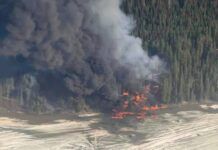
|   Tower Warned Crew Of Engine Fire… A day after the first fatal accident involving a Concorde supersonic airliner, French authorities were well into their grim task of recovering wreckage and beginning their investigation. The delta-wing jet fell into a small hotel near Paris’ Le Bourget Airport shortly after a fiery takeoff from the Charles de Gaulle Airport. All 100 passengers aboard — mostly German tourists — nine crewmembers and four on the ground died shortly after takeoff for the planned flight to New York’s John F. Kennedy International Airport. Even at this early date, however, it is abundantly clear that some sort of catastrophic engine failure during its takeoff roll was a major factor in the tragedy. The two left Rolls-Royce Olympus engines — and a repair to one of their thrust reversers accomplished by cannibalizing one from a nearby plane that helped delay the flight’s departure for more than an hour — will receive close scrutiny in the coming weeks and months as the investigation continues. A day after the first fatal accident involving a Concorde supersonic airliner, French authorities were well into their grim task of recovering wreckage and beginning their investigation. The delta-wing jet fell into a small hotel near Paris’ Le Bourget Airport shortly after a fiery takeoff from the Charles de Gaulle Airport. All 100 passengers aboard — mostly German tourists — nine crewmembers and four on the ground died shortly after takeoff for the planned flight to New York’s John F. Kennedy International Airport. Even at this early date, however, it is abundantly clear that some sort of catastrophic engine failure during its takeoff roll was a major factor in the tragedy. The two left Rolls-Royce Olympus engines — and a repair to one of their thrust reversers accomplished by cannibalizing one from a nearby plane that helped delay the flight’s departure for more than an hour — will receive close scrutiny in the coming weeks and months as the investigation continues.
…And Other Details Of Accident Sequence Emerge… That investigation will be aided by numerous credible eyewitness accounts from pilots who saw flames trailing from the jet’s left engines during the latter stages of its takeoff roll and by the reports from air traffic controllers at de Gaulle who reportedly warned the crew of Flight 4590 twice that it was on fire even before it left the runway. Those reports state that the controllers warned the crew that their Concorde was on fire and that the crew responded to the effect that they were aware of the fire, but were unable to abort the takeoff, probably because the jet had already accelerated beyond V1, its rejected-takeoff speed. Among the questions to which investigators will be seeking answers are the exact nature of the thrust-reverser repair technicians made before takeoff, what impact — if any — it could have had on the accident sequence and why the crew chose to continue the takeoff rather than abort and roll off the end of the departure runway. That investigation will be aided by numerous credible eyewitness accounts from pilots who saw flames trailing from the jet’s left engines during the latter stages of its takeoff roll and by the reports from air traffic controllers at de Gaulle who reportedly warned the crew of Flight 4590 twice that it was on fire even before it left the runway. Those reports state that the controllers warned the crew that their Concorde was on fire and that the crew responded to the effect that they were aware of the fire, but were unable to abort the takeoff, probably because the jet had already accelerated beyond V1, its rejected-takeoff speed. Among the questions to which investigators will be seeking answers are the exact nature of the thrust-reverser repair technicians made before takeoff, what impact — if any — it could have had on the accident sequence and why the crew chose to continue the takeoff rather than abort and roll off the end of the departure runway.
…As British Airways Resumes Flights — And Oshkosh Arrival Expected In the aftermath, citizens from around the crash site at Gonesse, France, praised the 54-year-old pilot, Christian Marty, believing that he flew the stricken jet away from populated areas, perhaps as he tried to land at nearby Le Bourget, before the crash. Also, British Airways Wednesday resumed scheduled flights of its fleet of seven Concordes, although Air France said that its fleet of five remaining examples of the supersonic jet will remain grounded at least until the accident aircraft’s flight data and cockpit voice recorders can be analyzed. Both were recovered form the wreckage Tuesday. As for the Concorde’s widely anticipated return to EAA AirVenture, it is still expected Friday. In the aftermath, citizens from around the crash site at Gonesse, France, praised the 54-year-old pilot, Christian Marty, believing that he flew the stricken jet away from populated areas, perhaps as he tried to land at nearby Le Bourget, before the crash. Also, British Airways Wednesday resumed scheduled flights of its fleet of seven Concordes, although Air France said that its fleet of five remaining examples of the supersonic jet will remain grounded at least until the accident aircraft’s flight data and cockpit voice recorders can be analyzed. Both were recovered form the wreckage Tuesday. As for the Concorde’s widely anticipated return to EAA AirVenture, it is still expected Friday.
Weather Is Fine, Wish You Were Here… If the rest of the weather during EAA AirVenture Oshkosh 2000 even remotely resembles opening day, then the attendees, exhibitors and volunteers will go away from this largest civil aviation event with fond memories. Fair skies, moderate temperatures and low humidity have been the rule so far, unlike recent years and in especially stark contrast to last year. A mostly gentle — but sometimes stiff — breeze through the large hangars allowed exhibitors and shoppers alike to keep their cool while shopping for the latest, greatest and cheapest widgets available. Outside, gawkers and tire-kickers wandered among the tents and pavilions to fawn over the latest wares and the heavy iron arrayed on the main ramp, while others sought out knowledge and experience from the numerous forums and technical sessions available. If the rest of the weather during EAA AirVenture Oshkosh 2000 even remotely resembles opening day, then the attendees, exhibitors and volunteers will go away from this largest civil aviation event with fond memories. Fair skies, moderate temperatures and low humidity have been the rule so far, unlike recent years and in especially stark contrast to last year. A mostly gentle — but sometimes stiff — breeze through the large hangars allowed exhibitors and shoppers alike to keep their cool while shopping for the latest, greatest and cheapest widgets available. Outside, gawkers and tire-kickers wandered among the tents and pavilions to fawn over the latest wares and the heavy iron arrayed on the main ramp, while others sought out knowledge and experience from the numerous forums and technical sessions available.
 In the afternoon, the steady flow of arrivals temporarily eased, the constant roar of radial engines turning large propellers filled the air as warbirds paraded, pirouetted and pounced on one another in mock combat. Later, the finest aerobatic pilots in the world mounted their steeds to show off before a crowd of thousands for the day’s airshow. Finally, the field quieted down again and dusk fell on the massed airplanes as contented campers settled in for a dry, cool evening before rising again the next day to do it all over again. Still, with all the airplanes, the people, the exhibits and the action, there’s plenty to go around. Neither parking nor camping areas are filled and getting around the event areas seemed easier on this opening day than in recent years — at least when compared to some of the weekend attendance levels in recent memory. In the afternoon, the steady flow of arrivals temporarily eased, the constant roar of radial engines turning large propellers filled the air as warbirds paraded, pirouetted and pounced on one another in mock combat. Later, the finest aerobatic pilots in the world mounted their steeds to show off before a crowd of thousands for the day’s airshow. Finally, the field quieted down again and dusk fell on the massed airplanes as contented campers settled in for a dry, cool evening before rising again the next day to do it all over again. Still, with all the airplanes, the people, the exhibits and the action, there’s plenty to go around. Neither parking nor camping areas are filled and getting around the event areas seemed easier on this opening day than in recent years — at least when compared to some of the weekend attendance levels in recent memory.
AirVenture 2000 is underway. Where are you? …Under A Bright Sky Full Of Wings… "Speed" is the theme for this year’s AirVenture, but visitors could get their fill of fast and slow at yesterday’s show. During a fly-by of production-model planes, a Helio-Courier showed just how breathtakingly slow it could go. The plane crawled down the flight line, completing tight turns and demonstrating just how versatile an aircraft it is. A nearly vertical three-point landing with a 10-foot landing roll completed the show. However, faster was the goal of the day, and when the warbirds took to the air, a Sea Fury, P-51, and Corsair — former Reno racers all — showed how to convert fuel into noise. During the afternoon airshow, Bobby Younkin snap-rolled his newly painted Samson on takeoff and challenged others to follow. Tomorrow, they definitely will. The CASPA Challenge pits the best airshow pilots in the country in a test of skill and nerves. We’ll be there and bring the flying fun home to you. "Speed" is the theme for this year’s AirVenture, but visitors could get their fill of fast and slow at yesterday’s show. During a fly-by of production-model planes, a Helio-Courier showed just how breathtakingly slow it could go. The plane crawled down the flight line, completing tight turns and demonstrating just how versatile an aircraft it is. A nearly vertical three-point landing with a 10-foot landing roll completed the show. However, faster was the goal of the day, and when the warbirds took to the air, a Sea Fury, P-51, and Corsair — former Reno racers all — showed how to convert fuel into noise. During the afternoon airshow, Bobby Younkin snap-rolled his newly painted Samson on takeoff and challenged others to follow. Tomorrow, they definitely will. The CASPA Challenge pits the best airshow pilots in the country in a test of skill and nerves. We’ll be there and bring the flying fun home to you.
…But Not The Vickers Vimy Or Harrier One of the great things about every AirVenture is that you get to see one-of-a-kind aircraft and spectacular machines that expand the envelope of the possible. Unfortunately, two such aircraft whose presence was eagerly anticipated this year were not able to make it to Oshkosh because of mechanical problems. A Vickers Vimy, a replica of a World War I-era bomber, has gearbox problems that couldn’t be repaired in time to fly to the airshow. And the Marine Corps has suspended operations for some Harriers, including the one scheduled to appear at AirVenture, due to engine-bearing problems. With so many airplanes gathered in one place, you wouldn’t think anyone would miss these two, but they can’t be replaced. Here’s hoping they make it for 2001 instead. One of the great things about every AirVenture is that you get to see one-of-a-kind aircraft and spectacular machines that expand the envelope of the possible. Unfortunately, two such aircraft whose presence was eagerly anticipated this year were not able to make it to Oshkosh because of mechanical problems. A Vickers Vimy, a replica of a World War I-era bomber, has gearbox problems that couldn’t be repaired in time to fly to the airshow. And the Marine Corps has suspended operations for some Harriers, including the one scheduled to appear at AirVenture, due to engine-bearing problems. With so many airplanes gathered in one place, you wouldn’t think anyone would miss these two, but they can’t be replaced. Here’s hoping they make it for 2001 instead.
Planned Turbine Jet Flies Far And Fast For Few Francs… For the first time ever, crowds — throngs of them, in fact — are getting to see and sit in a physical mockup of the soon-to-be Eclipse 500. The Eclipse is a sweet bird, there is no doubt. She is swoopy, reminiscent of the V-Jet; and she is fast, boasting a max cruise of 355 knots, +/-2.5 percent. Wednesday at AirVenture, Eclipse CEO/President Vern Raburn talked about the near future for his state-of-the-art aluminum aircraft. That immediate future includes cutting aluminum in the third quarter of 2001, a first flight in mid-June 2002, and certification in 2003, with customer deliveries beginning soon after. The plane will retail at $837,500… an unheard-of price for a twin-engine turbine. Not only is the price amazingly low in comparison to other corporate turbines on the market, it is also guaranteed. The $837,500 is in June 2000 dollars, mind you, so it will edge up to match inflation. For the first time ever, crowds — throngs of them, in fact — are getting to see and sit in a physical mockup of the soon-to-be Eclipse 500. The Eclipse is a sweet bird, there is no doubt. She is swoopy, reminiscent of the V-Jet; and she is fast, boasting a max cruise of 355 knots, +/-2.5 percent. Wednesday at AirVenture, Eclipse CEO/President Vern Raburn talked about the near future for his state-of-the-art aluminum aircraft. That immediate future includes cutting aluminum in the third quarter of 2001, a first flight in mid-June 2002, and certification in 2003, with customer deliveries beginning soon after. The plane will retail at $837,500… an unheard-of price for a twin-engine turbine. Not only is the price amazingly low in comparison to other corporate turbines on the market, it is also guaranteed. The $837,500 is in June 2000 dollars, mind you, so it will edge up to match inflation.
CEO Raburn says each deposit for the Eclipse is nonrefundable, with one very large exception: if the jet doesn’t meet the company’s performance guarantees, customers who ask will be given their money back. Deposits of $37,500 are being accepted now, says Chris Finnoff, former president of Pilatus Business Aircraft and now vice-president of sales and product support for Eclipse. That $37,000 will hold a spot until the Eclipse 500 makes its first flight, at which time the company will ask for $37,500 more. At certification, customers will owe an additional $150,000. At 180 days before delivery, Eclipse will ask for a percentage, and the remainder will be paid on delivery. …We Couldn’t, So You Can’t… In a world of multimillion-dollar corporate jets, $837,500 sounds good for a twin turbine… too good, in fact. "It doesn’t leave us much wiggle room," Finnoff admitted to AVweb, "not much at all." CEO Raburn said, "There are skeptics who say it can’t be done. That’s why we’re all wearing these stickers with ‘WCSYC’ on them. It stands for ‘We couldn’t, so you can’t.’ That’s what we’re running into…’you can’t build an airplane for that money.’ That’s the kind of attitude we’re talking about, so we decided to stick it back in their faces a little (with the stickers)." In a world of multimillion-dollar corporate jets, $837,500 sounds good for a twin turbine… too good, in fact. "It doesn’t leave us much wiggle room," Finnoff admitted to AVweb, "not much at all." CEO Raburn said, "There are skeptics who say it can’t be done. That’s why we’re all wearing these stickers with ‘WCSYC’ on them. It stands for ‘We couldn’t, so you can’t.’ That’s what we’re running into…’you can’t build an airplane for that money.’ That’s the kind of attitude we’re talking about, so we decided to stick it back in their faces a little (with the stickers)."
Eclipse seems to have what it takes to make the project fly. A fair number of the company’s top echelon was "borrowed" from successful Pilatus. Raburn, though an aviation-manufacturer neophyte, was one of the first employees of a little company called Microsoft, and by the looks of things, did quite well there. Though delays cost money and Eclipse officials would prefer to have none, they say they have the financial backing to weather any storms. Raburn thinks the sky is very nearly the limit for his sleek aircraft. He plans to target small companies without the financial wherewithal to afford a $2-million-plus jet, large companies that don’t haul many people, and those who just want to go fast. One of the things that Eclipse will be doing during the next two to three years is creating the jet’s market. "I think we will be doing a very large volume. I see a very large business for this aircraft," predicts Raburn. One prediction he declined to make, though, is the number of Eclipse 500s that would sell. "It’s our policy not to predict order numbers," he told members of the media. However, another member of Eclipse management told AVweb deposits have hit 130-plus, just since May. …Now, For The Nuts And Bolts… Remember that deposit refund exception? These are the performance numbers that must hold up or customers will be given the option of getting their money back. The stall speed is guaranteed at 62 knots, +/-4 percent. The max cruise speed will be 355 knots, +/-2.5 percent. The max cruise speed was revised downward 13 knots from the original objective. "We wanted to make it an objective we could achieve," said Raburn. The range with four occupants (a 200-pound pilot and three 170-pound passengers) at high-speed cruise — building in a 100-mile alternate — will be 1,300 nautical miles. The useful load will be 2,000 pounds, +/-2.5 percent. The Eclipse 500 will come with a long list of standard equipment, will be IFR-certified and certified for flight into known icing. Additional options are being hashed out, but the first to be offered is an extended-range version that will take you 1,825 nautical miles. Remember that deposit refund exception? These are the performance numbers that must hold up or customers will be given the option of getting their money back. The stall speed is guaranteed at 62 knots, +/-4 percent. The max cruise speed will be 355 knots, +/-2.5 percent. The max cruise speed was revised downward 13 knots from the original objective. "We wanted to make it an objective we could achieve," said Raburn. The range with four occupants (a 200-pound pilot and three 170-pound passengers) at high-speed cruise — building in a 100-mile alternate — will be 1,300 nautical miles. The useful load will be 2,000 pounds, +/-2.5 percent. The Eclipse 500 will come with a long list of standard equipment, will be IFR-certified and certified for flight into known icing. Additional options are being hashed out, but the first to be offered is an extended-range version that will take you 1,825 nautical miles.
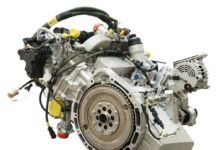
…And Additional Odds And EndsThe Eclipse will be certified under FAR Part 23 for single-pilot operation. The engines are Williams International EJ22s, which, according to Engineering VP Oliver Masefield, have a higher thrust-to-weight ratio than any other nonmilitary engine. "We are truly doing some revolutionary things," said Masefield, also a Pilatus alumni. "We are on an aggressive four-year development cycle, basically starting from a clean sheet of paper. We’re doing everything differently. We’re able to do this now because technologies are coming together just at the right time. This plane would not have been possible just five years ago."
Training And Insurance Will Be Critical For Prospective Buyers…Your Internet dot-com company has just struck it rich, and you’re ready to sell your Skyhawk and buy a new Eclipse 500 jet. You plunk down your deposit money and get a delivery slot, but your favorite CFI shrugs his shoulders when asked about training, and your insurance broker breaks into fits of laughter when you inquire about hull coverage. What’s a new Eclipse pilot to do? To stretch this scenario further, company CEO Vern Raburn announced today that several of the deposits for the Eclipse jet have come from people who do not even have a pilot’s license yet. Since the announced goal of Eclipse Aviation is to make aviation "personal," the company is already hard at work setting up the training and insurance infrastructure needed by pilots entering the world of turbojet aviation.  CEO Raburn said today that the company envisions an in-house "aviation academy," with much tighter control over training than the usual arms-length approach to factory training taken by manufacturers. "We don’t have anything against FlightSafety or Simcom," Raburn said. "In fact, we have three years to look at them and others as partners to make this happen." Don Taylor is Eclipse’s recently hired VP for safety, training and flight operations, and one of his tasks will be to set up the company’s ground school, simulator, and flight training. Taylor said that even though many new owners will be transitioning from singles or be without turbine experience, the integrated design and simplicity of the Eclipse will be a great advantage. "The design of this plane makes it very easy to fly. An engine loss on takeoff will be a non-event in this aircraft," Taylor said. "You’ll just climb out at 850 feet per minute instead of the usual 1,800." CEO Raburn said today that the company envisions an in-house "aviation academy," with much tighter control over training than the usual arms-length approach to factory training taken by manufacturers. "We don’t have anything against FlightSafety or Simcom," Raburn said. "In fact, we have three years to look at them and others as partners to make this happen." Don Taylor is Eclipse’s recently hired VP for safety, training and flight operations, and one of his tasks will be to set up the company’s ground school, simulator, and flight training. Taylor said that even though many new owners will be transitioning from singles or be without turbine experience, the integrated design and simplicity of the Eclipse will be a great advantage. "The design of this plane makes it very easy to fly. An engine loss on takeoff will be a non-event in this aircraft," Taylor said. "You’ll just climb out at 850 feet per minute instead of the usual 1,800."
Taylor said the aircraft purchase price will include training for one pilot, and will be a one-week type-rating course for those with turbine experience, including ground school, Level D simulator time and flight training. To support pilots with less experience, the factory may develop a home-study course to be completed before coming to school. There will probably also be a program for new pilots to fly with more experienced pilots before they get "signed off" by the factory. Taylor said the company has an engineering simulator up and running, but the selection of a builder of the Level D hi-fidelity simulator has not been made. …But Will The Insurance Industry Cooperate? Owner-operators of turbine aircraft have been particularly hard hit in the recent tightening of the cyclical aviation insurance industry, and Eclipse has recognized this as a roadblock for potential buyers. Jack Harrington, an aviation insurance attorney, has joined the company to help develop an insurance program that will be affordable and accessible for owners. In the relatively small aviation insurance market, where rates often to seem to be arrived at by mysterious methods, his task is to educate brokers about the "easy flying" of the Eclipse 500 jet. He wants to lay the groundwork for having the industry recognize the company’s training program. Owner-operators of turbine aircraft have been particularly hard hit in the recent tightening of the cyclical aviation insurance industry, and Eclipse has recognized this as a roadblock for potential buyers. Jack Harrington, an aviation insurance attorney, has joined the company to help develop an insurance program that will be affordable and accessible for owners. In the relatively small aviation insurance market, where rates often to seem to be arrived at by mysterious methods, his task is to educate brokers about the "easy flying" of the Eclipse 500 jet. He wants to lay the groundwork for having the industry recognize the company’s training program.
Even at a 1.5 to 2 percent hull rate per year, the price of the Eclipse will be some help in holding down insurance costs. But as CEO Raburn said, "You can’t teach good judgment." It can’t be taught quickly, in any event. Harrington would also like to develop a panel of pilots to help transitioning owners meet insurance requirements and avoid what Raburn called the "Thurman Munson syndrome." Munson was an all-star catcher for the New York Yankees who died in 1979 while transitioning from a piston aircraft to a Cessna Citation.
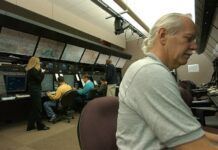
Directing An Aerial Ballet From A Wisconsin Soybean Field… Many people at AirVenture 2000 get to witness the amazing sight of hundreds of arriving planes landing at Wittman Field in a relatively orderly manner, often two or even three at a time on one runway. What very few of those folks get to see is the effort of four FAA controllers working at a temporary "tower" four miles west of Wittman Field to ensure all those planes get to the airport in an orderly and safe fashion. Located on a small knoll planted with soybeans just outside the tiny hamlet of Fisk, a small trailer and a line of blinking strobe lights aimed to the southwest is the final rendezvous point before pilots are given permission to enter the pattern at Wittman Field. AVweb visited Fisk on what is typically one of the busiest days for arriving planes, the Tuesday before AirVenture opens. Working the Fisk shift this day were FAA controllers John Moore, from the Minneapolis, Minn., tower; Kristen O’Conner, Bismarck, N.D.; Tim Oberdoerster, Youngstown, Ohio; and local controller Brian Vanlankvelt, from the Wittman Field tower. This was just one of the 16 four-person teams of controllers working AirVenture that rotate at Fisk throughout the show. Many people at AirVenture 2000 get to witness the amazing sight of hundreds of arriving planes landing at Wittman Field in a relatively orderly manner, often two or even three at a time on one runway. What very few of those folks get to see is the effort of four FAA controllers working at a temporary "tower" four miles west of Wittman Field to ensure all those planes get to the airport in an orderly and safe fashion. Located on a small knoll planted with soybeans just outside the tiny hamlet of Fisk, a small trailer and a line of blinking strobe lights aimed to the southwest is the final rendezvous point before pilots are given permission to enter the pattern at Wittman Field. AVweb visited Fisk on what is typically one of the busiest days for arriving planes, the Tuesday before AirVenture opens. Working the Fisk shift this day were FAA controllers John Moore, from the Minneapolis, Minn., tower; Kristen O’Conner, Bismarck, N.D.; Tim Oberdoerster, Youngstown, Ohio; and local controller Brian Vanlankvelt, from the Wittman Field tower. This was just one of the 16 four-person teams of controllers working AirVenture that rotate at Fisk throughout the show.
…Includes Juggling A Plateful Of Planes… When AVweb arrived, this team had just placed about a dozen planes into a oval-shaped holding pattern around nearby Rush Lake because Wittman Field was temporary closed for a flight of arriving T-34s. Oberdoerster kept in constant radio contact with the circling planes, telling them what was happening, how long the hold would last, and emphasizing that if anyone was low on fuel or had other problems to radio him. Meanwhile, Moore kept in touch with the OSH tower via phone line as Vanlankvelt and O’Conner identified each plane with high-power binoculars. As it turned out, a twin reported he was low on fuel and a Long EZ called to say he was getting smoke in his cockpit. Oberdoerster immediately gave both planes permission to leave the holding pattern and proceed directly to the pattern at Wittman, while Moore got on the phone to let the OSH tower know they were coming. Ten minutes later the phone rang letting the "Fisk Four" know that the field was again open. Oberdoerster started letting every third plane out of the holding pattern to land at Wittman, while reassuring the remaining planes that the traffic jam would soon be over. When AVweb arrived, this team had just placed about a dozen planes into a oval-shaped holding pattern around nearby Rush Lake because Wittman Field was temporary closed for a flight of arriving T-34s. Oberdoerster kept in constant radio contact with the circling planes, telling them what was happening, how long the hold would last, and emphasizing that if anyone was low on fuel or had other problems to radio him. Meanwhile, Moore kept in touch with the OSH tower via phone line as Vanlankvelt and O’Conner identified each plane with high-power binoculars. As it turned out, a twin reported he was low on fuel and a Long EZ called to say he was getting smoke in his cockpit. Oberdoerster immediately gave both planes permission to leave the holding pattern and proceed directly to the pattern at Wittman, while Moore got on the phone to let the OSH tower know they were coming. Ten minutes later the phone rang letting the "Fisk Four" know that the field was again open. Oberdoerster started letting every third plane out of the holding pattern to land at Wittman, while reassuring the remaining planes that the traffic jam would soon be over.
…And Getting A Little Help From Mother NatureMoore told AVweb that fortunately today the winds allowed them to land aircraft on Runway 27 or Runway 18, which allowed for adequate spacing of planes after they leave Fisk. The day before, when planes were landing on Runway 09, AVweb noticed numerous planes bunching up on final, forcing several to go-around as faster planes quickly caught up to slower ones in the short distance between the Fisk hand-off and the threshold. Moore said Runway 09 is the controllers least-preferred runway to land planes at Wittman during AirVenture due to the short distance between Fisk and the approach end. Moore added that when planes are landing on Runway 27, they have more distance to work with to space out planes with disparate performance as they fly a long downwind. But there were no such spacing problems Tuesday. After successfully clearing up the Rush Lake holding pattern and learning that the Long EZ and twin had landed successfully, the team knew that once again they had faced the challenge of helping control the busiest airspace in the world and succeeded in getting all those planes to AirVenture safely.
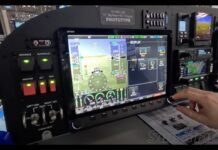
BFGoodrich Aerospace Wants To Build It For You… BFGoodrich Aerospace announced yesterday at AirVenture 2000 plans for a new self-contained primary instrument system that will present primary flight information, engine-monitoring data, navigation, weather, traffic and terrain avoidance all on several liquid-crystal multifunction display screens. A working prototype of the system, called SmartDeck, is being demonstrated at AirVenture. BFGoodrich Aerospace announced yesterday at AirVenture 2000 plans for a new self-contained primary instrument system that will present primary flight information, engine-monitoring data, navigation, weather, traffic and terrain avoidance all on several liquid-crystal multifunction display screens. A working prototype of the system, called SmartDeck, is being demonstrated at AirVenture.
Gary Watson, of BFGoodrich Aerospace, characterized the system as an "electronic co-pilot." It will assimilate and present information in a fashion intuitive to the pilot. Watson also said that BFGoodrich has an agreement with Advanced Creations to assist BFG in building the large flat-panel displays that are integral to the system. SmartDeck uses an active-matrix liquid-crystal display, micro-electro-mechanical systems and local-area-network technologies in the system, which BFG claims will allow them to build a powerful system at a low cost. Watson declined to quote an estimate on cost at this stage in the development. …But You’ll Have To Be PatientSmartDeck will have an integrated attitude and heading reference system and an air data computer and will run on one to four 10-inch-diagonal display screens. Each display will be able to operate standalone or as part of a complete system. The standalone system will display primary flight information such as heading, altitude, attitude and airspeed, while a second screen can show simultaneously a moving map, engine information and aircraft status information or can act as a co-pilot’s primary flight display. SmartDeck will be able to display primary flight data in conventional form or in what it calls "synthetic vision" with highway-in-the-sky overlay depiction. BFG says that SV/HITS provides a 3-D "out-the-window view," with indicators showing the aircraft’s predicted flight path. Watson said the system was being geared toward the "lower tier of GA," the four-seat single market. BFG hopes to have the system certified and for sale by 2002. In the meantime, you’ll have to be satisfied with practicing on your kids’ computer sims. It’s A Dolphin, It’s A Spaceship — No, It’s A Kitplane It looks like a cross between a BD-5 and a spacecraft, with a Swiss accent. It’s the Aeris 200, a kitplane under development by Aceair of Switzerland. The two-place tandem design features a pusher prop, mid-engine placement with a carbon-fiber driveshaft, and triple lifting surface design with a canard as well as a traditional T-tail. The company claims that the all-composite design will comply with all JAR 23 certification standards, and will undergo a "serious test program," including construction of two scale radio-controlled models. A third model underwent wind tunnel testing in Zurich. It looks like a cross between a BD-5 and a spacecraft, with a Swiss accent. It’s the Aeris 200, a kitplane under development by Aceair of Switzerland. The two-place tandem design features a pusher prop, mid-engine placement with a carbon-fiber driveshaft, and triple lifting surface design with a canard as well as a traditional T-tail. The company claims that the all-composite design will comply with all JAR 23 certification standards, and will undergo a "serious test program," including construction of two scale radio-controlled models. A third model underwent wind tunnel testing in Zurich.
Design work began in 1998 with dynamic model testing and wind tunnel testing last year. Prototype construction began in February and Aceair plans the first flight for January 2001. The airplane will be powered by a 105-hp Mid-West AE110 rotary engine driving a three-blade constant-speed pusher prop. A Rotax 912 is optional. A single fuselage tank will carry 29 gallons of fuel. Company brochures say that the wings will be removable for towing behind a car using a special trailer. Provision for a ballistic recovery chute is also included in the design. The company’s booth at AirVenture 2000 features a full-size mockup with interior, which allows visitors to climb into the cockpit to imagine flying the futuristic bird. The Swiss chocolates were also a popular draw. Not Only Ford Has A Classic Tri-motor — Stinson Built One, Too At first glance, it looks like a Ford tri-motor, but then you realize that it is smooth — no sign of that distinctive corrugated metal skin. It’s a Stinson "T" tri-motor, and it is parked just south of Show Center in the Antique/Classic area. The airplane is finished in 1932-vintage American Airlines livery, a rich dark blue with orange-red accents and lettering. NC11153 was built in 1931 for Century Air Lines, which operated it between Chicago, Detroit, St. Louis and Cleveland. Century was bought by American Airlines in 1932, hence the AA markings. The airplane was originally delivered with two anti-drag cowlings, three electric starters, two landing lights, two three-minute flares, a two-way radio, heater, toilet, extra fuel tanks and full instrumentation for "standard and blind flying." There’s no mention of a CD player or leather interior. At first glance, it looks like a Ford tri-motor, but then you realize that it is smooth — no sign of that distinctive corrugated metal skin. It’s a Stinson "T" tri-motor, and it is parked just south of Show Center in the Antique/Classic area. The airplane is finished in 1932-vintage American Airlines livery, a rich dark blue with orange-red accents and lettering. NC11153 was built in 1931 for Century Air Lines, which operated it between Chicago, Detroit, St. Louis and Cleveland. Century was bought by American Airlines in 1932, hence the AA markings. The airplane was originally delivered with two anti-drag cowlings, three electric starters, two landing lights, two three-minute flares, a two-way radio, heater, toilet, extra fuel tanks and full instrumentation for "standard and blind flying." There’s no mention of a CD player or leather interior.
The airplane stayed in airline service until after World War II. It was used to haul horses in the 1940s for spraying in the 1960s. It got more-powerful Lycoming R-680-13 engines in the 1950s, rated at 300 hp, and the most radical change to the airframe — metal skin in place of the fabric covering it had sported up to that time. In 1965, R.P. Rice converted the airplane back to standard category and it was flown around the country barnstorming rides. In 1981, American Airlines contracted for it to tour the country. After that, though, it was tied down in Tucson until 1996, when Greg Herrick found it and a complete restoration was begun. The 1,600 pounds of aluminum skin was removed and the tri-motor reverted to fabric. The results of the restoration are spectacular, and well worth seeing if you get the chance at AirVenture 2000. The Stinson is a part of the Golden Wings Flying Museum. Goodbye, Aeroshell Answer Man Ben Visser, the 33-year Shell employee who became known as the "Aeroshell Answer Man," is saying so long to questions, and hello to retirement. The tall, affable Visser will be leaving hot, humid, Houston, Texas, for the more temperature summers (and actual winters) of South Dakota, where he plans to build on a farm owned by his father and his grandfather before him. Visser was honored at AirVenture Oshkosh Wednesday morning by EAA Chairman Tom Poberezny, who thanked him for his valuable Aeroshell sponsorship support over the years. When Poberezny handed Visser a commemorative EAA clock Visser quipped, "Once I’m retired, I won’t need it." Though Visser will be away from Aeroshell, he won’t be leaving aviation. It’s in his blood. "One of the first things I’m going to do at the farm is put in a landing strip so I can fly in and out," Visser told AVweb. Happy retirement, Aeroshell Answer Man, and safe flying. Ben Visser, the 33-year Shell employee who became known as the "Aeroshell Answer Man," is saying so long to questions, and hello to retirement. The tall, affable Visser will be leaving hot, humid, Houston, Texas, for the more temperature summers (and actual winters) of South Dakota, where he plans to build on a farm owned by his father and his grandfather before him. Visser was honored at AirVenture Oshkosh Wednesday morning by EAA Chairman Tom Poberezny, who thanked him for his valuable Aeroshell sponsorship support over the years. When Poberezny handed Visser a commemorative EAA clock Visser quipped, "Once I’m retired, I won’t need it." Though Visser will be away from Aeroshell, he won’t be leaving aviation. It’s in his blood. "One of the first things I’m going to do at the farm is put in a landing strip so I can fly in and out," Visser told AVweb. Happy retirement, Aeroshell Answer Man, and safe flying.
Socata Unveils Trinidad GT Paint Scheme Winner At an airport full of planes with fancy paint schemes, French aircraft manufacturer Socata unveiled one of the fanciest on their new Trinidad GT. The scheme, titled "Night & Day," was the result of a contest Socata held earlier this year. After reviewing over 2,000 submissions from around the world, Socata chose the unique design submitted by Scott Dorsey, a professor at Mt. Union College, Alliance, Ohio. Socata said Dorsey’s design combined creativity with the ease of industrial application that they were seeking. Dorsey’s creative talents earned him and his wife a free trip to France. The Socata model displaying Dorsey’s paint scheme is the TB 21 Trinidad GT Turbo, the fastest of Socata’s TB range of aircraft. The retractable TB 21 uses a turbocharged Textron Lycoming TIO-540 engine developing 250 hp to reach speeds of 190 knots at FL250. The speedy TB 21 can also carry up to five persons, and has a maximum range of 1,035 miles. At an airport full of planes with fancy paint schemes, French aircraft manufacturer Socata unveiled one of the fanciest on their new Trinidad GT. The scheme, titled "Night & Day," was the result of a contest Socata held earlier this year. After reviewing over 2,000 submissions from around the world, Socata chose the unique design submitted by Scott Dorsey, a professor at Mt. Union College, Alliance, Ohio. Socata said Dorsey’s design combined creativity with the ease of industrial application that they were seeking. Dorsey’s creative talents earned him and his wife a free trip to France. The Socata model displaying Dorsey’s paint scheme is the TB 21 Trinidad GT Turbo, the fastest of Socata’s TB range of aircraft. The retractable TB 21 uses a turbocharged Textron Lycoming TIO-540 engine developing 250 hp to reach speeds of 190 knots at FL250. The speedy TB 21 can also carry up to five persons, and has a maximum range of 1,035 miles.
AirVenture Cup Winners Announced The EAA yesterday released the official winners of its AirVenture Cup speed race, which finished up at Wittman Field on Tuesday afternoon. The pilots raced from Dayton to Oshkosh, after the first leg of the race from Kitty Hawk, N.C., was canceled due to stubborn IFR conditions. First-place winners in each of the five categories were: Unlimiteds, Orion Riddell, flying a Lancair IV; Sport Class, Lee Behel, Questair Venture; Formula RG, Richard Keyt, Polen Special II; Formula FX, Bruce Hammar, Glasair I; and Sprint Class, Rob Martinson, in a Vari EZ. The EAA yesterday released the official winners of its AirVenture Cup speed race, which finished up at Wittman Field on Tuesday afternoon. The pilots raced from Dayton to Oshkosh, after the first leg of the race from Kitty Hawk, N.C., was canceled due to stubborn IFR conditions. First-place winners in each of the five categories were: Unlimiteds, Orion Riddell, flying a Lancair IV; Sport Class, Lee Behel, Questair Venture; Formula RG, Richard Keyt, Polen Special II; Formula FX, Bruce Hammar, Glasair I; and Sprint Class, Rob Martinson, in a Vari EZ.
|