|   Will The Last Person To Leave Please Turn Out The Lights?How Do You Know When You’ve Had Too Much Candy? Most years, coming to AirVenture for the annual migration of the aviation nation starts with a dash of dread while performing those tough chores that precede a long trip away from home: airplane maintenance, packing, office catch-up, and the like. Somehow, though, all that fret and sweat gives way to something like homecoming joy: You’re back and feeling like a kid in a candy store with a twenty-dollar bill to spend. Most years, coming to AirVenture for the annual migration of the aviation nation starts with a dash of dread while performing those tough chores that precede a long trip away from home: airplane maintenance, packing, office catch-up, and the like. Somehow, though, all that fret and sweat gives way to something like homecoming joy: You’re back and feeling like a kid in a candy store with a twenty-dollar bill to spend.
But by the end, this kid usually feels like he’s had a little too much candy. Now, that’s a tough thing for an admitted airplane addict: When you were nine, could you imagine having too much candy? That’s how overdosing on aviating feels — no clue of the concept, only a dull awareness of the dull roar of exhaustion, or airplane burn-out and air-show saturation. These sensations of overload come despite a popular conclusion that AirVenture 2000 has been "a little slow this year," according to the grapevine buzz. Didn’t grow into bigger-behemoth, ya know; maybe the bloom has faded; the crowds aren’t expanding any more … after peaking in very high six figures.  And that’s something bad? We need to make seeing everything even more exhausting? Sure, growth is a great thing, but if it should come to be that (gasp!) attendance is off a year, does that spell doom for AirVenture? For the homebuilt community? For plain general aviation as a whole? And that’s something bad? We need to make seeing everything even more exhausting? Sure, growth is a great thing, but if it should come to be that (gasp!) attendance is off a year, does that spell doom for AirVenture? For the homebuilt community? For plain general aviation as a whole?
Geez, folks, relax and lighten up — take a little time to smell the engine oil. It’s a fly-in, don’t you know, not a trade show (ignore those booths behind the privacy curtains); a celebration of flight, not a cause for commerce. All that business naturally follows consumer events like AirVenture — NASCAR races, regattas, mass motorcycle rides. Once-proud vestiges of popular culture now stand as shining examples of self-induced-success syndrome. They started out as noteworthy events in a niche activity, grew in fame, gain popularity, became famous and inside a decade or two, they grew to be bigger than big: They became legends. More volunteers could only handle part of the chores; the events became more expensive to produce. It all costs money so they got more people to pay through the back door to keep down prices for people coming through the front. One way or another, the dollars gotta come from somewhere: sponsors or the public. Sponsors get product presence and de facto endorsements; increasing diversity in products on display attracts folks not necessarily big fans of racing, riding or aviating. Much Ado About Something Big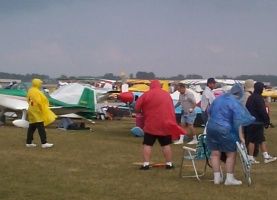 A common question among exhibiting regulars in recent days included the concept that a perceived decline in attendance somehow related to the evolution of "AirVenture, the fly-in" into "AirVenture, the grand world’s fair of flying." That attendance perception may prove true. On the other hand, it could be that weather, elsewhere, may have had a stronger influence on attendance than kind of institutional change at the event. Somehow it’s hard to conceive most of us standing at the hangar door, pondering whether changes at AirVenture have made it less than the event it had become: the world’s largest free-association assembly of free fliers. A common question among exhibiting regulars in recent days included the concept that a perceived decline in attendance somehow related to the evolution of "AirVenture, the fly-in" into "AirVenture, the grand world’s fair of flying." That attendance perception may prove true. On the other hand, it could be that weather, elsewhere, may have had a stronger influence on attendance than kind of institutional change at the event. Somehow it’s hard to conceive most of us standing at the hangar door, pondering whether changes at AirVenture have made it less than the event it had become: the world’s largest free-association assembly of free fliers.
It’s been a great week at AirVenture, in many ways, really it has. More than enough new and different to warrant a visit. But a great week of blue-sky airshow backdrops it hasn’t been. IMC prevailed into the morning more than once during the week, and the field still filled to near capacity before opening day Wednesday. Appleton and Fond du Lac handled their usual load of overflow, as well. And weather was a lot worse elsewhere. Those who hunkered down here felt somewhat deprived by the low ceilings, damp skies and flat, gray veil that also made much of the week cool, comfy and crowded. Forecasts calling for days of rain and low overcast to the south and east helped induce hundreds of departures through mid-afternoon Saturday. At times, the queue stretched the entire length of the taxiway parallel to Runway 36. Circumstances Beyond Our Control: Vimy And Concorde Leave The Candy Jar Just Half-full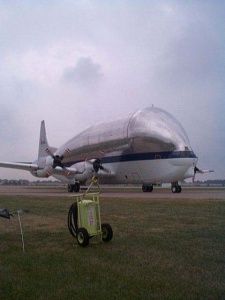 The post-crash cancellation of Concorde gave a different connotation to the "It’s going fast" apparel on sale at the numerous EAA merchandise stands around the field. The absence left a big whole on Aero Shell Square behind the big fish of a plane that is the Super Guppy. Awesome; impressive; a wonder of the world … and a bit of a whale in a crosswind, according to the flight crew. The pity of its flying appearance was its scant nature. The post-crash cancellation of Concorde gave a different connotation to the "It’s going fast" apparel on sale at the numerous EAA merchandise stands around the field. The absence left a big whole on Aero Shell Square behind the big fish of a plane that is the Super Guppy. Awesome; impressive; a wonder of the world … and a bit of a whale in a crosswind, according to the flight crew. The pity of its flying appearance was its scant nature.
Thanks to the flat-gray haze, NASA’s beluga bird appeared in view less than a minute before touchdown, and then as little more than a gray apparition worthy of Melville’s Great White Whale. On departure Monday, the taxi to the departure end of 36 lasted many times longer than the departure itself; a shallow climb toward the low cloud base and the Super Guppy was lost to sight. Old reliables didn’t disappoint with their routines: Patty Wagstaff, Sean D. Tucker, Delmar Benjamin, Gene Soucy, the Red Barons and Northern Lights, and scores of warbirds drew the crowds to the show-line brink in depth and the main aisle west of 18/36 often clogged to capacity. And the daily race of the unlimiteds and the CASPA airshow-performers competition added new elements of excitement to the afternoon showcase. The crowds were wowed and thick until the last show day on Monday. If the crowd wasn’t exactly light on the show line, could it have been in the four exhibit halls? Spending Habits: More From Less Probably, if there’s any significance to being able to navigate the halls without the map to an Elizabethan hedge maze loaded into a hand-held GPS. Fewer tourists, perhaps, the smiling vendors said. And why were they smiling through the open spaces? Buying was up, perhaps due to more pilots, or a higher percentage in a smaller crowd. Who knows? It wasn’t all that important, it turned out, for the vendors headed home with heavier wallets and lighter inventories. Probably, if there’s any significance to being able to navigate the halls without the map to an Elizabethan hedge maze loaded into a hand-held GPS. Fewer tourists, perhaps, the smiling vendors said. And why were they smiling through the open spaces? Buying was up, perhaps due to more pilots, or a higher percentage in a smaller crowd. Who knows? It wasn’t all that important, it turned out, for the vendors headed home with heavier wallets and lighter inventories.
Oshkosh delivered some genuinely new items to view, in tune with year’s past. The new Eclipse jet, a new kit-jet, the Leopard; EchoFlight’s palm-sized flight-information-service receiver and GPS; a Russian ultralight; a new Canadian kitplane … no, two. A new solid-state attitude and directional gyro from Sigma Tek. There was plenty of traditional stuff, to boot; and most of the mainstays. As a buyer’s market, AirVenture shares the stage with Sun ‘n Fun to make up the jumbo’s share of revenues for many company’s coffers. It’s also a showcase for those products, at booths for Microsoft’s upcoming combat sim, for Mattituck and Exxon-Mobile’s support of Bruce Bohannon’s new world time-to-climb record. Oops — there’s that sponsor thing again. For the most part, when chronic IMC and a summer downpour dampened spectator traffic Monday, most vendors complained less about the slowdown and most about the foot time that went into handling higher sales. Maybe even the business folks got too much candy. Fulfilling Without Overfilling: Maybe Just Enough Candy For One Year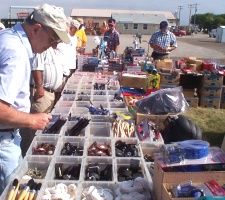 Overall, AirVenture 2000 did feel different than in years past. A lot cooler, more tolerable. The depth and diversity of show planes, antiques, classics, custom-builts, factory iron and military wings was again enough to give a junkie an octane rush just walking along the flight line. Overall, AirVenture 2000 did feel different than in years past. A lot cooler, more tolerable. The depth and diversity of show planes, antiques, classics, custom-builts, factory iron and military wings was again enough to give a junkie an octane rush just walking along the flight line.
More parking space for more planes, more camping acreage, more sales by more vendors, more products, more to do and more ways to do it. Rumors of a slump may be true and keeping score may be important by the measure of some. But going away with an exhausted smile from the heavy mileage of seven days at AirVenture sound more like the post-sugar rush letdown or an exhausted aviation addict than the basis for solid concerns. After all, for most of us, an AirVenture pilgrimage is an experience of anticipation and excitement, something like the build-up to Christmas or Hanukah and the rush of unwrapping the expected.  Is it any wonder that some get their fill for a while and cut the consumption short, or is it the normal ebb and flow of a healthy appetite. Judging by the attitude and demeanor of the crowd, by the taxiway talks and after-dinner commiserations, another year of AirVenture didn’t fail its fans or miss sky-high expectations. Is it any wonder that some get their fill for a while and cut the consumption short, or is it the normal ebb and flow of a healthy appetite. Judging by the attitude and demeanor of the crowd, by the taxiway talks and after-dinner commiserations, another year of AirVenture didn’t fail its fans or miss sky-high expectations.
And with the bulk headed home healthy, happy, enriched and fulfilled, it can hardly be called anything less than another success. Come late July of next year, it’s my bet that all our appetites will be back with a vengeance and AirVenture 2001 will be all it’s capable of being — a successful celebration for those who love the gathering, regardless of the crowd size or cash count. Just because the kids occasionally get too much at the candy store and stop before they’re sick doesn’t mean they lose their taste for candy. And really, how many pilots have you met that got too much of anything to do with flying and fun? AirVenture Seaplane Base A Welcome Respite From Wittman Field Crowds…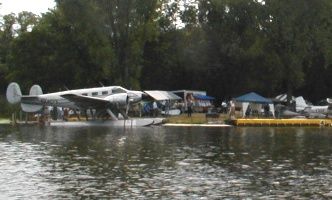 If you think you’ve seen all that AirVenture 2000 offers, but haven’t visited the seaplane base on nearby Lake Winnebago, you owe it to yourself to take some time to stop over and check out the action. And that action is definitely less hectic, less crowded, and more informal than the blur of activities constantly going on over at Wittman Field. Located several miles southeast of Wittman Field, the AirVenture seaplane base is only operational during the AirVenture convention. The other 51 weeks of the year it is just a quiet little cove surrounded by tall shade trees on the western shore of Lake Winnebago. Property owners John and Susie Vette, and Gary and Burliegh have been generous enough to allow EAA to use their site as the center of seaplane activities for each AirVenture. Though after AirVenture the base closes down, the property owners do allow four very good friends to keep their seaplanes there the rest of the year. Many of the pilots who fly into the seabase camp right there to enjoy the cool breezes off the lake, not to mention the nightly activities, including a Hawaiian luau, Karaoke night and even a bonfire with tall-tales contest. If you think you’ve seen all that AirVenture 2000 offers, but haven’t visited the seaplane base on nearby Lake Winnebago, you owe it to yourself to take some time to stop over and check out the action. And that action is definitely less hectic, less crowded, and more informal than the blur of activities constantly going on over at Wittman Field. Located several miles southeast of Wittman Field, the AirVenture seaplane base is only operational during the AirVenture convention. The other 51 weeks of the year it is just a quiet little cove surrounded by tall shade trees on the western shore of Lake Winnebago. Property owners John and Susie Vette, and Gary and Burliegh have been generous enough to allow EAA to use their site as the center of seaplane activities for each AirVenture. Though after AirVenture the base closes down, the property owners do allow four very good friends to keep their seaplanes there the rest of the year. Many of the pilots who fly into the seabase camp right there to enjoy the cool breezes off the lake, not to mention the nightly activities, including a Hawaiian luau, Karaoke night and even a bonfire with tall-tales contest.
…And Weather Doesn’t Keep Seaplane Numbers Down… Although aircraft operations at Wittman Regional Airport during this year’s AirVenture are way down, the total number of aircraft operations at the seaplane based were about even with 1999’s number. According to seaplane base chairman Scott Satz, close to 110 floatplanes and amphibians flew into Lake Winnebago this year, and of those, over 40 percent came from Canada. That shouldn’t be a big surprise, considering the preponderance of lakes and lack of roads in much of rural Canada, where the floatplane is more a necessity than a luxury. The day AVweb visited the base we noticed the planes were starting their takeoff run from well within the sheltered cove, where the seaplanes are moored, getting on the step and accelerating through the small opening to the bay right before lifting off. Satz said this is necessary when the winds cause big waves on Lake Winnebago. According to Satz, Lake Winnebago is unique in that it is relatively shallow, so big, rolling waves can form quickly, creating a hazard to a seaplane pilot trying to takeoff in the choppy waters. The relative calm of the cove gives pilots a good, safe running start before they pop out of the cove into the blustery bay. Satz also mentioned that pilots flying into the base for the first time can receive operational procedures and current lake conditions through contacts with members of the Seaplane Pilots Association Although aircraft operations at Wittman Regional Airport during this year’s AirVenture are way down, the total number of aircraft operations at the seaplane based were about even with 1999’s number. According to seaplane base chairman Scott Satz, close to 110 floatplanes and amphibians flew into Lake Winnebago this year, and of those, over 40 percent came from Canada. That shouldn’t be a big surprise, considering the preponderance of lakes and lack of roads in much of rural Canada, where the floatplane is more a necessity than a luxury. The day AVweb visited the base we noticed the planes were starting their takeoff run from well within the sheltered cove, where the seaplanes are moored, getting on the step and accelerating through the small opening to the bay right before lifting off. Satz said this is necessary when the winds cause big waves on Lake Winnebago. According to Satz, Lake Winnebago is unique in that it is relatively shallow, so big, rolling waves can form quickly, creating a hazard to a seaplane pilot trying to takeoff in the choppy waters. The relative calm of the cove gives pilots a good, safe running start before they pop out of the cove into the blustery bay. Satz also mentioned that pilots flying into the base for the first time can receive operational procedures and current lake conditions through contacts with members of the Seaplane Pilots Association
…Including A Florida Pilot Who Flew To Oshkosh Without Touching A Runway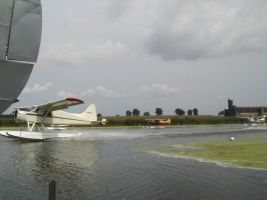 One pilot enjoying his first visit to the seaplane base at AirVenture was Greg Williams from Orlando, Fla. Greg and a buddy flew the 1,100 miles to Oshkosh in Greg’s 1998 float-equipped Maule M7. The interesting part was the Aqua 2400 floats on Williams’ M7 were not amphibious, so he always had to look for water to land to refuel or spend the night. Not a big problem, according to Williams. One evening after a long day of flying, they just saw a nice big pond with a house on the shore and decided to land for the night. After taxiing up to the shore, the owner came out to greet them, telling them it was no problem to moor for the night, and even offered them dinner. Almost sounds like the old days when barnstormers criss-crossed the country, never quite knowing where they would land at the end of the day. And to prove how addicting floatplane flying can be, Williams told AVweb that he bought his first floatplane while working on his Private certificate, getting his seaplane rating and 500 hours before he ever got his land rating. The AirVenture seaplane base is a great place to witness for yourself that a romantic type of flying does still exist. Who knows, you may become addicted to water flying just like Williams. One pilot enjoying his first visit to the seaplane base at AirVenture was Greg Williams from Orlando, Fla. Greg and a buddy flew the 1,100 miles to Oshkosh in Greg’s 1998 float-equipped Maule M7. The interesting part was the Aqua 2400 floats on Williams’ M7 were not amphibious, so he always had to look for water to land to refuel or spend the night. Not a big problem, according to Williams. One evening after a long day of flying, they just saw a nice big pond with a house on the shore and decided to land for the night. After taxiing up to the shore, the owner came out to greet them, telling them it was no problem to moor for the night, and even offered them dinner. Almost sounds like the old days when barnstormers criss-crossed the country, never quite knowing where they would land at the end of the day. And to prove how addicting floatplane flying can be, Williams told AVweb that he bought his first floatplane while working on his Private certificate, getting his seaplane rating and 500 hours before he ever got his land rating. The AirVenture seaplane base is a great place to witness for yourself that a romantic type of flying does still exist. Who knows, you may become addicted to water flying just like Williams.
Backlog of Special Issuances Troubles Federal Air Surgeon And Pilot Audience…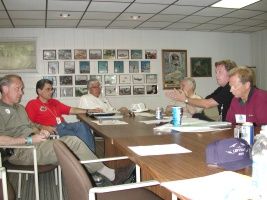 Just like Sunday’s "Meet the Administrator" session, the Federal Air Surgeon Dr. Jon Jordan held a similar give-and-take forum on airman medical standards and certification issues. One issue that continues to vex the agency is the backlog of "special issuance" cases being reviewed at the FAA’s Civil Aeromedical Institute (CAMI) in Oklahoma City. A special issuance is an exemption from the certification standards granted to a pilot who has a disqualifying medical condition, such as heart disease, cancer or diabetes. "Resource considerations are causing some of our problems," Dr. Jordan explained, "but we are also getting more complicated cases to review because of all the different types of serious problems we are willing to deal with." CAMI dealt with about 8,000 applications with serious medical conditions last year, and many of the cases take months to be decided. Jordan said he hoped that in the future, delegating more authority to local Aviation Medical Examiners (AMEs) to help make some of these certification decisions can help reduce the backlog. He added he felt some AMEs may be reluctant to take on increased responsibility because of concerns over being sued if a pilot later has an accident. However, later in the day, Dr. Jordan announced that the FAA has worked out an agreement to allow some cases of Special Issuance exemptions to be handled by local AMEs. (See AVweb’s Day 6 OSHnews coverage for the complete story on this agreement new agreement.) Just like Sunday’s "Meet the Administrator" session, the Federal Air Surgeon Dr. Jon Jordan held a similar give-and-take forum on airman medical standards and certification issues. One issue that continues to vex the agency is the backlog of "special issuance" cases being reviewed at the FAA’s Civil Aeromedical Institute (CAMI) in Oklahoma City. A special issuance is an exemption from the certification standards granted to a pilot who has a disqualifying medical condition, such as heart disease, cancer or diabetes. "Resource considerations are causing some of our problems," Dr. Jordan explained, "but we are also getting more complicated cases to review because of all the different types of serious problems we are willing to deal with." CAMI dealt with about 8,000 applications with serious medical conditions last year, and many of the cases take months to be decided. Jordan said he hoped that in the future, delegating more authority to local Aviation Medical Examiners (AMEs) to help make some of these certification decisions can help reduce the backlog. He added he felt some AMEs may be reluctant to take on increased responsibility because of concerns over being sued if a pilot later has an accident. However, later in the day, Dr. Jordan announced that the FAA has worked out an agreement to allow some cases of Special Issuance exemptions to be handled by local AMEs. (See AVweb’s Day 6 OSHnews coverage for the complete story on this agreement new agreement.)
As an example of medical conditions the FAA is willing to look at, Jordan pointed out that, "We are the only nation in the world willing to medically certify insulin-taking diabetics as private pilots." When asked whether the insulin-taking-diabetic program might be extended to commercial pilots, Jordan said the FAA was reluctant to expand this policy until the agency knew more about pilot compliance with the program. "We take a very different view of what’s an acceptable risk for pilots who carry passengers for hire," Jordan said. "So far there have been three accidents involving diabetic pilots in this program. Two did not involve the pilot’s diabetes, and the third is still under investigation." …And The "Age 60" Rule Motors On Jordan was asked several questions about the FAA’s "Age 60" rule, which since 1959 has required airline pilots to retire when they reach age 60. Jordan feels that there needs to be some age limit for pilots flying commercial airliners, saying "our cognitive faculties and reaction time starts declining at age 45." Asked why older pilots couldn’t just be cleared for further flying by submitting to more extensive "astronaut-type" physicals, Jordan responded," The agency is not comfortable with its ability to monitor cognitive function reliably in aging pilots. Traditional neuropsychological testing — and even the CogScreen computer-based system that Georgetown University developed for us — are not giving us the answers we want." While Jordan said that arriving at a scientific way to pick a new age for mandatory retirement is very difficult for the agency, it is clear he thinks there needs to be one. Jordan was asked several questions about the FAA’s "Age 60" rule, which since 1959 has required airline pilots to retire when they reach age 60. Jordan feels that there needs to be some age limit for pilots flying commercial airliners, saying "our cognitive faculties and reaction time starts declining at age 45." Asked why older pilots couldn’t just be cleared for further flying by submitting to more extensive "astronaut-type" physicals, Jordan responded," The agency is not comfortable with its ability to monitor cognitive function reliably in aging pilots. Traditional neuropsychological testing — and even the CogScreen computer-based system that Georgetown University developed for us — are not giving us the answers we want." While Jordan said that arriving at a scientific way to pick a new age for mandatory retirement is very difficult for the agency, it is clear he thinks there needs to be one.
…And Flies Using a GE-T58 engine (a twelve-stage turbojet) adapted from a helicopter engine, the non-pressurized ViperJet prototype arrived at AirVenture last weekend — under its own power. The fact that the kit-built jet is non-pressurized could make for an interesting ride at the target cruise of 20,000 feet. With the current powerplant, the aircraft uses at least 3,000 feet of runway to get off the ground, perhaps less when it returns, and can cruise up to 295 KIAS at 10,000 feet. ViperJet said they’d like to use a turbofan, but at this time no suitable options exist. According to designer Scott Hanchette, finite element analysis has been performed on the airframe and results were both to his liking and okayed by Air Boss Engineering in Reno, Nev. Four orders have been placed with a 10 percent deposit of $13,490 (figure on a total kit price of $140,000 without the jet engine) even before the prototype has been tested to its design limits of 350 knots Vne and plus or minus 6 Gs (Scott told us ultimate load was plus or minus 12.) Those four brave souls who plunked down the deposits are sitting tight with no delivery dates and a 30-day escrow before the money is absorbed by the company — as the prototype spells out new challenges for the company to resolve. At the same time, Hanchette also made it sound like the first customer kit was in the works — even though the kit would undergo continuous modification based on results of flight-testing and the builder had no idea when he’d see his kit. Using a GE-T58 engine (a twelve-stage turbojet) adapted from a helicopter engine, the non-pressurized ViperJet prototype arrived at AirVenture last weekend — under its own power. The fact that the kit-built jet is non-pressurized could make for an interesting ride at the target cruise of 20,000 feet. With the current powerplant, the aircraft uses at least 3,000 feet of runway to get off the ground, perhaps less when it returns, and can cruise up to 295 KIAS at 10,000 feet. ViperJet said they’d like to use a turbofan, but at this time no suitable options exist. According to designer Scott Hanchette, finite element analysis has been performed on the airframe and results were both to his liking and okayed by Air Boss Engineering in Reno, Nev. Four orders have been placed with a 10 percent deposit of $13,490 (figure on a total kit price of $140,000 without the jet engine) even before the prototype has been tested to its design limits of 350 knots Vne and plus or minus 6 Gs (Scott told us ultimate load was plus or minus 12.) Those four brave souls who plunked down the deposits are sitting tight with no delivery dates and a 30-day escrow before the money is absorbed by the company — as the prototype spells out new challenges for the company to resolve. At the same time, Hanchette also made it sound like the first customer kit was in the works — even though the kit would undergo continuous modification based on results of flight-testing and the builder had no idea when he’d see his kit.
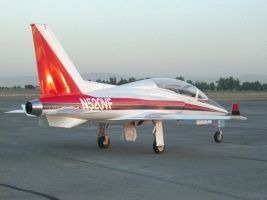 Stunned by the sleek lines of the craft, we forgot to ask if the engineering figures were run for the prototype, the final product, or some stage in between. See, the current aircraft is made mostly of fiberglass, with carbon fiber in the spars and a steel tube load bearing structure in the fuselage. Hanchette indicated that he’d like to see finished aircraft fly with carbon-fiber skins and spars with E-glass bulkheads and no steel tube reinforcement. It did seem that the design was still very much a work in progress. To follow up, AVweb asked if the company had any intentions of doing physical load testing of wing structure. The reply indicated they were very confident in the computer-generated numbers and flight-testing. A very exciting design. A very good one to watch from the bleachers. We wish them well. To sooth your curiosity — or dream a little dream — visit the Pasco, Wash., company’s web site . Stunned by the sleek lines of the craft, we forgot to ask if the engineering figures were run for the prototype, the final product, or some stage in between. See, the current aircraft is made mostly of fiberglass, with carbon fiber in the spars and a steel tube load bearing structure in the fuselage. Hanchette indicated that he’d like to see finished aircraft fly with carbon-fiber skins and spars with E-glass bulkheads and no steel tube reinforcement. It did seem that the design was still very much a work in progress. To follow up, AVweb asked if the company had any intentions of doing physical load testing of wing structure. The reply indicated they were very confident in the computer-generated numbers and flight-testing. A very exciting design. A very good one to watch from the bleachers. We wish them well. To sooth your curiosity — or dream a little dream — visit the Pasco, Wash., company’s web site .
 That’s right, a company wants to build a flying replica of the world’s only pure rocket-powered combat aircraft, the Messerschmitt Me163 Komet, made operational by a desperate Germany in the closing months of World War II. The company attempting this sky-high project is Xcor Aerospace of Mojave, Calif., literally a group of rocket scientists with experience designing and building rocket engines. Xcor presented this intriguing idea at an AirVenture forum, and admitted that the main reason for pursuing such a challenge is demonstrate that rocket propulsion is a safe and viable means for propelling future sub-orbital type aircraft. Xcor wants to keep the good flying characteristics of the Me163, but eliminate the bad features of the Komet, such as the dangerous hypergolic fuel, jettisonable takeoff trolley, and unstable landing skid. The Xcor Me163 rocket engine, a scale-model of which has already been built and tested, will use liquid oxygen and alcohol for the fuel mixture, with a proprietary igniter system to light the fire. That’s right, a company wants to build a flying replica of the world’s only pure rocket-powered combat aircraft, the Messerschmitt Me163 Komet, made operational by a desperate Germany in the closing months of World War II. The company attempting this sky-high project is Xcor Aerospace of Mojave, Calif., literally a group of rocket scientists with experience designing and building rocket engines. Xcor presented this intriguing idea at an AirVenture forum, and admitted that the main reason for pursuing such a challenge is demonstrate that rocket propulsion is a safe and viable means for propelling future sub-orbital type aircraft. Xcor wants to keep the good flying characteristics of the Me163, but eliminate the bad features of the Komet, such as the dangerous hypergolic fuel, jettisonable takeoff trolley, and unstable landing skid. The Xcor Me163 rocket engine, a scale-model of which has already been built and tested, will use liquid oxygen and alcohol for the fuel mixture, with a proprietary igniter system to light the fire.
What about the projected performance of the "new" full-scale Me163? How about a climb rate of 21,500 fpm, a ceiling of 60,000 feet, and an engine burn time of 211 seconds. Plus the engine has the capability to be shut down and restarted in-flight. Xcor appears to have done there homework, and now they only need a little money to get one flying — say about $4 million to build and fly the first replica Me163. If you give them a check next week, they estimate they can have your flyable Me163 in a little over two years. Interested? You can check out the Xcor web site for more information.
Sun ‘n Fun saw Kolb Aircraft, Co., introduce an upgraded version of their proven very light experimental, the Firestar Mark III Extra, and now at AirVenture 2000 Kolb was showcasing their Kolbra tandem STOL trainer. Kolb has recently changed hands and the new owners have relocated the company to London, Ky. The company has strong roots in Homer Kolb’s designs, which have been successfully built and flown by more than 2,000 people — most finished the kits in a little more than a year of low-pressure building. The aircraft appeal mostly to pilots who’ve lost their medicals, farmers who want a tax-deductible way to "survey their crops" and even kitplane builders who want something to fly while they’re building more complex aircraft. Ultralights can be purchased as complete aircraft for those not inclined to build, or Kolb will sell you a 65 mph, single-seat hop-about called the Firefly for $19,000. The new Kolbra Ultralight trainer can also be bought as a finished aircraft for around $25,000 or a kit for about $10,000 less. Although there are one or two regulation complications to flying a two-seat ultralight, having a medical isn’t one of them.
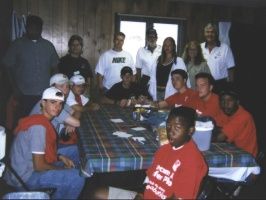 One of the recurring themes AVweb sees at each successive AirVenture is the wide range of people who come here and the interesting stories they bring along. One such story is Dustin Autry, who took his first flight at the age of 10 in a Cherokee Six. Last week, he arranged the trip to AirVenture 2000 from Olive Branch, Tenn., for himself and three friends in a rented Cessna 182, which he flew as pilot-in-command. Oh yeah, and Dustin is only 17. Dustin is the product of his own initiative (he’s invested about $8,000 of his own money in training and renting aircraft) and Aviation Explorer Post 924, where he acts as the group’s president. Explorer groups are an offspring of the Boy Scouts of America, and the group Dustin belongs to is aviation-specific. The somewhat more weathered founders of Explorer Post 924, Jon Peacock and Harold Spillers, have watched more than 300 young men and women come and go over seven years since they formed the group. Today, one third of past members currently hold at least a PPL. Most members of the group have one thing on their mind: In Dustin’s words, "I just wanna get paid to do something I love." For more information about Explorer Post 924, they have their own web site. One of the recurring themes AVweb sees at each successive AirVenture is the wide range of people who come here and the interesting stories they bring along. One such story is Dustin Autry, who took his first flight at the age of 10 in a Cherokee Six. Last week, he arranged the trip to AirVenture 2000 from Olive Branch, Tenn., for himself and three friends in a rented Cessna 182, which he flew as pilot-in-command. Oh yeah, and Dustin is only 17. Dustin is the product of his own initiative (he’s invested about $8,000 of his own money in training and renting aircraft) and Aviation Explorer Post 924, where he acts as the group’s president. Explorer groups are an offspring of the Boy Scouts of America, and the group Dustin belongs to is aviation-specific. The somewhat more weathered founders of Explorer Post 924, Jon Peacock and Harold Spillers, have watched more than 300 young men and women come and go over seven years since they formed the group. Today, one third of past members currently hold at least a PPL. Most members of the group have one thing on their mind: In Dustin’s words, "I just wanna get paid to do something I love." For more information about Explorer Post 924, they have their own web site.
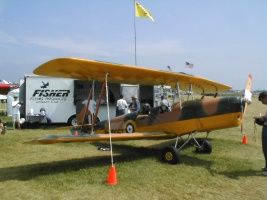 Fisher Flying Products of Edgeley, N.D., showed their recently completed steel-frame RS-80 Tiger Moth at AirVenture 2000, and garnered quite a bit of foot traffic around the two-seat biplane replica. Although Fisher was showing the 80 percent scale Tiger Moth in the ultralight area, this is a real light airplane, offering a Czechoslovakian LOM M132 engine of 120 hp, and a gross weight of 1,350 pounds. Fisher vice-president Gene Hanson said the company has had good success with the wood-frame R-80 Tiger Moth kits, but there were numerous requests for people who wanted a steel-frame option. Though the wings and tail surfaces are slightly smaller than the original Tiger Moth, the cockpit is almost exactly the same size as the original, according to Hanson. Even with the shorter 23-foot wingspan of the RS-80, Fisher claims the biplane will climb at 800 fpm, cruise at 80 mph, and features a 200-mile range. An interesting demonstration of the Tiger Moth’s attraction to flying romanticists is the fact that African Flying Adventures is already building four of the RS-80s for ten-day flying adventures over the Zimbabwe wilderness. Sounds like soon you may be able to rent an RS-80 for your own "Out of Africa" adventure. For more information on the RS-80 Tiger Moth, you can go to the Fisher Flying Products web site. Fisher Flying Products of Edgeley, N.D., showed their recently completed steel-frame RS-80 Tiger Moth at AirVenture 2000, and garnered quite a bit of foot traffic around the two-seat biplane replica. Although Fisher was showing the 80 percent scale Tiger Moth in the ultralight area, this is a real light airplane, offering a Czechoslovakian LOM M132 engine of 120 hp, and a gross weight of 1,350 pounds. Fisher vice-president Gene Hanson said the company has had good success with the wood-frame R-80 Tiger Moth kits, but there were numerous requests for people who wanted a steel-frame option. Though the wings and tail surfaces are slightly smaller than the original Tiger Moth, the cockpit is almost exactly the same size as the original, according to Hanson. Even with the shorter 23-foot wingspan of the RS-80, Fisher claims the biplane will climb at 800 fpm, cruise at 80 mph, and features a 200-mile range. An interesting demonstration of the Tiger Moth’s attraction to flying romanticists is the fact that African Flying Adventures is already building four of the RS-80s for ten-day flying adventures over the Zimbabwe wilderness. Sounds like soon you may be able to rent an RS-80 for your own "Out of Africa" adventure. For more information on the RS-80 Tiger Moth, you can go to the Fisher Flying Products web site.
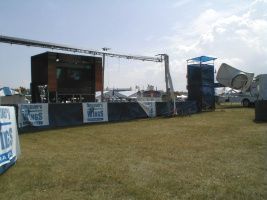 In addition to the extensive print, radio, and AVweb‘s exclusive Internet coverage of AirVenture 2000, the video broadcast coverage this year has been the largest of any AirVenture yet. The Discovery Wings Channel and Discovery Science Channel have been providing live broadcasts and special features throughout the week. Most of the television production is taking place at a compound near the west ramp that includes a huge broadcast trailer, tents, satellite dishes and a large stage for interviews and presentations. And if you are camping at AirVenture this year and don’t have a TV to watch the live coverage, don’t fret — the Speedvision cable TV channel will air a one-hour AirVenture 2000 special on September 20, 8 p.m. ET/9 p.m. PT. In addition to the extensive print, radio, and AVweb‘s exclusive Internet coverage of AirVenture 2000, the video broadcast coverage this year has been the largest of any AirVenture yet. The Discovery Wings Channel and Discovery Science Channel have been providing live broadcasts and special features throughout the week. Most of the television production is taking place at a compound near the west ramp that includes a huge broadcast trailer, tents, satellite dishes and a large stage for interviews and presentations. And if you are camping at AirVenture this year and don’t have a TV to watch the live coverage, don’t fret — the Speedvision cable TV channel will air a one-hour AirVenture 2000 special on September 20, 8 p.m. ET/9 p.m. PT.
|