



























It’s another one of those nights when I’ve stayed here in the Pilot’s Lounge after everyone has gone home. Tonight it is because I am still seething. I don’t want to get into my car because the level of anger I have over a case I settled this afternoon is still building. I have no business driving.
My client, a first-time airplane buyer, was taken in by a broker who assured him that the low price on the airplane he had for sale was simply because he needed to move it fast, before interest ate him up. The buyer agreed to buy the airplane without seeing it. He then allowed the broker to select the mechanic to do a prebuy inspection. The buyer was told that the airplane passed the inspection with flying colors. At that point the buyer went to pick up his new acquisition. He got it home and everything proceeded to break. Once he had his mechanic open things up he also learned the wings were full of corrosion. That’s when I got involved.
Of course, once suit was filed, the mechanic claimed that he had only done an oil change and produced paperwork showing that he had only performed, and charged for, an oil change. Over the course of three years, the buyer put substantial money into the airplane to repair corrosion damage, replace corroded parts and prevent further corrosion. After a lot of work, I was able to get some of the buyer’s money back, but not all.
He took one heck of a financial hit and I again had to deal with the slimy underworld that taints parts of aviation. The only thing I had to look back on that didn’t make me angry about the case was that the broker involved was no longer selling airplanes.
Taking Precautions
 The more I thought about the case, the madder I got. There are a just too many lowlife individuals out there peddling airplanes. I’ve seen it year after year. There are a lot of books on buying used airplanes but few people seem to be reading them. As a lawyer, I make money from lawsuits; however, suits involving airplane buyers who get fleeced are just plain ugly. Crooked sellers, knowing that it is often effective to go on the offense right away, make all sorts of false statements that have to be dealt with, one by one. That sets off the buyer and the battle gets nasty fast. The nature of the beast is that the buyer almost never gets back all of the lost money.
All in all, I would prefer that buyers take some precautions to avoid buying a dog dressed as an airplane in the first place and never have to retain me. So, while I’m good and angry, here are some ideas I’ve got on the subject of buying a used airplane. I know they won’t cover everything and it’s impossible to fully protect yourself from a crook, but maybe they will get you thinking when you decide to buy a used airplane.
Be Cynical
Understand out of the box that there is a tremendous amount of junk out there. While a number of manufacturers are churning out new airplanes, the vast majority of the ones we can afford to buy are just plain old. In the late 1960s, there was a tremendous debate as to whether we should continue to allow World War II aircraft to fly as they were over 20 years old, a shocking age at the time. Now, if you can find a good, used airplane that is less than 20 years old, at a decent price, it is unusual.
My livelihood involves being around aircraft. I see some beautiful airplanes on a day-to-day basis but I also see the poor state of maintenance of way, way too many airplanes. It is expensive to keep airplanes in good shape and pilots too often either don’t have the money or the inclination to do so. At a nearby FBO, I am watching an airplane of a type that I’ve lusted over for years being parted out because the owner was too cheap to either hangar it or reseal the windows as he was warned to do at the last annual. Rainwater had come in through the worn window seals and corroded the airframe beyond economical repair. Had that owner been less ethical, he could have probably unloaded it cheaply on an out-of-state buyer who would think he was getting a deal. By selling it out of state, the cost to the buyer to come back here and sue would add so much to the expense of the case as to make it not worth pursuing.
Most of us fly because we enjoy it tremendously and like the people we meet. Most pilots are extremely honest. They expect other pilots to be honest. Most are, but a certain percentage, when it comes to selling airplanes, aren’t.
A lot of crummy airplanes have been given a quick paint job to cover the warts. We all like a good-looking airplane. But, as Ernie Gann once said, “A whore is easy to meet.” There are a lot of painted ladies out there. If an airplane looks too attractive, and seems too good to be true, I hope your internal alarm system works, otherwise you are going to be paying to fix a diseased body.
Budget
 Decide how much you can afford to spend on an airplane before you start to look. Then, and I can’t say this vehemently enough, set aside at least one quarter, even better, one third, of that sum for repairs that you will have to make to the airplane in the first year. Put it in a bank account and forget you even have it until the airplane is home and in your hangar or on your tiedown. Then you will need every penny of it. There are going to be problems you just plain missed on the prepurchase inspection. Things are going to break. In addition, you are going to find that your own tastes and preferences in the airplane are different than those of the previous owner so you are going to have to fix some things the previous owner felt were not worth fixing.
Avoid Buying Sight-Unseen
Resolve that you will not buy an airplane sight unseen unless you are also willing to put 50 percent of the money you have left in your budget into another bank account for the needed repairs and lawsuit when you actually get the airplane in hand. Let’s put it this way: There aren’t any super deals to be had on far-away airplanes. If the airplane were great and way under-priced, the locals would have grabbed it long ago. This isn’t rocket science. If the locals haven’t snatched that wonderful, colossal airplane that is priced 50 percent too low, why are you frantically trying to buy it without even seeing it? Always keep in mind that there is garbage out there that people want you to buy. In every single lawsuit in which I’ve been involved over an airplane sale, the airplane was purchased sight unseen. I respectfully suggest that if you don’t have the money to transport yourself AND your mechanic to look an airplane over, you probably don’t have the money to fix it after it arrives.
If the airplane is to be delivered to you, the only safe way is to enter into a written agreement that says you do not have to accept it unless it passes a prepurchase inspection with your mechanic and that the seller is on the hook for transportation of the airplane both ways should the airplane fail the prepurchase inspection. (At the same time, the law imposes an obligation on you to act responsibly once the seller has flown the airplane all the way to you and not refuse it just because the interior color is just a shade lighter tan than will match your Dockers.) Smart buyers also provide in that written agreement that it is enforceable against the seller in a court in the buyer’s state. Suing a seller in his state is expensive. Yes, if the airplane passes inspection and you buy it, the usual custom is for you to pay for the airline ticket to get the seller home.
Get The Historical File On The Airplane
 Once you find an airplane that interests you, order the entire aircraft file from a company that does title searches. I use the AOPA’s service for this task. They know what they are doing and can do it fast; in fact, they can usually fax the documents to you within two or three days of your call. I suggest that you order a copy of the entire FAA aircraft file, not just request a title search. A title search, while essential to tell you if there are any liens on the airplane (the seller must prove to you that he will deal with all of them to your satisfaction before you agree to buy the airplane), is just part of the picture. A title search is done by examining the documents in the FAA files. What you want is a copy of all of those documents, all of the bills of sale for the transactions before you, the liens on the airplane, and their releases as well as the FAA Form 337s for major repairs and alterations.
You want to know where the airplane lived out its life before you. Corrosion is probably the most serious problem facing older airplanes. Did it spend years on the Florida coast or was it high and dry in Arizona? Call up the previous owners and talk to them about the airplane. The 337s will show such mundane things as radio installations, but also such interesting things as STCs and nasty little things such as replacement of wing skins, a strut, fuselage skin and windows following a crunch that may not be explained, or even referenced, in the logbooks. If the airplane is advertised with no damage history and that is important to you, you have just saved yourself a boatload of trouble. If it isn’t important, you have ammunition on negotiating purchase price.
“Fresh Annual,” Anyone?
I recommend that any potential buyer be extremely suspicious of airplanes advertised with a “fresh annual.” Think hard now; if you were selling your airplane, how much would you spend on an annual? Would you insist the mechanic correct every little thing that was wrong? Most of the time this is window dressing on a barker. It’s often a sign that should read, “Look elsewhere.” Besides, you are going to do a prebuy that is so thorough, that once you have decided to accept the airplane, you will have the mechanic go ahead and complete an annual inspection because it is already at least 60% complete anyway, so a “fresh” annual adds no value to the airplane in your eyes.
Avoid An Airplane With A Newly-overhauled Engine
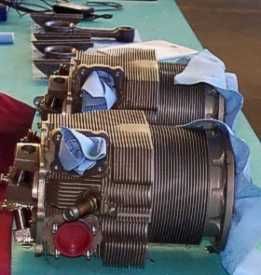 Treat any airplane with a “fresh engine overhaul” as if the engine is high time. You are much, much better off buying an airplane with a run-out engine and having it overhauled where and how you want it done. It is impossible on a prepurchase inspection to tell how well an engine overhaul was performed. In a nutshell, the cost of a good engine overhaul exceeds the boost it gives to the selling price of the airplane. That’s a given. Act accordingly.
Only a fool will put more money into the airplane than he or she expects to get out of it at the sale. Assume the overhaul is worthless when negotiating. My rule of thumb is not to consider an overhaul worth its salt unless the engine has at least 200 hours on it since the overhaul, the owner can produce oil analysis records (and I talk with the analysis company) and the compression is at or close to new-overhaul tolerances.
Is A Broker Involved?
Find out if a broker is selling the airplane. If so, look up the N-number in the AVweb database and call the owner and talk with him or her about the airplane. Find out why it is being sold. Find out why the owner is willing to forgo some income on the sale and is using a broker. The owner may not be honest, but you will probably get some useful information. Brokers don’t make much on fixed-gear, single-engine airplanes, so see what you can find out as background. I have represented some excellent, honest brokers. Most of them go where the big money is, to turbine aircraft. I’ve also sued some real crooks in the piston-engine aircraft business. At the risk of insulting the honest brokers – and there are a lot of honest brokers out there (although the dishonest ones seem to be the quickest to tell you how honest they are) – if you are dealing with a broker, be very, very careful.
Logbooks
Find out if they are complete. Missing logbooks are not necessarily disqualifying. In general, missing logs from more than 15 years ago are not nearly as important as missing logbooks currently. If there are no logs, there is reason to be suspicious that the airplane was stolen. With any missing logs you must assume that the airplane has some damage history. It will be up to you and your mechanic to find the evidence on the prebuy. Most of the time you won’t get access to the logs until the prepurchase inspection, but you can find out whether they are complete or not fairly early on. If the logs are incomplete it may be impossible to prove compliance with some or all Airworthiness Directives (ADs). The assurance of a seller that all ADs have been complied with is worthless as that airplane is not airworthy unless the records detail the method of compliance with each and every applicable AD.
What Does New Paint Hide?
If the airplane was recently repainted, the reason was probably to sell it. Have your mechanic look closely to see if it was done to cover up corrosion. Figure the paint job will last about half the time a good one will, and that you’ll be looking at paint chipping, cracking and peeling in the first year. The stripes on the front of my Aztec don’t line up when you look at it head on. I knew it was repainted just before it was sold, but after negotiations were done, it didn’t add anything to the sale price. Unless the airplane has been on the market for over a year, don’t put much stock in a paint job that is under a year old. You may even want to call the paint shop and find what was charged for the job versus what is the rate for a top-quality job. Ask around and find out the reputation of the paint shop.
Weight And Balance
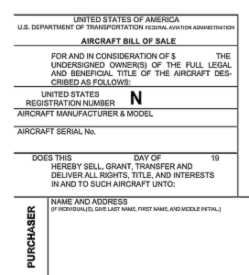 Once you are getting interested in a specific airplane have the owner fax the actual weight and balance data to you. Most of the time the actual airplane is somewhat heavier than the “sample” given in manuals. Find out if the airplane you are considering can actually carry the loads and fuel quantities required for the type of flying you intend to do. My airplane partner and I had to pass on an airplane that we were seriously looking at because it had 150 pounds less useful load than we anticipated and that meant he couldn’t take his family in it.
Get A Current List Of Applicable ADs
As you get very serious, talk to your mechanic about the airplane and get list and summary of the AD s that apply to the particular bird. Make sure there are not any repetitive ADs that will wipe out the family fortune, or that the airplane isn’t coming up on some major “pull the wings off and x-ray everything” AD. If you are satisfied on that point, then you will also have the list ready to go when you open the logbooks at the prepurchase inspection and it will minimize the time needed to see whether there has been compliance with all the ADs.
Agree On A Price, Subject To A Prebuy Inspection
Do your negotiations with the seller and, if you can come to an agreement on price, put together a written agreement that identifies the airplane, states the sale price and that the sale is conditioned on successful completion of a prepurchase inspection and that the price may be adjusted in further negotiations between the buyer and seller based on the results of the prebuy. If there is any ferrying of the airplane involved, set out who is responsible for what costs, both if the airplane fails the inspection and if it passes and someone needs a way to get home.
The Prebuy Inspection
It is absolutely, positively essential that you have a prepurchase inspection done by a mechanic or shop that you respect. Never, ever, ever, ever let the seller select who will do the prepurchase inspection. If you need to locate a reputable mechanic at a remote location one of the best ways is on the Internet on one of the better aviation forums such as AVsig on CompuServe. Putting up an inquiry usually results in some good ideas that will at least give you some guidance as to whom to call.
Be patient. A good prepurchase inspection is going to take a very full day on a simple single-engine airplane, and longer for a complex one or a twin. That’s okay, because if it passes the prepurchase inspection and you buy the airplane you are going to go ahead and complete an annual inspection on the airplane anyway.
Go into the prepurchase inspection as if you are trying to find a reason to disqualify the airplane. That is the safer mindset than if you are trying to find reasons to qualify the airplane. You may like the looks so much that you use them to qualify and accept an otherwise questionable mount.
The first step in any prepurchase inspection is a detailed examination of all the logbooks. They must show compliance with every single AD (or the reason each one does not apply) or someone is going to have to pay for compliance for any that the records show weren’t done before you agree to accept the airplane. You may find that it’s a minor matter, or it may be a big deal. Lack of AD compliance is a good way to kill a sale very quickly. Going forward with a purchase where there is question regarding AD compliance is not one of the smartest things you will do in your life.
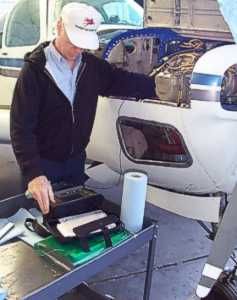 For reasons I have never understood, aircraft and engine logbooks usually do not have page numbers. Look at each page carefully to see if any have been razored out. Read each and every entry. This is detective time. Did the airplane sit dormant for a couple of years? That’s a hint that there may be corrosion in the airframe or in the engine. Was it getting 100-hour inspections every few weeks? If so, it was probably a trainer, so look over the areas that students beat up. Your mechanic should be the person to take the lead in the logbook examination as he or she is more likely to know what to look for than you; however, you should be heavily involved as two people casting jaundiced eyes on entries are less likely to miss something than one person.
When was the last time the airplane was weighed? If more than about five years ago, figure that you will need to have it weighed as old weight data has an odd way of being very wrong, and often not in your favor.
If the airplane is in annual and you haven’t flown it, do so. Do a very detailed preflight then operate it, following every step in the checklist in a deliberate manner. Observe how it behaves throughout the speed range down through stall. How does it track on the ground? Can it be trimmed to fly hands-off? Is the ball in the center in level flight with the control wheel at neutral? Are furnishings worn? Do the seats lock in their tracks?
As the inspection proceeds, if you find an absolutely disqualifying factor, stop the prebuy at that moment; tell the seller why you have stopped and why the airplane failed. Believe it or not, there have been times that a good mechanic has found evidence of damage and illegal repairs that have escaped other mechanics for years, even to the point the current owner had no idea about the situation because it all happened before he bought the airplane and he didn’t find it. There is no reason to pay for more prepurchase inspection than you need. There is also the chance that the seller will agree to fix the problem you identified, in a way that is acceptable to you, and you can continue the inspection and potentially buy the airplane.
All the time the inspection is going on you and your mechanic should be making a squawk list of everything you feel needs to be repaired to bring the airplane up to the level that is acceptable to you.
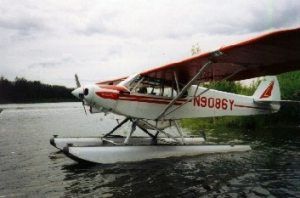 Your mechanic will have his or her own procedure for the inspection. Follow along and learn all you can about the airplane you may be buying. Look in all the inspection ports, help remove the interior, get to know the airplane; generally be a hands-on participant in the prebuy inspection. Take notes on the comments made.
Once your mechanic has finished with the inspection, go off by yourselves and talk it over. You will have a squawk list in hand and a pretty good feeling as to whether the airplane is acceptable or not. If it is okay as-is and the squawks are fairly minor, chances are you can finish up the sale at the agreed-upon price, and turn your mechanic loose to finish up an annual inspection. If the squawks are more than about $1,000 worth, and you still would like the airplane, it is time to discuss how to resolve them with the seller. One approach is to give the seller the squawk list with the ones you feel he should fix circled. The seller can either agree or back out of the deal. (If the sale does not go through you are obligated to put the airplane back together after the prepurchase inspection is stopped, so that the seller can fly it away.) You may want to get good estimates of the costs to fix the various squawks and get a price concession so that your mechanic can fix them to your satisfaction, or you may want to agree to have the seller do the fixes needed. If the seller won’t agree to fix the squawks or give an appropriate price concession, the deal is over. If the seller agrees to act on your squawk list, don’t wait a day or two, after he is working on the airplane, and then try to back out of the deal. Once you gave him the squawk list you have effectively agreed to accept the airplane when the listed items are fixed.
Closing The Deal
 If the deal is to go forward, write it down. Make two originals. Identify the airplane by registration and serial number, state the sale price, identify the buyer and seller, and if there are any outstanding items that either party must perform, set them out clearly and concisely. A wise seller is going to state that the airplane is sold “as is, where is,” and then write in large letters that the airplane is sold without any warranties, express or implied. The intention is to make it clear to the world that the seller is not going to pay to make any additional repairs to the airplane other than are set out in the agreement, ever. You the buyer are on the hook for further repairs. Both of you then sign each original and each keeps one. Then you take care of the bill of sale and such other transfer paperwork as you may have.
Shake hands with the seller, advise your mechanic to finish up the annual inspection and take the seller to his flight home. Then get ready to spend the rest of that money you set aside at the beginning of this effort. You are going to need it.
See you next month.