














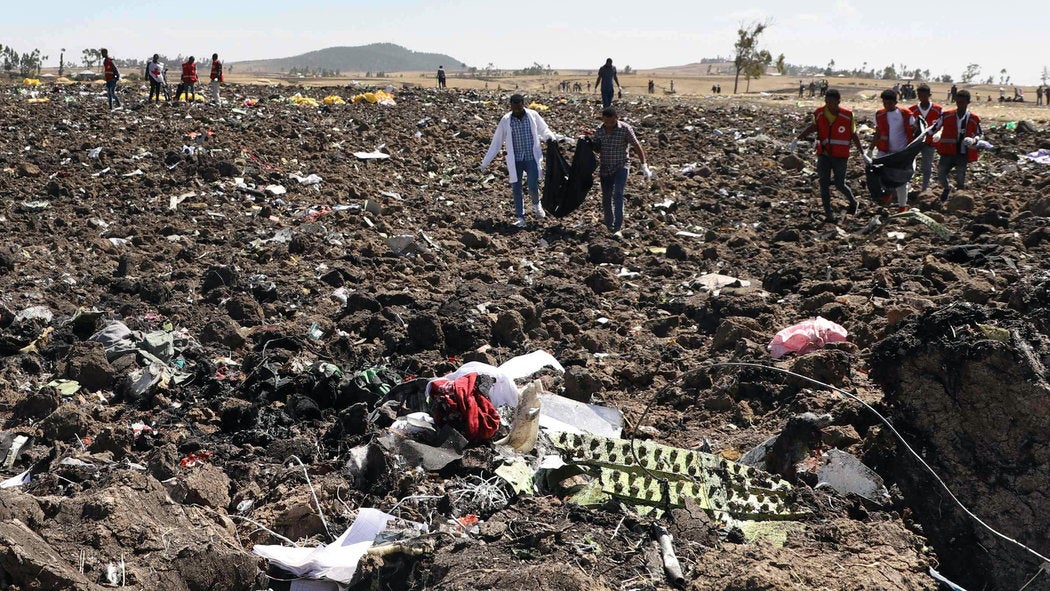

Boeing lawyers say the company shouldn’t have to pay for the pain suffered by victims of two 737 MAX crashes because they couldn’t possibly have felt any pain. The Wall Street Journal is reporting Boeing’s legal team says the law in Illinois, where this case is being heard, doesn’t allow their families to be paid for pain and suffering to be compensated because there essentially was none. Boeing consulted experts who determined there wasn’t enough time in the 700-MPH impact for the human brain to process pain signals.
Boeing has already admitted fault for the crash and an earlier one in Indonesia which together killed 346 occupants of the two brand-new aircraft. These filings are an attempt to have the court limit what evidence a jury could consider when awarding damages. The families want the jury to be able to consider the effect of the six minutes of climbs and dives that preceded the crash. The WSJ says the Boeing claims allowing that evidence would “prejudice and confuse” jurors, potentially leading them to award amounts “tantamount to punitive damages.”
“Jurors would inevitably sympathize with testimony about the passengers’ alleged fear of impending death and imagine themselves in the passengers’ shoes,” the WSJ quoted Boeing attorneys as writing in one filing. Eliminating pain and suffering from the compensation calculation leaves only grief and loss by the plaintiffs to be considered by the jury. The difference could amount to millions of dollars per victim. The plaintiffs’ lawyers said the 157 passengers and crew “undeniably suffered horrific emotional distress, pain and suffering, and physical impact/injury while they endured extreme G-forces, braced for impact, knew the airplane was malfunctioning, and ultimately plummeted nose-down to the ground at terrifying speed.”
